
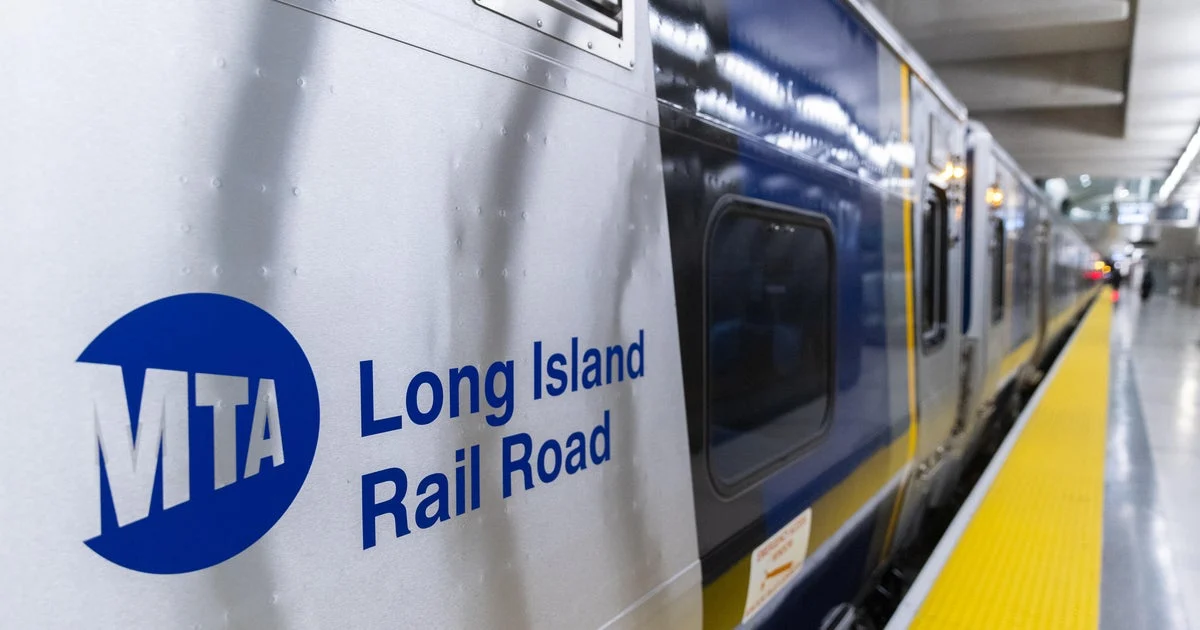
The Long Island Rail Road (LIRR) strike ended Monday night after the Metropolitan Transportation Authority (MTA) and five union labor groups reached a tentative agreement to restore train service that had been halted for three days. The strike involved about 3,500 unionized workers and began at midnight Saturday, disrupting service for roughly 300,000 daily commuters.
New York Governor Kathy Hochul announced the agreement on social media, stating, “Tonight, the MTA reached a fair deal with the five LIRR unions that delivers raises for workers while protecting riders and taxpayers.” She confirmed that phased LIRR service would resume Tuesday at noon.
Return to Service and Agreement Details
MTA officials clarified that although the strike officially ends at midnight Tuesday, no train service will be available during the morning commute to allow for necessary safety inspections and workforce coordination. LIRR President Robert Free explained that limited hourly train service would begin at noon on select branches including Port Washington, Huntington, Ronkonkoma, and Babylon. Full peak service is expected to resume by 4 p.m., covering all branches according to a standard weekday schedule. Shuttle buses will be available in the morning to compensate for the delayed train service.
Governor Hochul emphasized that the agreement does not include any fare increases or tax hikes, citing concerns about the rising cost of living. The MTA and union leaders declined to disclose specific contract terms, but acknowledged the deal offers fair wage increases without exceeding the MTA’s budget constraints. The deal now awaits ratification by the five unions involved, some of which had been working without a contract for over two years.
Strike Impact and Contingency Measures
The strike marked the first LIRR work stoppage since 1994, significantly inconveniencing commuters on Long Island. During the strike, the MTA deployed shuttle buses operating from early morning through 9 a.m. at six pickup points to ferry stranded commuters to New York City subway stations. Although the buses accommodated more than 2,000 riders on Monday, many commuters reported extended travel times and frustration.
Several commuters shared difficulties adjusting to the shuttle service, with some facing multi-hour delays and costly alternative transportation. The MTA advised travelers to continue using shuttle buses Tuesday morning before normal train service resumes midday.
Why it matters
The resolution of the LIRR strike restores critical commuter rail service in the nation’s largest commuter system, alleviating transportation disruptions for hundreds of thousands of riders. The tentative agreement prioritizes wage increases for workers while avoiding additional costs for taxpayers and riders amidst ongoing inflation concerns. The successful negotiations may also influence labor disputes and contract talks within other transit agencies in the region.
Background
The LIRR’s labor unions had been without a contract for over two and a half years before the recent strike, the first since 1994 when a similar two-year contract delay led to a work stoppage requiring state intervention. The National Mediation Board played a role in returning parties to the negotiating table, which involved intensive bargaining through the weekend and into Monday evening.
Sources
This article is based on reporting and publicly available information from the following source:
Read more US News stories on Goka World News.