
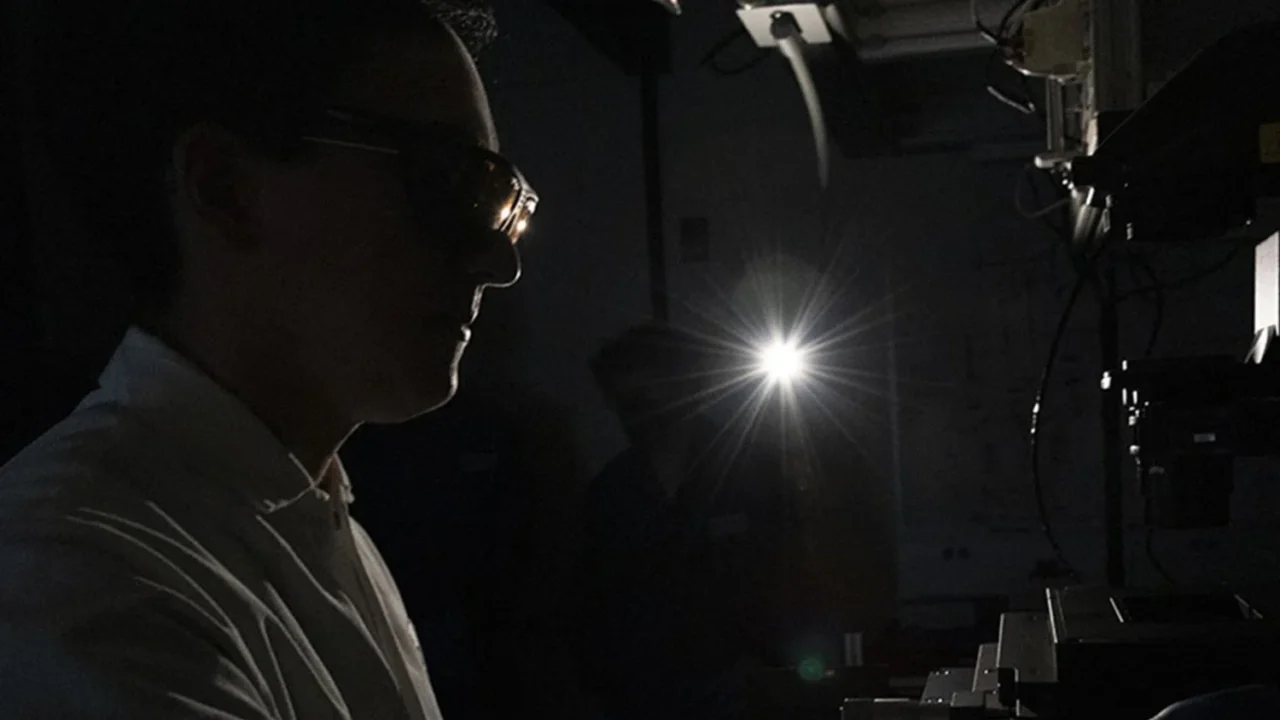
A team from the Broad Institute of MIT and Harvard has introduced a novel single-molecule imaging technique that enables sustained observation of cancer-related proteins in living cells. This method employs highly stable upconverting nanoparticle probes which allow researchers to track individual cell receptors over extended periods, overcoming limitations of traditional fluorescent dyes.
Published in the journal Cell, the study focuses on the epidermal growth factor receptor (EGFR) family, which includes EGFR, HER2, and HER3 receptors linked to various cancers. The researchers tagged these receptors using their customized nanoparticle probes to observe real-time receptor interactions on the cell membrane with unprecedented duration and resolution.
Advancements in Single-Molecule Tracking
Conventional fluorescent dyes used in single-molecule tracking often suffer from photobleaching, a phenomenon where emitters lose fluorescence after a few seconds under laser illumination. This limitation restricted previous studies to brief receptor snapshots rather than continuous tracking of signaling events.
The new probes contain rare-earth ions that produce persistent luminescence lasting minutes to potentially years, depending on their formulation. By varying the ion composition and doses, researchers can design probes emitting in different colors, enabling multi-target tracking within a single experiment.
Receptor Dynamics and Cancer Implications
Using the probes, the team uncovered new dynamics of receptor dimerization — the pairing process essential for initiating cell signaling. They found that activated EGFR receptors can remain paired for several minutes, a timeframe not previously observed. Prolonged dimerization is associated with increased cell proliferation, a hallmark of cancer.
Crucially, EGFR receptors carrying cancer-related mutations exhibited more stable dimers that formed even in the absence of external activating molecules. This enhanced stability helps explain how mutations drive uncontrolled cell growth, offering potential targets for therapeutic intervention.
The study also revealed novel interactions involving HER2 and HER3 receptors and documented a continuously changing landscape of receptor pairing and unpairing on the cell surface, demonstrating the dynamic nature of these signaling molecules.
Future Applications and Enhancements
Lead researcher Sam Peng highlighted the potential of this technique to transform the study of molecular biology by enabling high-resolution, long-term observation of dynamic biological processes.
The team plans to apply this imaging method to investigate drug mechanisms, exploring how therapeutics impact individual molecules over time. Ongoing efforts aim to enhance the probes’ size, brightness, and color range for broader applications across biomedical research.
Why it matters
This imaging breakthrough allows for unprecedented visualization of cancer-related receptor behaviors in living cells, deepening understanding of molecular mechanisms driving cancer. The technique could accelerate drug development by offering detailed views of how treatments affect receptor dynamics at the single-molecule level, potentially improving targeted therapies.
Background
EGFR, HER2, and HER3 are receptors involved in cell signaling pathways that regulate growth and proliferation. Abnormal activation or mutation of these receptors is implicated in several cancer types. Previous imaging technologies have been limited by photobleaching, restricting the ability to observe receptor interactions continuously. The development of photostable nanoparticle probes represents an advance in molecular imaging, facilitating longer and more detailed studies of cellular processes.
Sources
This article is based on reporting and publicly available information from the following source:
Read more Science Discoveries stories on Goka World News.