
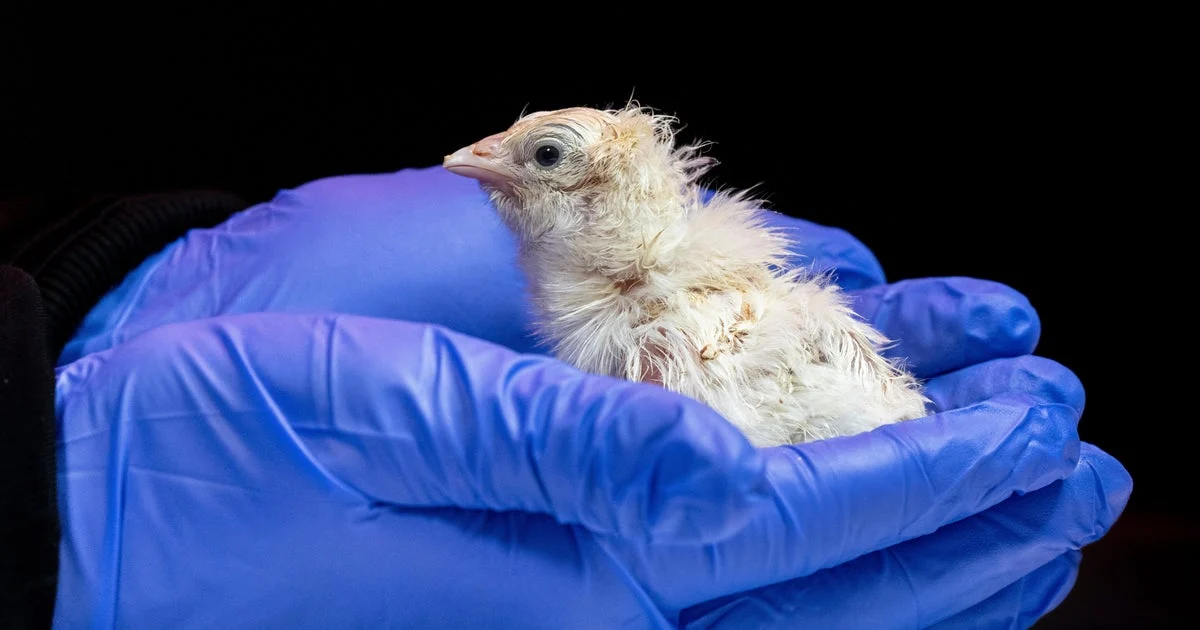
Colossal Biosciences announced it has hatched 26 live chicks using a 3D-printed lattice structure designed to mimic a natural eggshell, marking a significant step in its goal to revive extinct species, including New Zealand’s giant moa bird.
The artificial eggshell system replicates some functions of a real eggshell, such as allowing oxygen exchange through a membrane, but does not include all natural egg components like the temporary organs that nourish the developing chick and remove waste. Fertilized eggs were placed inside the artificial shell and incubated, with added calcium supplements necessary for embryonic growth.
Colossal’s CEO, Ben Lamm, explained the technology could eventually be scaled to support hatching larger birds, such as the extinct 12-foot tall South Island moa, whose eggs are vastly larger than a chicken’s and pose challenges for natural reproduction. The company previously engineered animals with traits resembling extinct species, including mice with woolly mammoth characteristics and dire wolf-like pups.
Independent experts commend the technical achievement but caution that the system is more accurately described as an artificial eggshell rather than a full artificial egg. Vincent Lynch, an evolutionary biologist at the University at Buffalo, emphasized that while the technology could produce genetically modified birds, it does not equate to resurrecting extinct species like the moa.
Researchers also noted that prior work has involved the use of transparent or artificial eggshells, which aid developmental studies but are not novel in producing live chicks. Nicola Hemmings, a reproductive biologist at the University of Sheffield, stated such methods have long served research purposes and highlighted the significant challenges ahead before any successful moa revival could be attempted.
Colossal is focusing on solving engineering issues related to surrogacy and hatching processes now, anticipating the need for larger artificial egg structures to accommodate extinct species. The company also stresses the potential conservation applications of its platform, such as helping endangered birds that struggle to breed in captivity and reviving species from frozen genetic material.
Bioethicists and conservationists, however, express concerns about the ecological and ethical implications of reintroducing extinct species into modern environments that differ considerably from their original habitats. Arthur Caplan of New York University noted the challenge of ensuring a suitable environment for such animals.
Why it matters
Colossal’s artificial eggshell technology represents a novel approach to species conservation and de-extinction efforts by potentially enabling the incubation of fragile or extinct bird species’ embryos. This advancement signals progress in biotechnology applications for biodiversity preservation amid widespread declines in bird populations.
Background
Founded with ambitious goals, Colossal unveiled plans in 2021 to revive species like the woolly mammoth and the dodo bird using genetic engineering. The company has since announced progress in efforts related to the extinct Tasmanian tiger and now reports this breakthrough in artificial egg technology as a foundational step toward eventually reviving larger extinct birds.
Sources
This article is based on reporting and publicly available information from the following source:
Read more Science Discoveries stories on Goka World News.