
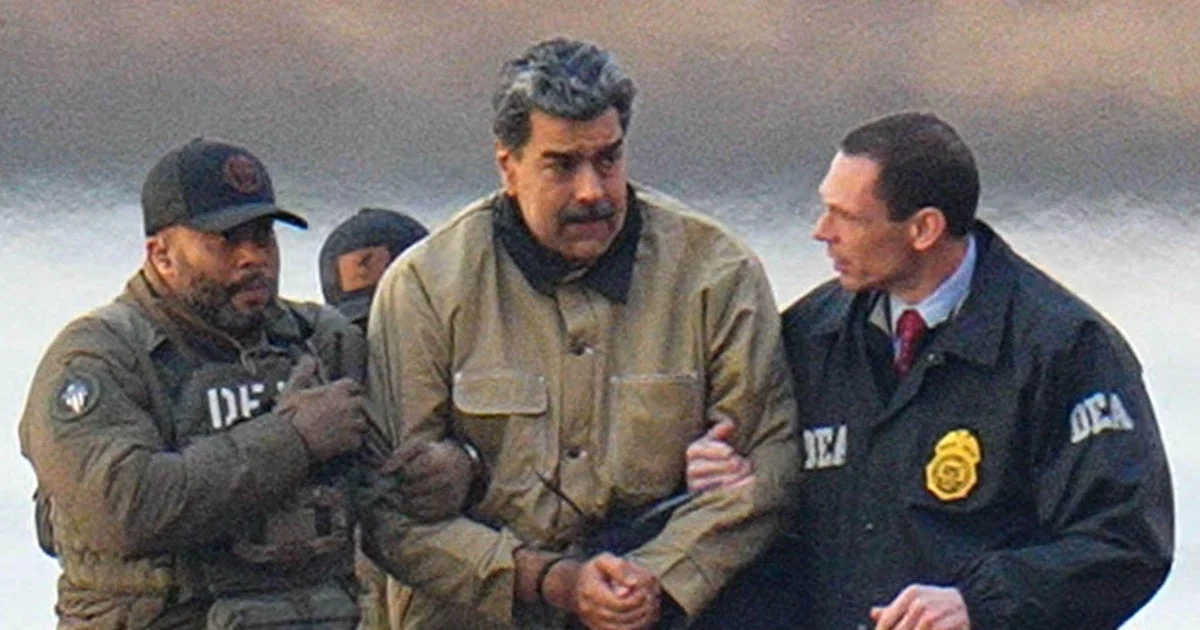
Federal prosecutors in Miami have opened a new criminal investigation into former Venezuelan President Nicolás Maduro, according to multiple sources familiar with the matter. This investigation was initiated amid concerns within the Justice Department about the strength of the ongoing prosecution against Maduro in New York.
Maduro, along with his wife Cilia Flores, was captured by U.S. forces on Venezuelan soil in early January and subsequently transported to New York City to face charges related to narcotrafficking and firearms. The superseding indictment against him, filed in 2020 during Bill Barr’s tenure as attorney general, accuses Maduro of narcoterrorism, cocaine importation, possession of machine guns, and conspiracy to possess machine guns. Both Maduro and Flores have pleaded not guilty.
Despite these charges, Justice Department officials have privately expressed concern about the indictment’s lack of money-laundering allegations—a significant gap given Maduro’s suspected financial operations. Analysts monitoring the case have also questioned the narcotics trafficking claims, noting that much of the cocaine entering the United States originates in Colombia rather than Venezuela, according to the DEA.
The new Miami case was established around March and is overseen by Michael Berger, a Miami-based prosecutor with expertise in international criminal cases. The probe involves agents from the FBI, Homeland Security Investigations, and the IRS Criminal Investigation unit.
This new investigation connects Maduro to Alex Saab, a close associate who served as Venezuela’s minister of industry and national production and was recently deported to the U.S. Saab faces an indictment for alleged money laundering linked to Venezuela’s public welfare food program, known as CLAP (Comité Local de Abastecimiento y Producción). Saab was previously an unindicted co-conspirator in a 2021 Southern District of Florida case involving foreign bribery and money laundering tied to this food program. The recently unsealed January indictment charges Saab with a single count of money laundering extending through that month.
Saab, who served two years in a U.S. prison after extradition from Cape Verde, was pardoned by President Joe Biden in 2023 and returned to Venezuela as part of a prisoner swap with Maduro’s government. Federal prosecutors believe Saab controls some of Maduro’s financial assets, though tracing these funds has been challenging.
This effort reflects a broader focus by South Florida prosecutors and federal agents on uncovering financial crimes linked to Venezuelan leadership. Past high-level convictions, such as the 2018 sentencing of former Venezuelan national treasurer Alejandro Andrade Cedeno for money laundering, demonstrate the ongoing U.S. pursuit of Venezuelan corruption and illicit finance.
A Justice Department spokesperson declined to comment on the new investigation, while attorneys for Maduro and Saab did not respond to requests for comment.
Why it matters
The initiation of a parallel criminal investigation in Miami signals skepticism within U.S. federal agencies about the sufficiency of charges against Nicolás Maduro in New York. By targeting alleged money laundering linked to Maduro and his associates, prosecutors aim to build a more comprehensive financial case addressing a critical facet of transnational crime. These efforts also highlight continued U.S. scrutiny of Venezuelan political and financial networks amid wider geopolitical tensions.
Background
Nicolás Maduro, in power since 2013, has faced multiple criminal charges from the United States, primarily alleging narcotrafficking and arms violations. His arrest in January marked a rare instance of U.S. forces capturing a sitting or former foreign leader. Alex Saab, Maduro’s associate, was long viewed by U.S. authorities as a key financial intermediary, especially concerning the Venezuelan government’s controversial CLAP food distribution program. The complexity of these cases reflects difficulties in prosecuting international financial crimes involving political figures, often complicated by extradition challenges and political considerations.
Sources
This article is based on reporting and publicly available information from the following source:
Read more US News stories on Goka World News.