
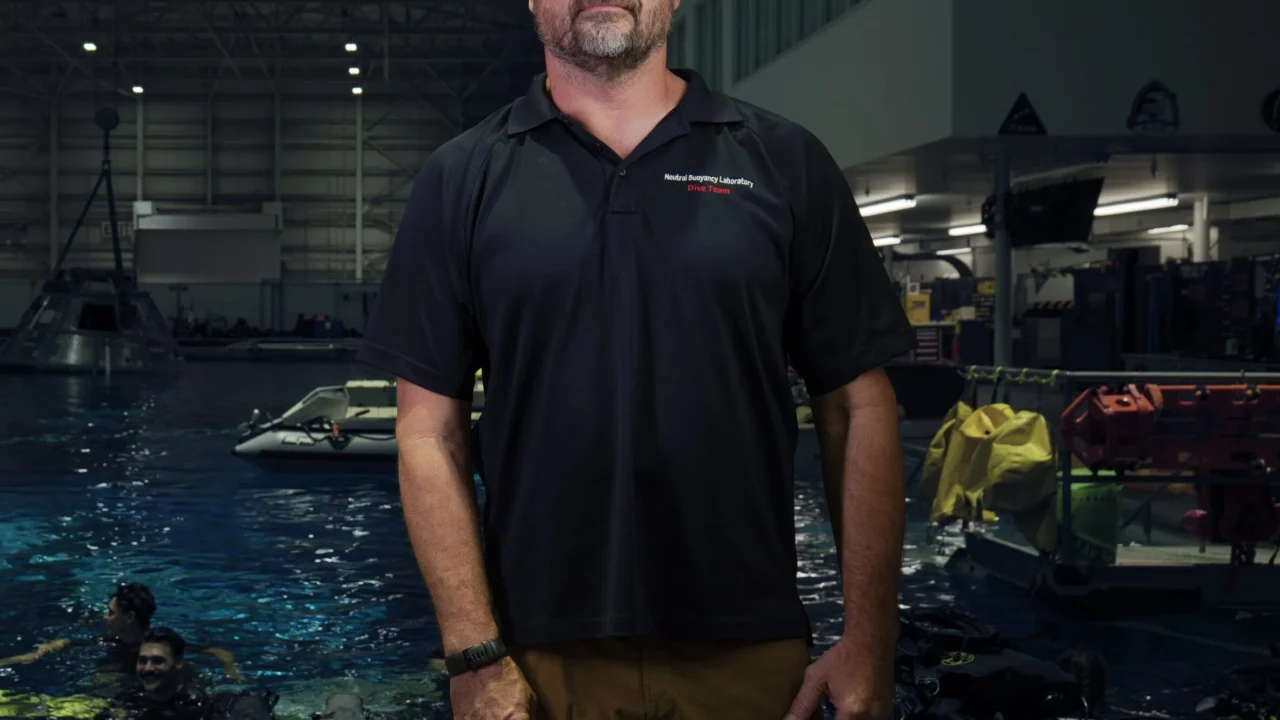
Tim Goddard, NASA’s open water lead, played a central role in the successful recovery of the Artemis II crew and Orion spacecraft after their return from lunar orbit. The mission concluded with a splashdown in the Pacific Ocean off the coast of San Diego, where Goddard and a joint NASA-U.S. Navy team managed the complex open water operations to safely retrieve both astronauts and spacecraft.
Orchestrating a Multifaceted Recovery Mission
As open water lead, Goddard is responsible for designing, certifying, and training the recovery teams alongside managing the necessary hardware. The operation involved a coordinated effort between six small boats, four helicopters, and a host Navy amphibious ship—all supported by more than 50 personnel distributed across surface vessels, airborne assets, and underwater teams. Goddard explained that the large-scale mission requires synchronized coordination of communications, vessel traffic control, medical support, and aviation, extending beyond just capsule retrieval to recovering the spacecraft in the Navy ship’s well deck hours later.
Extensive Training Ensures Mission Success
The recovery team prepared months in advance, performing extensive training at NASA’s Neutral Buoyancy Laboratory in Houston, one of the world’s largest indoor pools capable of simulating underwater operations. Training progressed from controlled bay conditions near San Diego to open ocean exercises mimicking the challenging environment expected on recovery day. Goddard emphasized the importance of repetition, saying, “When we do the real thing, it’s not their first time seeing it.”
A Veteran of Orion Recovery Operations
This mission marked Goddard’s third Orion recovery, having supported previous capsule retrievals during Exploration Flight Test-1 in 2014 and Artemis I’s uncrewed lunar test flight in 2022. Unlike prior missions focused solely on the spacecraft, Artemis II’s crew introduction shifted priorities to first ensuring astronaut safety before recovering the capsule.
Goddard’s extensive experience dates back to 2007 when he joined the initial Orion recovery team, following a 27-year career as a Navy diver and his subsequent NASA tenure beginning in the 1990s. “Over half of my time at NASA has been supporting this operation,” he noted. The addition of human crew added immense responsibility, making successful recovery a significant personal and professional milestone.
Why it matters
The Artemis II recovery exemplifies the complexity of safely returning astronauts from deep space missions, a critical capability as NASA pursues sustained lunar exploration. Successfully managing crew safety alongside spacecraft retrieval demonstrates refined operational readiness for future Artemis missions, advancing goals for human spaceflight beyond Earth orbit.
Sources
This article is based on reporting and publicly available information from the following source:
Read more Space & NASA stories on Goka World News.