
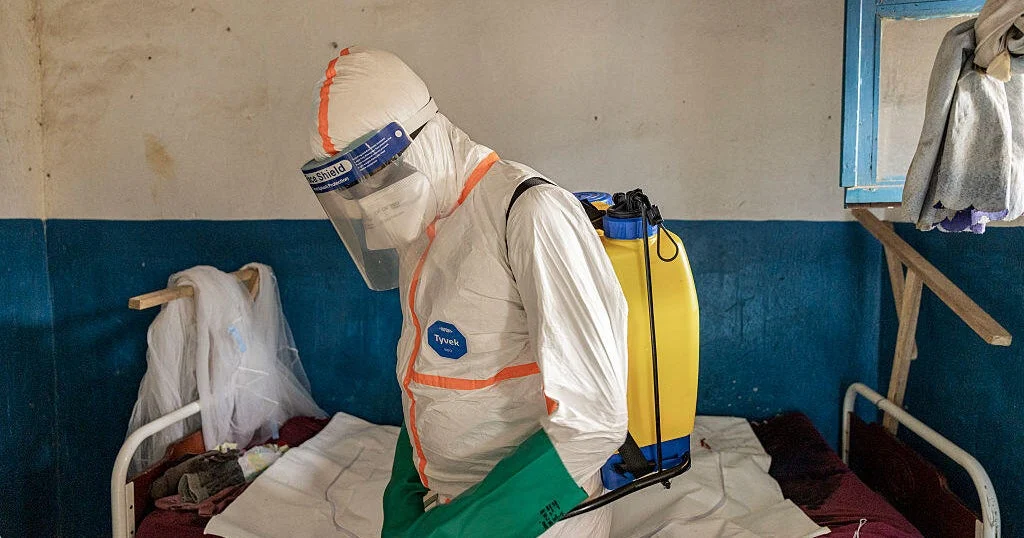
The Department of Homeland Security (DHS) will implement new entry restrictions starting Thursday for foreign travelers arriving in the United States from countries affected by the latest Ebola outbreak. Under the new rule, all U.S.-bound passenger flights carrying travelers who have been in Congo, Uganda, or South Sudan within the previous 21 days must land at Washington-Dulles International Airport.
The policy, directed by Homeland Security Secretary Markwayne Mullin, aims to concentrate public health resources at a single airport equipped to perform enhanced screening and monitoring to mitigate Ebola’s spread. Cargo flights are not subject to these restrictions.
A DHS spokesperson confirmed the measures to CBS News, stating that Customs and Border Protection (CBP) is “enhancing public health screening, travel monitoring, and health protection response activities” for travelers potentially exposed to Ebola. CBP is coordinating with airlines, international partners, and port-of-entry officials to manage and identify travelers at risk.
The DHS rule does not detail the specific screening or quarantine protocols that travelers will undergo upon arrival at Dulles. This move follows a Centers for Disease Control and Prevention (CDC) travel restriction announced Monday, which bars non-U.S. passport holders who traveled to Congo, Uganda, or South Sudan in the past 21 days from entering the United States. The relationship between the DHS directive and the CDC order remains unclear.
Current Ebola outbreak situation
On May 15, the Africa Centres for Disease Control and Prevention confirmed an Ebola outbreak in eastern Congo. The World Health Organization (WHO) reports at least 600 suspected cases and 139 suspected deaths associated with the outbreak. WHO Director-General Tedros Ghebreyesus noted the virus had likely been circulating undetected for some time before the announcement.
The outbreak involves the Bundibugyo strain of Ebola, which currently has no approved vaccines or treatments. WHO has declared the outbreak a public health emergency of international concern, although it does not meet criteria for a pandemic emergency.
Separately, a U.S. doctor working with a missionary organization in Congo contracted Ebola and was evacuated to Germany for treatment, while at least six Americans have reportedly been exposed to the virus.
Why it matters
The new DHS flight routing and health screening requirements reflect efforts to prevent the spread of Ebola into the United States amid a resurgence of the virus in central Africa. Centralizing international arrivals from Ebola-affected countries at Washington-Dulles enables concentration of public health resources and consistent application of protective measures. These measures aim to mitigate risks associated with travelers who may have been exposed to the virus before entering the country.
Sources
This article is based on reporting and publicly available information from the following source:
Read more US News stories on Goka World News.