
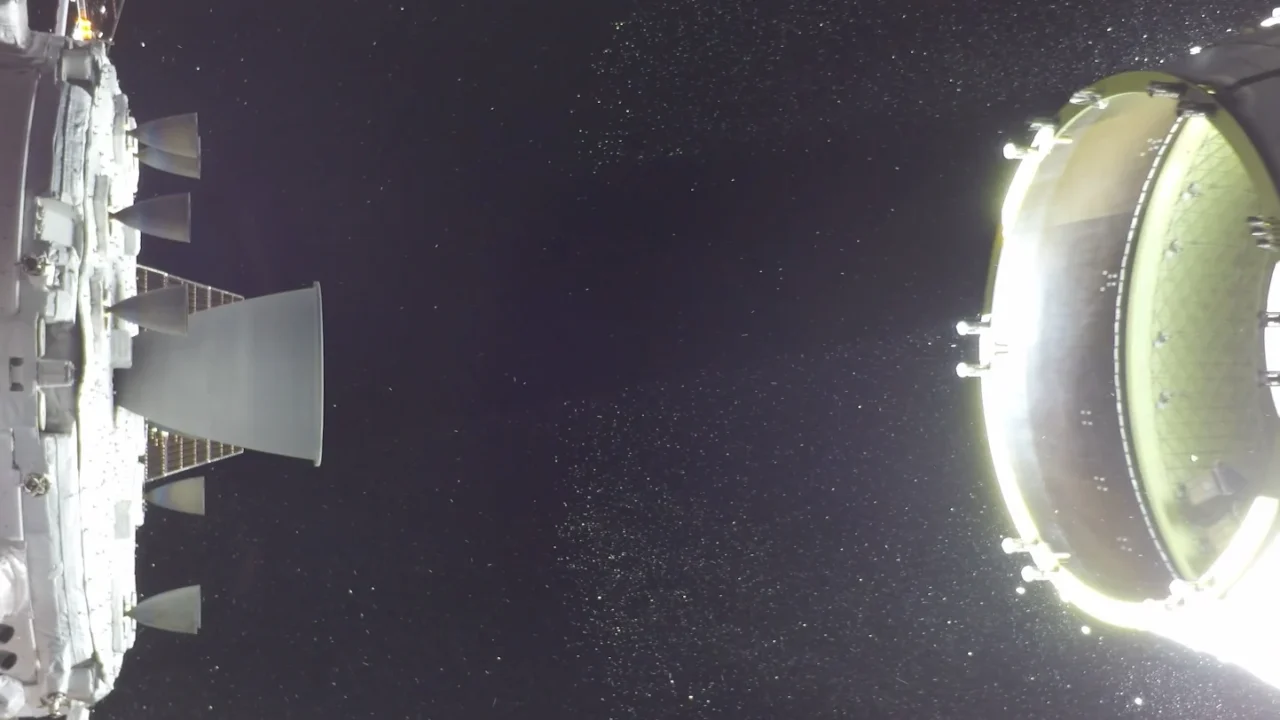
NASA has issued a request for information (RFI) inviting organizations to express interest in launching CubeSats on upcoming Artemis missions III, IV, and V. Responses are due by Monday, June 1, and the agency will use the feedback to plan future opportunities for CubeSat payloads aboard these lunar missions.
The Space Launch System (SLS) rocket and Artemis program offer unique platforms for scientific and technological investigations. “These missions provide great opportunities for teams to conduct investigations that contribute to the expansion of human space exploration,” said Courtney Ryals, acting manager of SLS payload integration at NASA’s Marshall Space Flight Center in Huntsville, Alabama.
NASA anticipates accommodating CubeSats sized at 6U and 12U, which refers to increments of 10 x 10 x 10 centimeters per unit. These nanosatellites would deploy either in Earth orbit or on a heliocentric disposal trajectory after Orion spacecraft separation from the rocket’s upper stage. There may also be opportunities for CubeSats to deploy on reentry trajectories from Earth orbit. The CubeSats would be released from a ring on the upper stage of the SLS rocket once the Orion capsule is operating independently.
NASA previously flew 10 CubeSats on the uncrewed Artemis I mission in 2022 and four CubeSats on the crewed Artemis II mission, deploying them following upper stage separation. Along with offering a ride to space as secondary payloads, NASA supports payload integration and engineering services for the CubeSats.
The Artemis program aims to push human exploration further on the Moon through increasingly challenging missions by astronauts. These efforts seek to advance scientific discovery, economic development, and establish a sustainable human presence on the lunar surface. Ultimately, Artemis missions are intended to lay the groundwork for the first crewed missions to Mars.
Why it matters
Including CubeSats as secondary payloads on Artemis launches enables cost-effective access to deep space and lunar environments for smaller scientific and technology demonstration missions. These deployments expand opportunities for research and innovation beyond primary crewed missions, accelerating knowledge and development critical for sustained space exploration.
Background
NASA’s Artemis program uses the Space Launch System rocket to send astronauts and payloads beyond Earth orbit. Artemis I marked the first uncrewed test launch in 2022, and Artemis II will be crewed. The program plans multiple missions with increasing complexity to the lunar surface and vicinity in preparation for future Mars exploration. CubeSats — small, standardized satellites — have been integrated into Artemis flights to leverage available payload capacity and advance a variety of mission objectives.
Sources
This article is based on reporting and publicly available information from the following source:
Read more Space & NASA stories on Goka World News.