
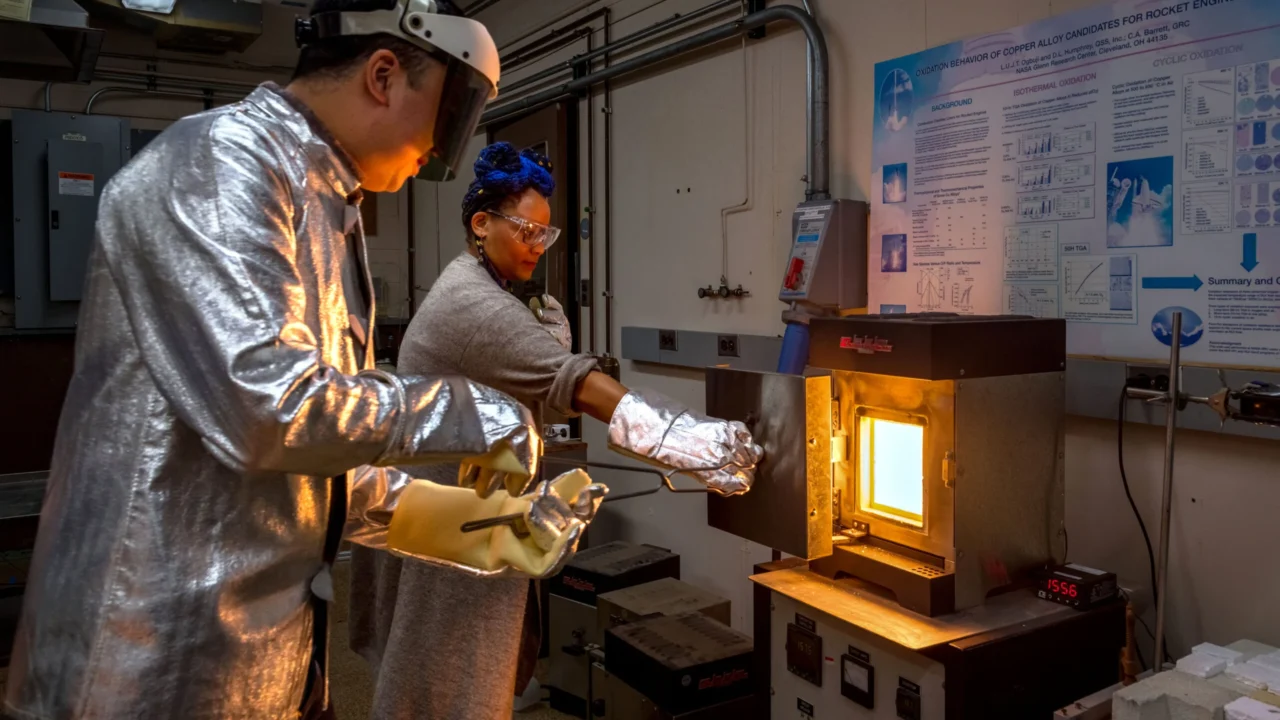
NASA scientists at Glenn Research Center have discovered a new material that resists corrosion from molten lunar dust, a critical step toward harnessing Moon resources for future space missions. This material could enable technologies to melt and process Moon rocks, extracting metals and oxygen for building infrastructure and supporting life support systems on the lunar surface.
The breakthrough came through a collaboration between Dr. Kevin Yu, a technologist at NASA’s Jet Propulsion Laboratory, and Dr. Jamesa Stokes, a materials research engineer at NASA Glenn. As part of a NASA graduate fellowship program, they studied interactions between simulated lunar dust and various compounds, seeking materials durable enough to withstand the extremely harsh conditions of molten Moon regolith.
Molten lunar dust, effectively crushed and melted Moon rock, is highly corrosive and reaches temperatures exceeding 2,900 degrees Fahrenheit. Common refractory materials typically degrade quickly under these conditions. However, after combining simulated Moon dust with scandium oxide and heat treating the mixture, the researchers identified an entirely new substance not previously cataloged in extensive materials databases.
“It’s basically lunar lava, and very corrosive,” said Dr. Yu. “The new material doesn’t corrode quickly and withstands the required extreme heat.” The substance initially appears as a pink powder and changes color during processing, providing a visual indicator of chemical reactions. While scandium oxide is relatively costly, the material’s production cost remains less than that of precious metals like platinum used in similar applications.
The new compound shows promise for use in pipes or basins that would hold molten lunar regolith, a key component of future technologies designed to extract valuable metals and oxygen directly on the Moon. Additionally, its light weight, low density, and excellent heat insulation compared to current jet engine coatings may provide terrestrial aerospace benefits.
Why it matters
This development could reduce payload weight for lunar missions by enabling in situ resource utilization (ISRU), eliminating the need to transport large quantities of materials from Earth. Efficient extraction and processing of lunar resources are essential for sustainable exploration and long-term human presence on the Moon.
By creating materials that survive extreme lunar environmental conditions, NASA advances both space exploration and aerospace engineering on Earth, potentially leading to improved heat-resistant coatings for jet engines.
Background
NASA’s efforts to utilize materials found on the Moon aim to support the agency’s Artemis program and future crewed lunar settlements. Extracting oxygen from lunar regolith can supply life support and rocket fuel, while local metal extraction could enable construction of habitats and infrastructure with reduced Earth launch costs.
Materials research funded by NASA’s Space Technology Mission Directorate and Aeronautics Research Mission Directorate plays a vital role in overcoming the challenges posed by the Moon’s harsh environment, including extreme temperatures and abrasive dust.
Sources
This article is based on reporting and publicly available information from the following source:
Read more Space & NASA stories on Goka World News.