
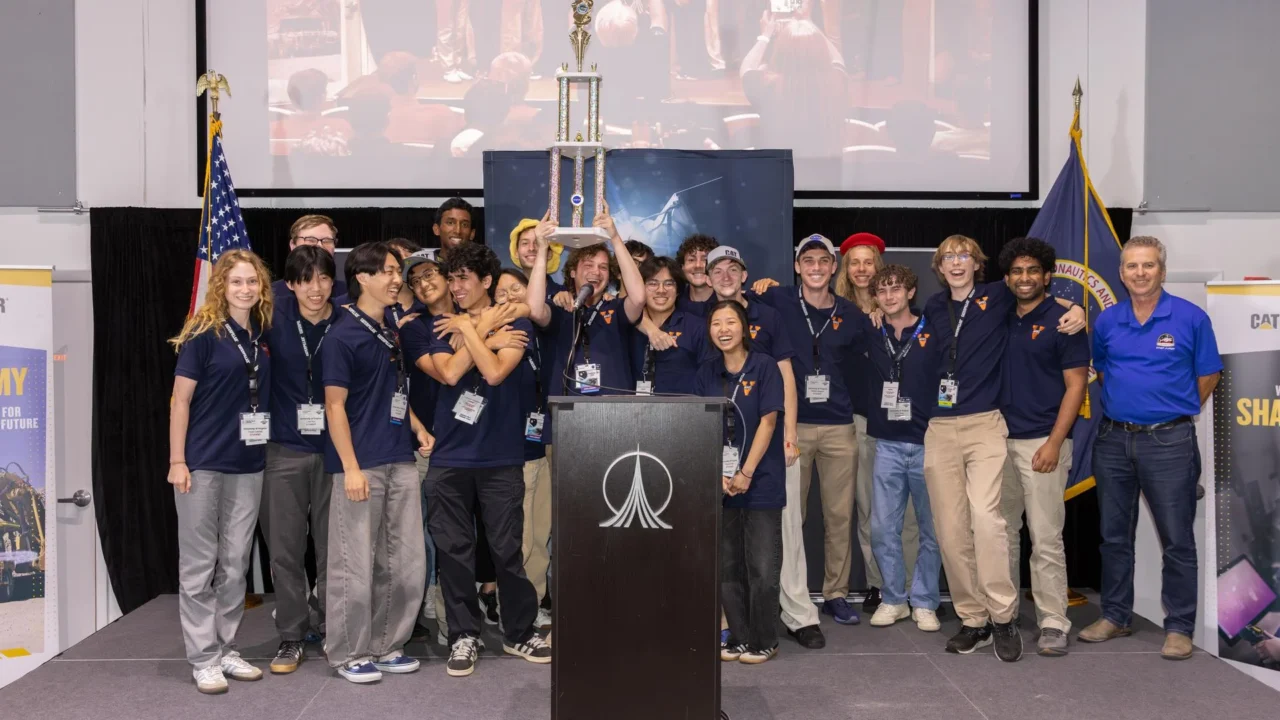
The University of Virginia secured the Off World Grand Prize at NASA’s 2026 Lunabotics Challenge, a nationwide competition where college teams develop robotic systems for lunar construction. The event highlights technologies critical to NASA’s Artemis program, aimed at establishing a permanent human presence on the Moon.
What happened
The 2026 Lunabotics Challenge gathered 47 collegiate teams at the Kennedy Space Center Visitor Complex in Florida, where students demonstrated robots capable of excavating, transporting, and building with simulated lunar soil. The competition tested autonomy, energy efficiency, communications, and engineering design under simulated lunar conditions.
The University of Virginia team excelled across multiple criteria, including STEM industry planning, systems engineering, presentations, and robotic construction. Despite losing a wheel during the final round, the team adapted by reconfiguring their robot to operate on three wheels, ultimately achieving the highest overall score.
The challenge proceeded in stages, beginning last September with design submissions, followed by qualification rounds at the University of Central Florida’s Exolith Lab. The top 10 teams advanced to the finals in May.
Notably, the number of fully autonomous robots increased from 12 last year to 27 this year, indicating rapid progress in the development of independent robotic systems capable of lunar operations.
Why it matters
The Lunabotics Challenge contributes to NASA’s preparation for sustained lunar exploration by fostering technologies essential for constructing and maintaining Moon bases. Autonomous and adaptable robots capable of manipulating lunar regolith will be instrumental in protecting habitats, supporting power infrastructure, and shaping the lunar surface for human activities.
This competition also serves as a critical pipeline for training future aerospace engineers and researchers who may directly contribute to NASA’s Artemis missions and other lunar initiatives.
Robotic systems like the Infrastructure Pilot Excavator (IPEx), developed at NASA’s Swamp Works to dig and transport lunar soil, will benefit from the innovative ideas demonstrated in Lunabotics.
Background
NASA’s Lunabotics Challenge, now in its 17th year, is an annual, two-semester competition where university teams design, build, and test prototype lunar construction robots using NASA systems engineering principles. It mirrors real-world engineering challenges involved in building infrastructure on the Moon.
The challenge aligns with NASA’s Artemis program, which aims to return humans to the Moon, establish a sustainable presence, and prepare for future missions to Mars. Autonomous robotic construction is a key step toward reducing risks and costs of human lunar operations.
Past Lunabotics competitions have progressively increased in complexity and technical demands, reflecting advancements in robotics and autonomy necessary for off-Earth environments.
Sources
This article is based on reporting and publicly available information from the following source:
Read more Space & NASA stories on Goka World News.