
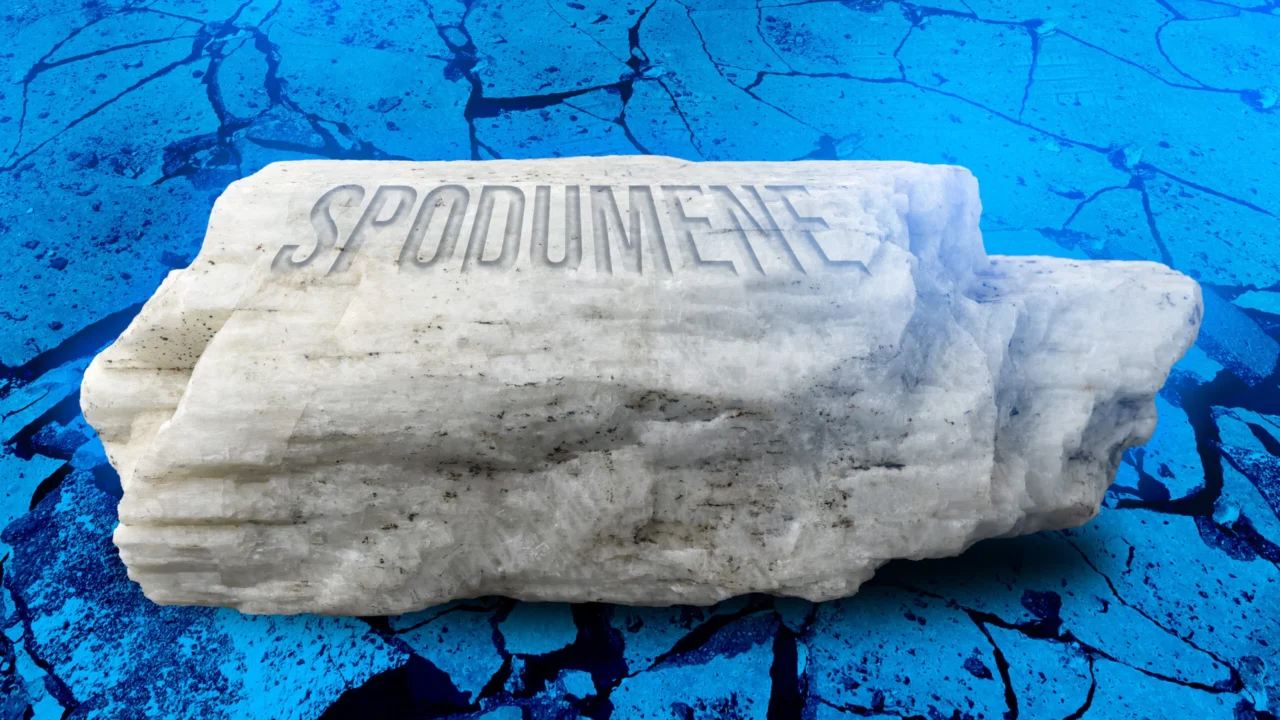
MIT researchers have developed a novel low-temperature process to extract battery-grade lithium from hard rock minerals, promising to reduce costs and environmental impacts associated with traditional lithium mining.
What happened
Lithium demand has surged due to its critical role in lithium-ion batteries that power electric vehicles and portable devices. While regions like the U.S., Europe, and Australia possess large lithium reserves, China controls most of the lithium refining industry. Extracting lithium from hard rock minerals, particularly spodumene, currently involves energy-intensive methods such as baking rock at over 1,000 degrees Celsius followed by chemical leaching, which generates significant waste and high costs.
The MIT team developed a closed-loop chemical process using ammonium fluoride in a water-based solution to dissolve spodumene at room temperature, a significant departure from existing high-heat extraction methods. This solvent dissolves silica first, allowing the separation of lithium, aluminum, and silica into valuable products rather than waste. Lithium is recovered as battery-grade lithium carbonate and lithium hydroxide; aluminum is separated as smelter-grade alumina, and silica is processed into cement additives.
The reagents and solvents used are recycled within the process, minimizing waste and lowering operating costs. Researchers estimate this method could halve the cost compared to traditional hard rock lithium extraction and make it competitive with lithium extraction from brine water. The process has been tested on 17 different spodumene sources worldwide, confirming its applicability.
The research team has spun off a company, Rock Zero, to begin commercial scaling of the technology. Their work was published in the journal Science.
Why it matters
This innovation addresses several key challenges facing the lithium supply chain amid increasing global demand for electric vehicle batteries and renewable energy storage. By reducing energy consumption and chemical waste, the process offers a more sustainable alternative to traditional hard rock lithium extraction, which is currently dominated by China and poses environmental concerns.
Additionally, the ability to process abundant hard rock deposits domestically in countries like the U.S. could enhance supply chain security for critical battery materials and reduce dependence on foreign refining operations. The production of multiple valuable co-products from the lithium-containing rock also promises economic benefits, potentially opening new markets for mining by-products.
Background
Traditional lithium extraction from hard rock is a complex, energy-intensive operation involving thermal treatment and chemical processing, which can be costlier than extracting lithium from brine lakes but remains crucial due to brine supply limitations. Efforts to develop more efficient, lower-impact methods have been ongoing but have yet to yield commercially viable alternatives.
The MIT research builds on earlier insights involving ammonium fluoride’s unique ability to dissolve silica—a key component of spodumene—and enables a low-temperature, solvent-recycling process. The team’s approach is inspired by chemical etching techniques and aims to produce lithium salts that meet industry purity standards.
Supported by agencies including the Department of Energy’s ARPA-E and the National Science Foundation, this work marks a significant step towards scalable, sustainable lithium mining technology.
Sources
This article is based on reporting and publicly available information from the following source:
Read more Science & Technology stories on Goka World News.