
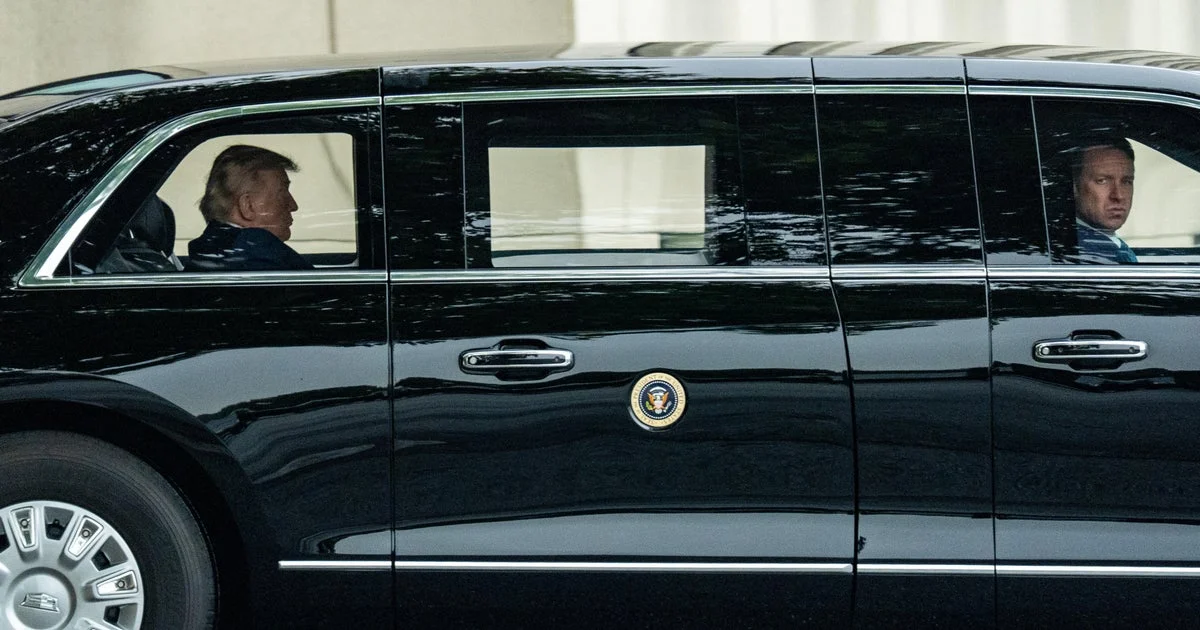
President Donald Trump visited Walter Reed National Military Medical Center during a routine six-month checkup but did not meet any of the 14 American troops recovering there from injuries sustained in the war with Iran, according to family members and a military official.
What happened
During his visit to Walter Reed, President Trump met with some service members and medical staff but specifically did not see soldiers injured in Operation Epic Fury, the Iran war launched earlier this year. The White House confirmed the visit but declined to specify whether any of the Iran-war wounded troops were included. A White House spokesperson said, “President Trump was honored to meet our amazing service members and medical staff,” but offered no explanation for the omission.
Among those not seen by the president is Sergeant Cory Hicks, who was severely wounded in an Iranian drone strike on a U.S. base in Kuwait in March. The attack killed six soldiers and injured over 20. Hicks sustained a lacerated kidney, a severed spleen, and a traumatic brain injury. He is one of six Kuwait attack survivors still recovering at Walter Reed.
Trump’s visit contrasted with his Memorial Day remarks the day before, where he honored 13 soldiers killed in the Iran conflict, calling them “wonderful souls” who sacrificed to prevent Iran from obtaining nuclear weapons. In a subsequent Cabinet meeting, he reiterated condolences for their losses but made no mention of the wounded soldiers.
Why it matters
It is standard practice for U.S. presidents to visit and support wounded troops recovering from combat injuries, symbolizing national recognition and care for their sacrifices. Trump’s omission of the Iran-war wounded during his Walter Reed visit raised questions about his engagement with troops affected by a conflict he initiated. Given the significant injuries from recent attacks, including traumatic brain injuries and fatal drone strikes, direct acknowledgment often plays a critical role in veterans’ morale and public perception of military leadership.
Trump’s past comments minimizing injured service members’ wounds and controversy over Purple Heart awards have heightened scrutiny over his relationship with the military wounded community. With over 400 troops injured in the Iran war—90% of whom have returned to duty—recognition of their injuries remains a sensitive and important topic.
Background
The conflict with Iran began earlier this year after escalating tensions and attacks on U.S. military positions in the Middle East. Operation Epic Fury includes multiple casualties from Iranian drone strikes and other engagements. President Trump previously attended dignified transfers for soldiers killed in the Kuwait attack and other incidents related to the war.
In the past, presidents such as George W. Bush made public visits to wounded soldiers at Walter Reed as demonstrations of support. Trump visited the medical center in 2017 during his first term to award the Purple Heart to a wounded Afghanistan soldier but has faced criticism for downplaying the severity of injuries suffered by troops in Iranian strikes.
Casualties from the Kuwait drone attack in March included six fatalities and more than 20 wounded. Many recovering soldiers face not only physical injuries but also significant mental health challenges, grappling with loss and trauma from the attacks.
Sources
This article is based on reporting and publicly available information from the following source:
Read more US News stories on Goka World News.