
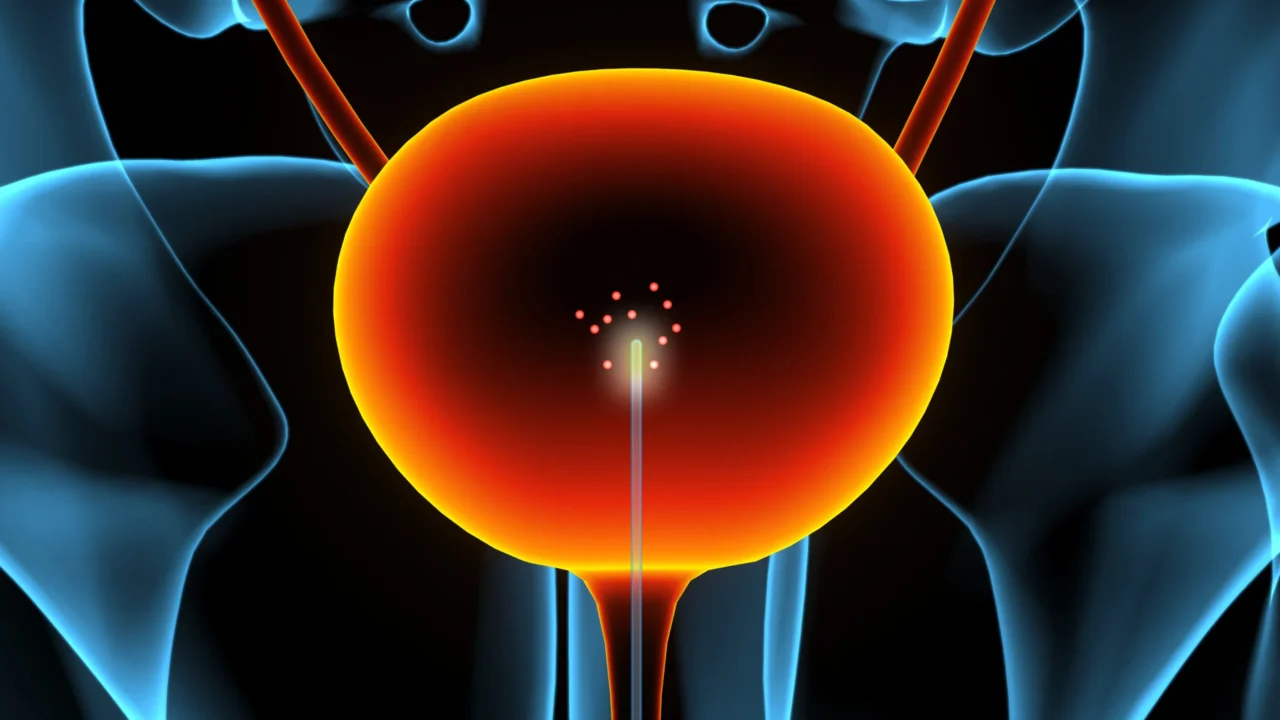
MIT researchers have developed a novel catheter coated with nanosensors capable of detecting bladder cancer biomarkers directly inside the bladder with unprecedented sensitivity. This advancement could enable much earlier tumor detection and precise localization compared to current methods.
What happened
Bladder cancer affects about 85,000 Americans annually and is known for its high recurrence rate, with roughly half of treated patients experiencing tumor regrowth within five years. Existing monitoring techniques, such as urinalysis and cystoscopy, often detect tumors only after they have progressed significantly. To address this, the MIT team created a urinary catheter coated with carbon nanotube-based nanosensors designed to detect nuclear matrix protein 22 (NMP-22), an FDA-approved biomarker for bladder cancer.
The catheter integrates a rotating ball lens that emits laser light and captures fluorescent signals from the sensors. When the targeted biomarker interacts with the synthetic antibody coatings on the nanotubes, it alters the fluorescent properties, allowing researchers to create a chemical image pinpointing the biomarker’s location in the bladder lining.
In preclinical animal tests, this method was shown to be up to 180 times more sensitive than traditional urinalysis, detecting tumors as small as 16 square millimeters. By sensing NMP-22 near the tumor site, the nanosensor catheter overcomes issues of biomarker dilution and degradation common with urine-based tests.
Why it matters
Early detection and precise localization of bladder cancer tumors can significantly improve patient outcomes and reduce treatment costs. Currently, patients often undergo invasive cystoscopy exams annually or more frequently for monitoring, which detect tumors only when they are visible. The MIT nanosensor catheter offers a less invasive, more sensitive, and potentially faster diagnostic tool that can detect cancer recurrence at an earlier stage.
Improved diagnostic precision also facilitates targeted treatment or biopsy, which may reduce the frequency and cost of hospital visits. The approach’s chemical imaging capability represents a significant innovation in cancer monitoring by imaging molecular signals rather than relying solely on visual tumor identification.
Background
Carbon nanotubes emit near-infrared fluorescence when exposed to laser light, and can be functionalized with polymers acting as synthetic antibodies to detect specific molecules. Michael Strano’s lab at MIT has pioneered such nanotube sensors capable of detecting various targets including viral proteins and metabolic molecules.
NMP-22 is a well-established biomarker for bladder cancer but is challenging to detect early in urine samples due to low concentrations from dilution and degradation. Deploying sensors directly inside the bladder overcomes these obstacles.
The researchers plan to miniaturize the imaging system for clinical use and integrate the sensors with cystoscopes, potentially expanding this technology to detect other diseases by tailoring the sensor coatings to different molecular targets.
Sources
This article is based on reporting and publicly available information from the following source:
Read more Science Discoveries stories on Goka World News.