
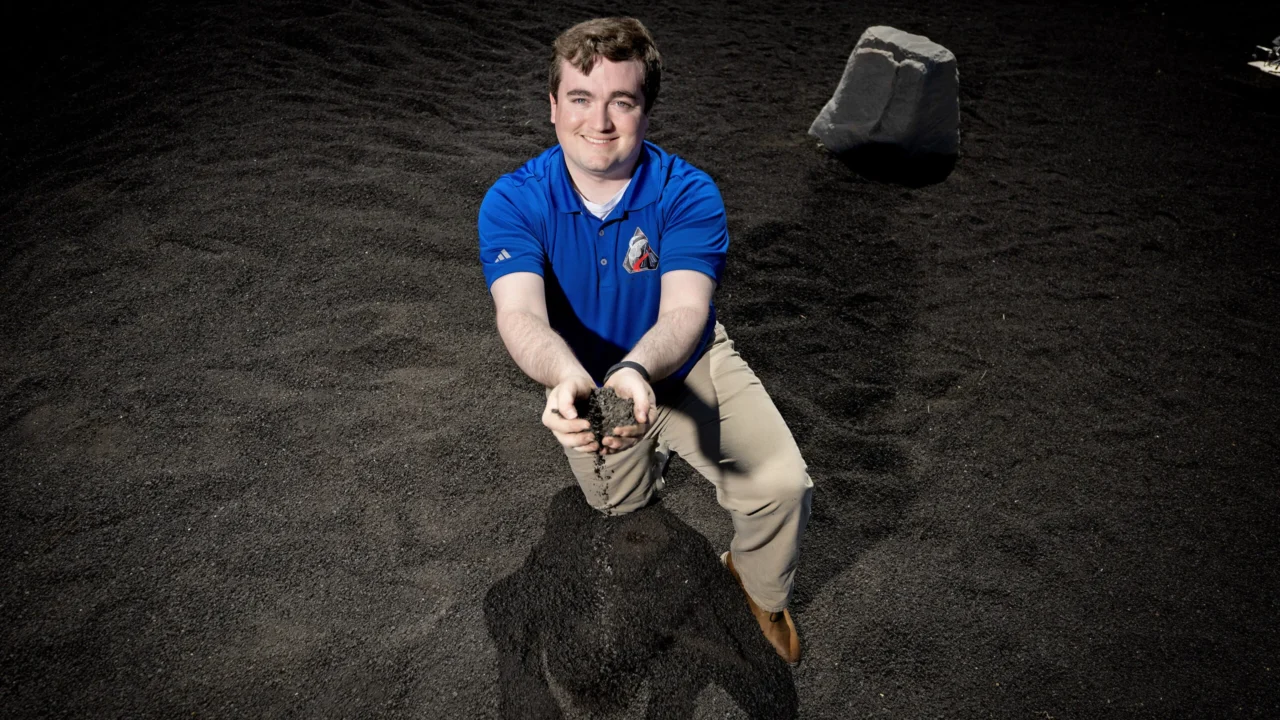
NASA aerospace engineer Daniel Stubbs is developing models to understand how rocket engine plumes interact with the Moon’s surface, aiming to improve safety for Artemis astronauts during landing and takeoff.
What happened
Daniel Stubbs, an aerospace engineer at NASA’s Marshall Space Flight Center in Huntsville, Alabama, specializes in studying the effects of rocket exhaust plumes on the lunar regolith—the abrasive layer of dust and rock fragments covering the Moon. This research is critical for NASA’s Artemis program, which intends to return astronauts to the Moon by 2028 using larger and more powerful lunar landers than those used in the Apollo era.
Stubbs’ work involves modeling how rocket plumes interact with the lunar surface during landings and takeoffs. Unlike Apollo missions, where descent stages were left on the surface, Artemis landers will lift off directly using the same engines employed for landing, creating new challenges related to dust erosion, surface cratering, and debris clouds.
The plume-induced dust clouds can obscure the landers’ instruments, potentially impairing guidance systems and increasing landing risks. Additionally, the dust kicked up during ascent could damage scientific instruments or other assets deployed on the lunar surface.
NASA’s Human Landing System program is conducting extensive ground-based testing of plume and dust interactions in a 60-foot space simulator at Langley Research Center. The testing replicates lunar surface conditions to evaluate aerodynamic forces, heat effects, and risks such as lander instability from crater formation.
Why it matters
Understanding plume-surface interactions is vital for ensuring the safety and success of Artemis missions. Accurate modeling helps engineers design landers that can withstand lunar dust erosion and avoid landing hazards like unstable surfaces or visibility loss. This research also protects valuable scientific equipment on the Moon and supports reliable crewed missions.
The insights gained will contribute to more robust lunar exploration infrastructure, enabling longer-duration missions and serving as groundwork for future crewed trips to Mars.
Background
The Apollo missions revealed that lunar regolith is composed of fine, sharp particles formed by meteoroid impacts over millions of years, posing significant hazards to astronauts and equipment. New Artemis landers will be heavier and use multiple engines, intensifying the effects of rocket exhaust plumes on the surface.
Stubbs began this line of research during graduate school through a NASA Early Stage Innovations grant and continues it as a NASA engineer. His efforts are part of broader initiatives by NASA to build the Human Landing System capable of supporting sustainable lunar exploration under the Artemis program.
Sources
This article is based on reporting and publicly available information from the following source:
Read more Space & NASA stories on Goka World News.