
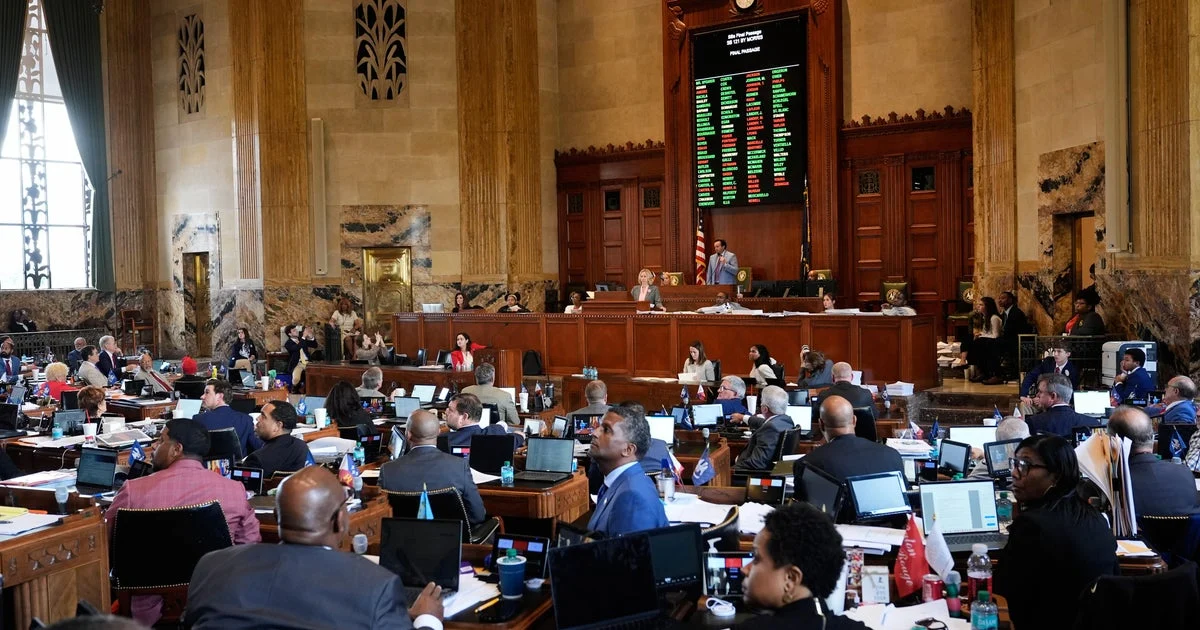
Louisiana lawmakers passed a new congressional map on May 29 designed to gain an additional Republican seat while maintaining only one of the state’s two majority-Black districts as Democratic-held. Republican Governor Jeff Landry is expected to sign the map into law.
What happened
The approval comes a month after the U.S. Supreme Court ruled the state’s previous congressional map an illegal racial gerrymander, invalidating a plan that was intended to comply with the federal Voting Rights Act. The Court’s decision weakened key provisions of the 1965 Act and prompted Louisiana Republicans to redraw districts to enhance GOP electoral prospects.
Currently, Louisiana’s map — created through court order in 2024 — includes two majority-Black districts, each represented by a Democrat. The new map reduces Democratic-held seats to one majority-Black district located around New Orleans, where Rep. Troy Carter serves, while reshaping Rep. Cleo Fields’ district by incorporating more predominantly white areas around Baton Rouge and southern Louisiana.
Republicans debated aiming for a 6-0 majority but instead settled on a 5-1 split to protect incumbent GOP Rep. Mike Johnson’s seat and avoid risking losses by adding Black voters to Republican districts. The new map shifts some Baton Rouge areas to the New Orleans district, strengthening Democratic voters there while making other districts more favorable to Republicans.
Several lawsuits challenging the new map are anticipated. Democrats argue that it packs Black voters into a single district, potentially constituting another racial gerrymander despite the Supreme Court’s ruling. Plaintiffs from the earlier court case have also criticized the legislature for maintaining only one majority-Black district.
Why it matters
This redistricting battle represents a broader national conflict over congressional boundaries in Republican-controlled southern states following the Supreme Court’s rollback of the Voting Rights Act’s protections. The map reshaping directly affects Louisiana’s political balance, aiming to reinforce Republican representation ahead of the midterm elections. The state’s adjustments mirror efforts in Florida, Tennessee, Alabama, and elsewhere where GOP lawmakers seek to maximize electoral advantage by redrawing districts at the expense of Black voting power.
The outcome in Louisiana will influence the broader U.S. House majority contest. While Republicans see potential gains of up to 14 seats from redistricting nationwide, Democrats expect to pick up some seats in states like California and Utah. The Supreme Court’s intervention has intensified legal and political fights over representation and voting rights.
Background
The original 2024 court-ordered map was intended to comply with the Voting Rights Act by creating two majority-Black congressional districts in Louisiana. After the Supreme Court’s April 30 ruling struck down that map as a racial gerrymander, Governor Landry delayed the state’s primary to allow time for a new map.
Louisiana is one of several southern states adjusting congressional boundaries to consolidate Republican strength following the Supreme Court decision. Florida swiftly enacted a new map that could add four Republican seats, Tennessee redrew districts to target majority-Black areas, and Alabama is engaged in ongoing legal battles over attempts to diminish Black voting influence in favor of GOP gains. South Carolina chose not to redraw districts despite political pressure.
Sources
This article is based on reporting and publicly available information from the following source:
Read more Politics stories on Goka World News.