
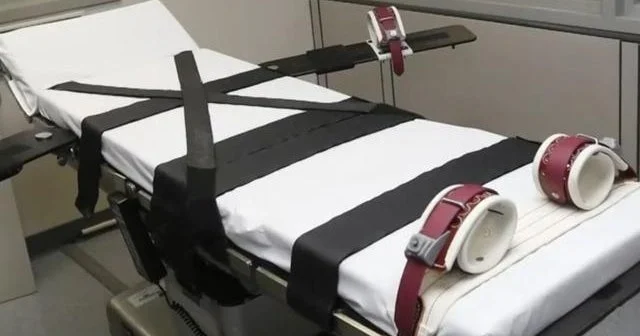
A federal judge in Alabama has ruled that executions by nitrogen gas do not violate the constitutional prohibition against cruel and unusual punishment, rejecting a death row inmate’s challenge to the execution method.
What happened
U.S. District Judge Emily C. Marks issued the ruling on Thursday following the first bench trial in the country focused on the constitutionality of nitrogen gas executions. The method, introduced in 2024, involves replacing breathable air with pure nitrogen after strapping a respirator to the inmate’s face, causing death due to oxygen deprivation. So far, eight people have been executed by this method—seven in Alabama and one in Louisiana.
The challenge was brought by Jeffery Lee, a 58-year-old Alabama death row inmate scheduled for execution by nitrogen gas on June 11. Lee argued that the method causes excessive suffering, but the judge found that despite causing “severe air hunger” lasting one to three minutes, the practice does not meet the constitutional threshold for cruel and unusual punishment under the Eighth Amendment.
Lee’s attorneys have indicated plans to appeal the decision. Meanwhile, Alabama Attorney General Steve Marshall praised the ruling, emphasizing that the courts deferred capital punishment decisions to legislative authorities.
Testimonies during the trial included differing perspectives on inmates’ reactions during executions, such as shaking, which some lawyers argued reflected distress while others labeled involuntary. Notably, the last nitrogen gas execution in Alabama took over 30 minutes.
Why it matters
This ruling marks a significant legal precedent as nitrogen gas executions become an increasingly utilized method amid drug shortages impacting lethal injection availability. The decision affirms that, according to current constitutional interpretations and Supreme Court precedents, nitrogen hypoxia does not constitute cruel and unusual punishment. It clears the way for Alabama and other states authorizing nitrogen gas executions to continue using the method despite ongoing ethical and legal debates.
Background
Nitrogen gas executions were first introduced in Alabama in 2024 as an alternative to traditional lethal injections. The method involves removing oxygen and replacing it with nitrogen to cause death by hypoxia. Five states have authorized nitrogen gas for executions, but only Alabama and Louisiana have carried out executions using it.
Jeffery Lee was convicted of capital murder for a 1998 double homicide during a pawn shop robbery in Orrville, Alabama. Although a jury recommended life imprisonment, a judge sentenced him to death under a judicial override practice that Alabama ended in 2017. His case highlights ongoing controversies surrounding the death penalty and execution protocols.
Sources
This article is based on reporting and publicly available information from the following source:
Read more US News stories on Goka World News.