
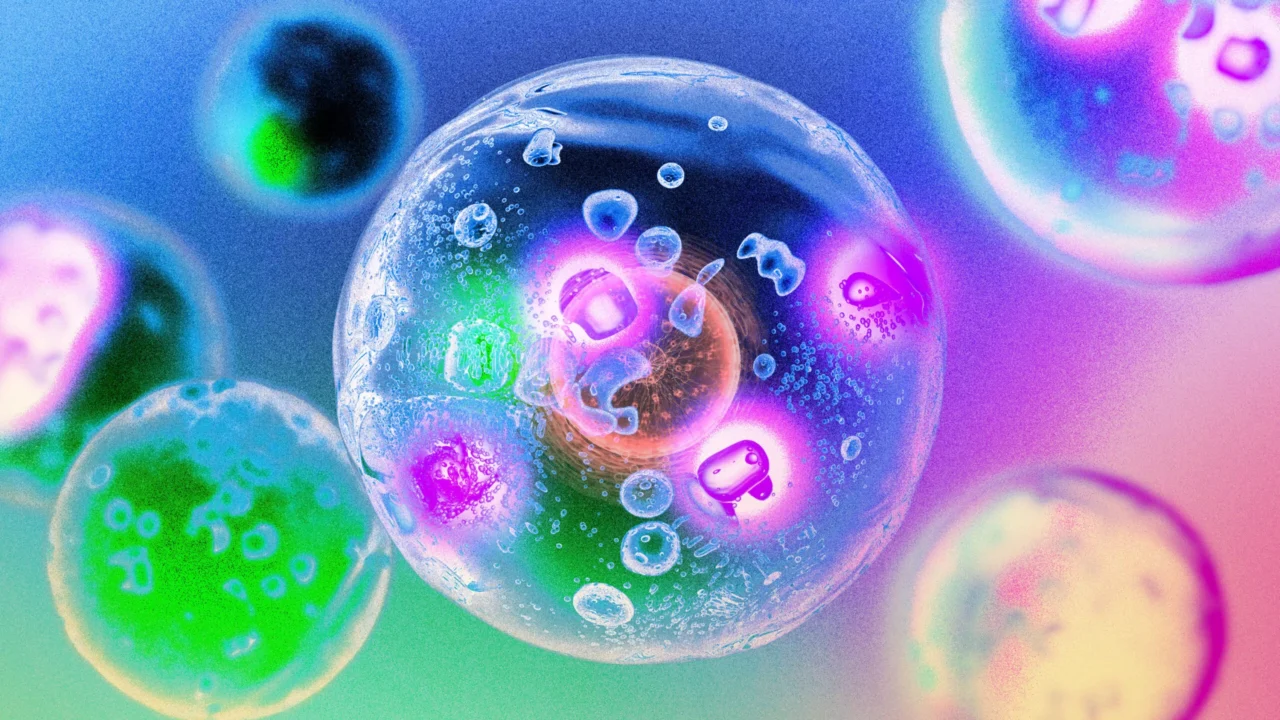
MIT researchers have demonstrated that enzymes called kinases accelerate cellular reactions by assembling into dense droplets through a process known as phase separation. This condensation optimizes biochemical conditions, speeding up kinase activity and influencing cell signaling pathways, a discovery with potential implications for cancer treatment and drug design.
What happened
Biologists have established that proteins inside cells can separate into concentrated droplets similar to oil droplets in vinegar, organizing cellular components. The new MIT study focused on kinases, enzymes that regulate signaling by adding phosphate groups to proteins. The researchers showed that phase separation enables kinases to form droplets that increase their biochemical activity.
The team studied focal adhesion kinase (FAK), which activates growth and survival signals when cells attach to their surroundings. By overexpressing FAK in unattached cells, they triggered droplet formation, unexpectedly activating growth signals independent of environmental cues. This suggests that in cancer cells, excessive FAK levels can cause persistent signaling through droplet formation, potentially promoting uncontrolled proliferation and metastasis.
The researchers also examined kinases Mst2 and Abl, finding that droplet formation similarly enhanced their activity and altered their phosphorylation targets. These results indicate droplets can broaden kinase functions beyond typical patterns.
Further analysis revealed that the droplets concentrate ATP, the phosphate source kinases use, facilitated by positively charged regions on kinases attracting negatively charged ATP molecules. Machine learning predicted nearly half of human kinases could form such droplets based on their charge properties.
Why it matters
This discovery clarifies a fundamental mechanism cells use to regulate enzymatic signaling, highlighting how spatial organization through droplet formation controls kinase function. It sheds light on pathological processes like cancer, where kinase overactivity through phase separation may drive disease progression.
Understanding how kinases form and function within these droplets opens avenues for precise drug targeting. By designing therapies that disrupt harmful droplet formation or localize drugs specifically within these compartments, it may be possible to reduce off-target effects and improve cancer treatments.
Background
Phase separation in cells, identified within the past decade, refers to the formation of protein-rich droplets that compartmentalize cellular functions without membranes. Kinases play vital roles in transmitting signals by phosphorylation and can self-activate through autophosphorylation.
Previous studies indicated that kinase spatial organization influences signaling efficacy, but the role of droplet formation was not fully understood. This study builds on that knowledge by linking phase separation directly to enzymatic activity and pathway regulation, particularly in cancer-related contexts.
Sources
This article is based on reporting and publicly available information from the following source:
Read more Science Discoveries stories on Goka World News.