
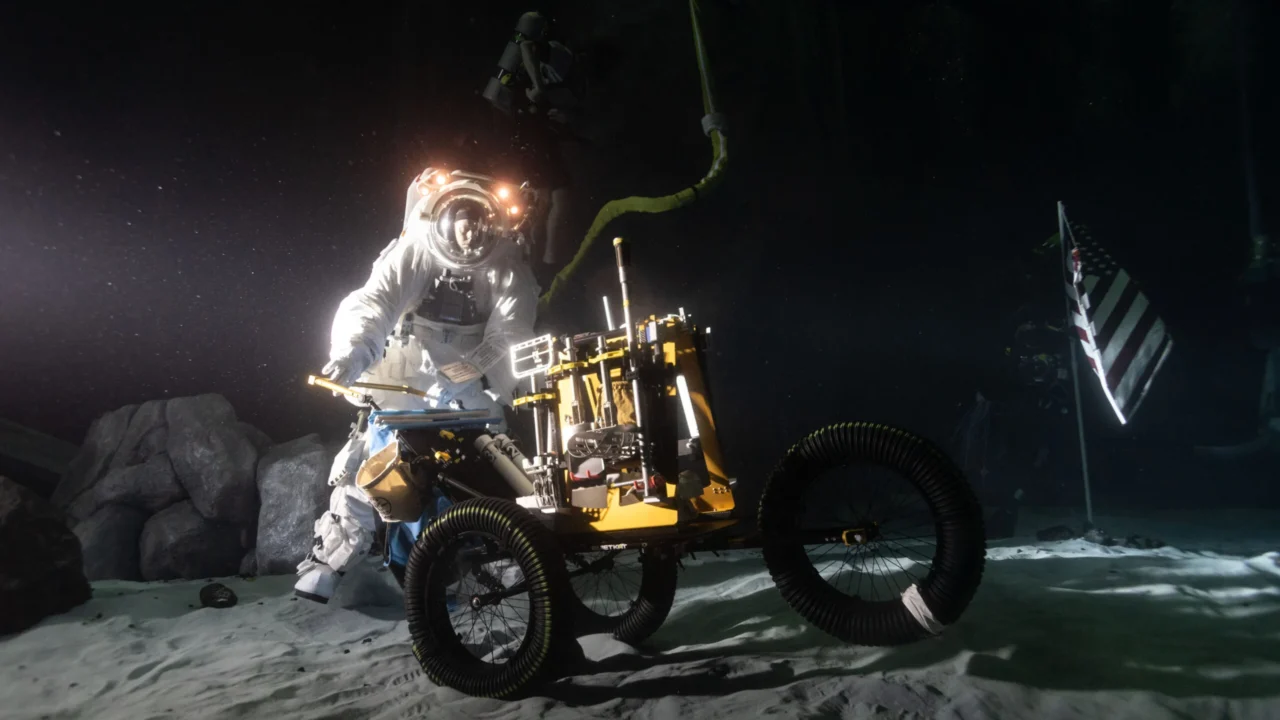
Scott Wray, NASA’s Artemis Extravehicular Activity (EVA) training lead, is responsible for preparing astronauts to perform spacewalks on the lunar surface, a challenge NASA has not faced for over five decades. His work focuses on developing new techniques, tools, and training curricula tailored for the Artemis missions to the Moon.
What happened
Wray’s role centers on training Artemis crew members for lunar EVAs involving new spacesuits, vehicles, and the Moon’s harsh surface environment. Unlike previous spacewalks on the International Space Station (ISS), lunar EVAs will require astronauts to walk rather than translate using handholds, necessitating different mobility skills and training methods.
The training includes geology education, covering impact craters, volcanology, sample collection, and traverse planning, to ensure astronauts conduct effective scientific exploration alongside EVA operations. NASA’s team employs multiple facilities and technologies, including the Neutral Buoyancy Laboratory for underwater simulation of microgravity, the Active Response Gravity Offload System for mobility practice, virtual reality, lighting labs simulating lunar conditions, geology field sites, and suit simulators for emergency response training.
Before becoming Artemis EVA training lead, Wray accumulated more than 16 years of experience at NASA’s Johnson Space Center, supporting spacewalks during the Space Shuttle and ISS programs. He also served as a flight controller during notable events, such as the 2013 incident where astronaut Luca Parmitano’s spacesuit helmet began filling with water, underscoring the critical need for vigilance and adaptability in human spaceflight.
Why it matters
Preparing astronauts for lunar EVAs is crucial as NASA’s Artemis program aims to return humans to the Moon and establish a sustainable presence. The unique challenges posed by lunar gravity, surface terrain, and scientific mission goals require innovative training that builds on decades of prior EVA knowledge while adapting to new operational realities.
These efforts not only ensure astronaut safety and mission success but also lay the groundwork for future exploration beyond the Moon, including Mars. By combining technical skills and scientific expertise, the Artemis training program enhances NASA’s capability to conduct complex exploration while managing risks in uncharted environments.
Background
Scott Wray’s interest in spacewalks began in childhood, and he joined NASA after studying aerospace engineering. His early career involved hands-on support for space shuttle and ISS EVAs, including developing repair procedures and tools. Transitioning to a civil servant in 2021, he shifted focus to accommodate a more diverse astronaut corps and new EVA paradigms.
Artemis represents NASA’s next generation of human spaceflight missions, aiming not only to land astronauts on the Moon but also to conduct extensive scientific research that had not been possible during earlier lunar missions in the 1960s and ’70s. Wray’s leadership in EVA training ensures the crew’s readiness for these complex tasks in a challenging new setting.
Sources
This article is based on reporting and publicly available information from the following source:
Read more Space & NASA stories on Goka World News.