
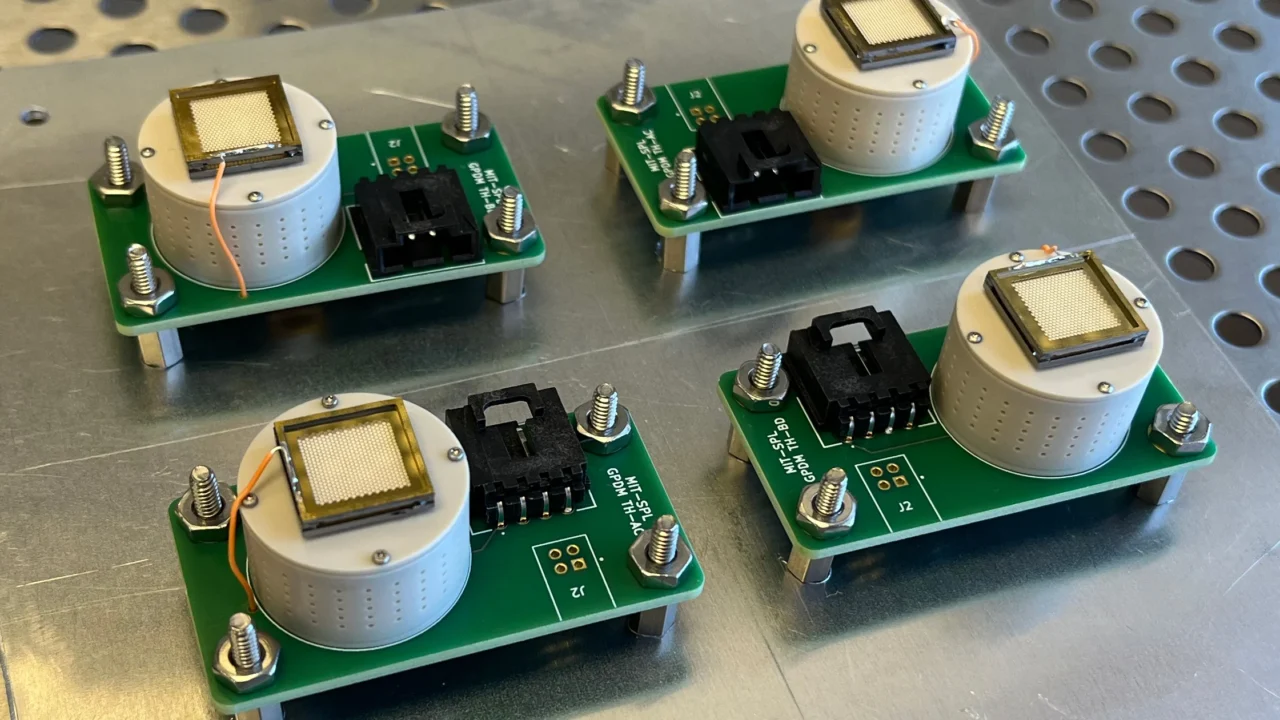
MIT engineers have developed a propulsion system that integrates chemical and electric thrusters powered by a single propellant, promising faster and more fuel-efficient small satellites. This innovation could enable smaller spacecraft to perform a wider range of maneuvers, from rapid bursts to precise adjustments, optimizing mission flexibility and efficiency.
What happened
The new propulsion technology centers on a “green monopropellant” called Advanced SpaceCraft Energetic Non-Toxic propellant (ASCENT), initially developed by the U.S. Air Force for chemical thrusters. MIT researchers demonstrated that this ionic liquid fuel can also effectively power electrospray thrusters—tiny electric propulsion devices that use electric fields to eject charged particles, providing highly precise and fuel-efficient thrust.
By combining chemical and electrospray thrusters fueled from the same ASCENT tank, MIT aims to equip small satellites, such as CubeSats, with a versatile propulsion system capable of both quick, powerful maneuvers and gradual, accurate adjustments.
The team is collaborating with NASA on the upcoming Green Propulsion Dual Mode mission, which will launch a CubeSat featuring one chemical thruster and four electrospray thrusters all powered by ASCENT. This mission, planned for November, will be the first to test a dual-mode propulsion system in space.
Why it matters
This dual-mode propulsion system combines the advantages of chemical thrusters—high thrust for rapid changes in velocity—with the precision and fuel efficiency of electrospray thrusters. Such a system enhances the capabilities of small satellites, allowing them to undertake complex missions traditionally reserved for larger, more costly spacecraft.
With dual-mode propulsion, CubeSats could perform extended interplanetary voyages using electrospray thrusters while switching to chemical thrusters for fast repositioning when needed. This flexibility opens new possibilities for scientific exploration and commercial satellite operations, including more responsive Earth observation and targeted space science missions.
Background
Small satellites, or microsatellites, are increasingly used due to their reduced size and launch cost, but their propulsion systems must likewise be compact and efficient. Electrospray thrusters provide low-thrust but highly efficient propulsion suitable for slow, long-duration trajectory adjustments, while chemical thrusters enable quick maneuvers but require heavier, hazardous fuel loads.
Traditional systems need separate tanks for each propulsion type, adding bulk and complexity. The development of ASCENT as a green, non-toxic monopropellant that can fuel both thruster types eliminates this need, facilitating more compact, versatile propulsion packages ideal for small spacecraft.
MIT’s research builds on a decade of electrospray thruster development and extends the propulsion toolkit available for space exploration, supported in part by NASA and partnerships with the U.S. Air Force.
Sources
This article is based on reporting and publicly available information from the following source:
Read more Space & NASA stories on Goka World News.