
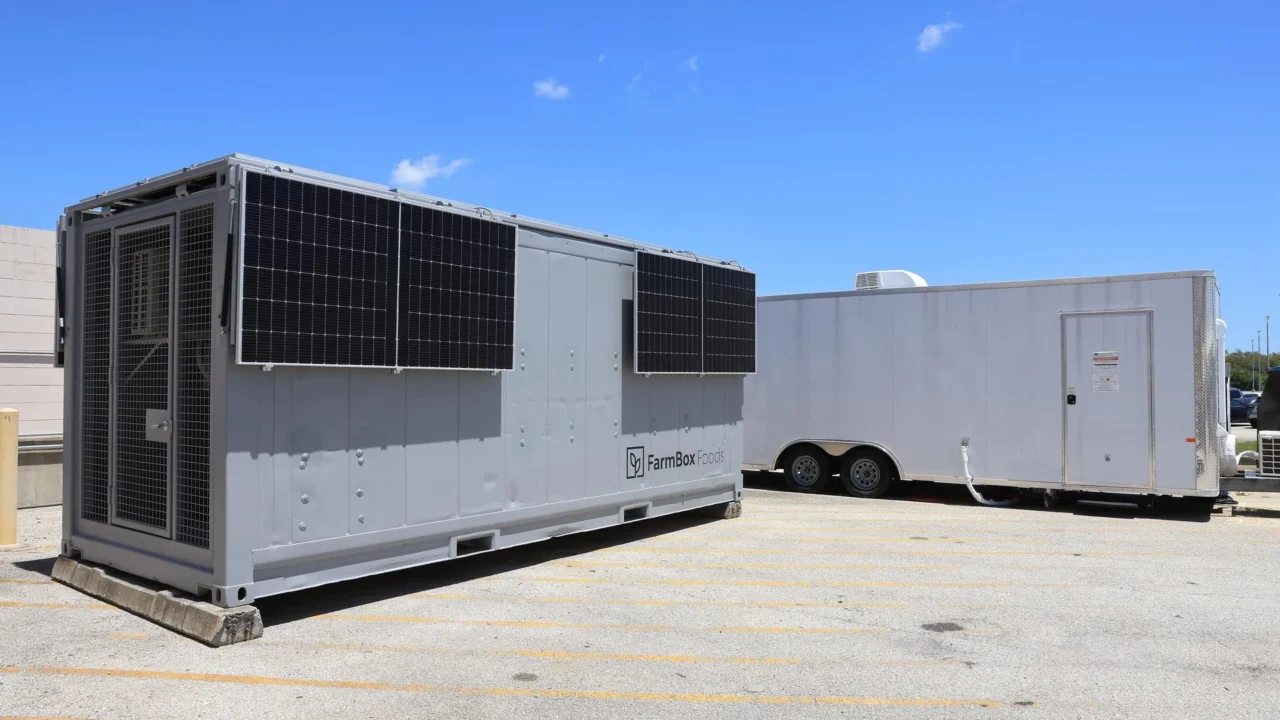
NASA has deployed a mobile wastewater treatment facility from its Kennedy Space Center in Florida to the University of North Dakota, where it will undergo testing in simulated lunar habitat conditions. This initiative aims to develop sustainable life support systems critical for long-duration missions on the Moon and Mars.
What happened
The Divergent Deployable Wastewater Treatment Facility, housed inside an 8.5-by-24-foot trailer, was transported to the University of North Dakota in Grand Forks. There, graduate students and NASA researchers are integrating the system with the university’s Integrated Lunar/Martian Analog Habitat. The facility features three distinct biological reactors designed to separately process urine, hygiene and laundry water, fecal waste, and food waste—each of which contains varying concentrations of salts, solids, and nutrients.
The three bioreactors—the Anaerobic Phototrophic Membrane Bioreactor, Suspended Aerobic Membrane Bioreactor, and Membrane Aerated Biological Reactor—work collectively to recycle wastewater into nutrient-rich solutions for a vertical hydroponic garden inside the trailer. This setup allows future crews to grow crops using recycled nutrients while maximizing water reuse.
The system is connected to a habitat-like environment through a urine-diverting toilet to simulate operational limits astronauts would face on other planetary surfaces. Additionally, NASA-funded research teams are developing advanced membrane separation technologies to boost water recovery efficiency and system resilience for long-term space habitation.
Why it matters
Establishing a sustained human presence on the Moon requires reliable life support technologies that reduce dependency on Earth resupply. Treating wastewater efficiently and transforming it into resources like water and nutrients is essential for enabling closed-loop ecosystems in lunar or Martian habitats. This technology directly supports NASA’s Artemis program goals and future crewed missions to Mars by advancing biological life support systems beyond current standards.
Reliable wastewater treatment aboard extraterrestrial habitats will help conserve precious resources, support in-space agriculture, and reduce waste storage needs. In addition, NASA envisions using nutrient byproducts for in-space manufacturing, such as producing bioplastics for 3D printing with lunar or Martian surface materials. Testing this facility in realistic analog environments allows NASA to validate system performance, refine crew operation protocols, and prepare for long-duration missions.
Background
NASA’s Bioregenerative Life Support Systems effort aims to develop sustainable methods for recycling water, nutrients, and waste in space habitats. Current life support systems rely heavily on resupply from Earth, which is costly and impractical for extended Moon or Mars stays. The divergent approach of treating separate waste streams enhances processing efficiency for small crews typical of planetary missions.
The University of North Dakota’s analog habitat serves as a testbed to prepare technologies before transitioning to more advanced simulation environments, including potential integration with NASA’s yearlong Mars mission simulations at the Johnson Space Center. These developments mark a significant step toward a closed-loop habitat capable of supporting future explorers living and working far from Earth.
Sources
This article is based on reporting and publicly available information from the following source:
Read more Space & NASA stories on Goka World News.