
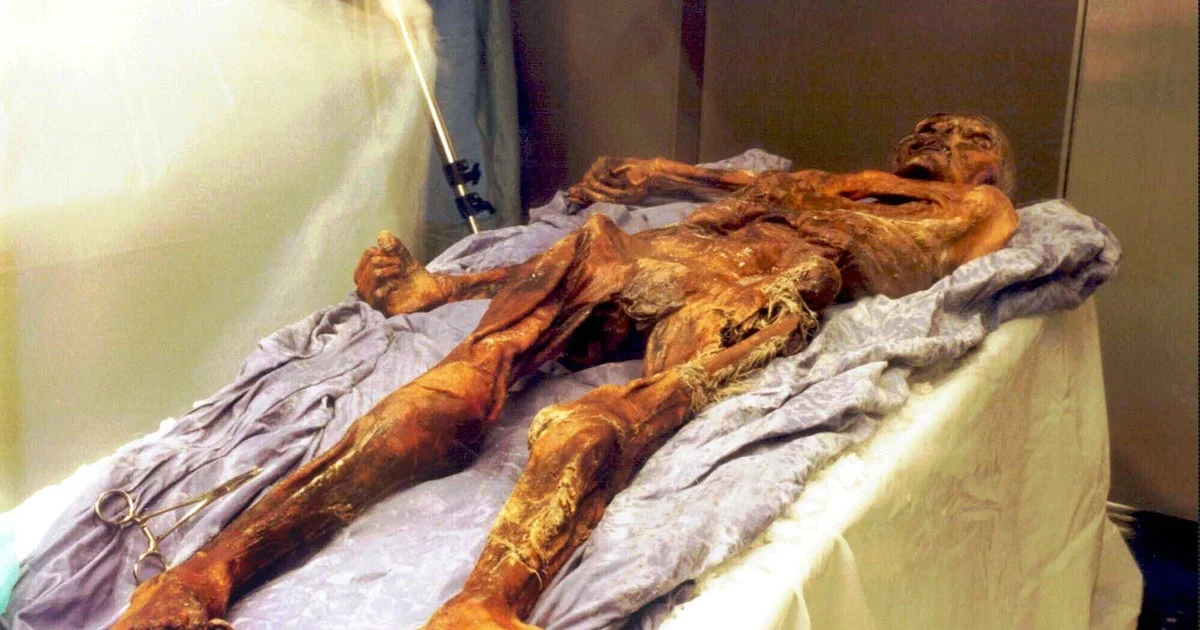
Scientists have discovered living yeast in the gut of Oetzi the Iceman, a 5,300-year-old frozen mummy, and used it to make sourdough bread, revealing a living microbial ecosystem preserved within the ancient body.
What happened
Oetzi the Iceman, who died over five millennia ago in the Alps on the border of Austria and Italy, was found in 1991 with his remains remarkably preserved at a constant temperature of minus six degrees Celsius. An Italian research team analyzing his microbiome discovered four types of cold-adapted yeast surviving within his gut, skin, and meltwater surrounding the body.
Lead author Mohamed Sarhan of Eurac Research explained that these yeasts remain metabolically active despite the extreme cold, representing a rare case of ancient microbial life persisting over millennia. The team genetically confirmed the yeast entered Oetzi’s body shortly after his death.
Capitalizing on this discovery, scientists cultivated the yeast in refrigeration conditions and successfully produced a “very good” sourdough bread after three months of trial and error. Co-author Frank Maixner noted that this surprising revival bridges the ancient and modern microbial worlds.
Beyond baking, the yeast showed the ability to metabolize phenol, a chemical once used to treat the corpse to prevent fungal growth, suggesting potential environmental applications for bioremediation.
Why it matters
This discovery provides unique insight into ancient microbiomes and the survival of microbial life in frozen environments, expanding understanding of both ancient ecosystems and microbial evolution. The ability to culture yeast from a five-millennia-old mummy opens new avenues for studying microbial resilience and exploring biotechnological uses, such as breaking down environmental contaminants.
Additionally, the study offers a window into the diet and microbial composition of prehistoric humans, which differs markedly from modern populations, informing research into human health, diet, and microbiome changes over thousands of years.
Background
Oetzi died from an arrow wound while crossing the Alps before the construction of the Egyptian pyramids. Preserved naturally by ice, his body has provided extraordinary archaeological and scientific insights since its discovery.
Previous studies revealed Oetzi’s diet, comprising deer, goat, and wheat, as well as his age and physical condition at death. This latest research, published in the journal Microbiome, further highlights that his remains are not just a frozen time capsule but a dynamic habitat where ancient and newer microorganisms coexist.
Earlier findings also showed Oetzi’s gut bacteria resembled those of modern indigenous peoples with high-fiber diets, underscoring significant shifts in human gut ecology over millennia.
Sources
This article is based on reporting and publicly available information from the following source:
Read more Science Discoveries stories on Goka World News.