
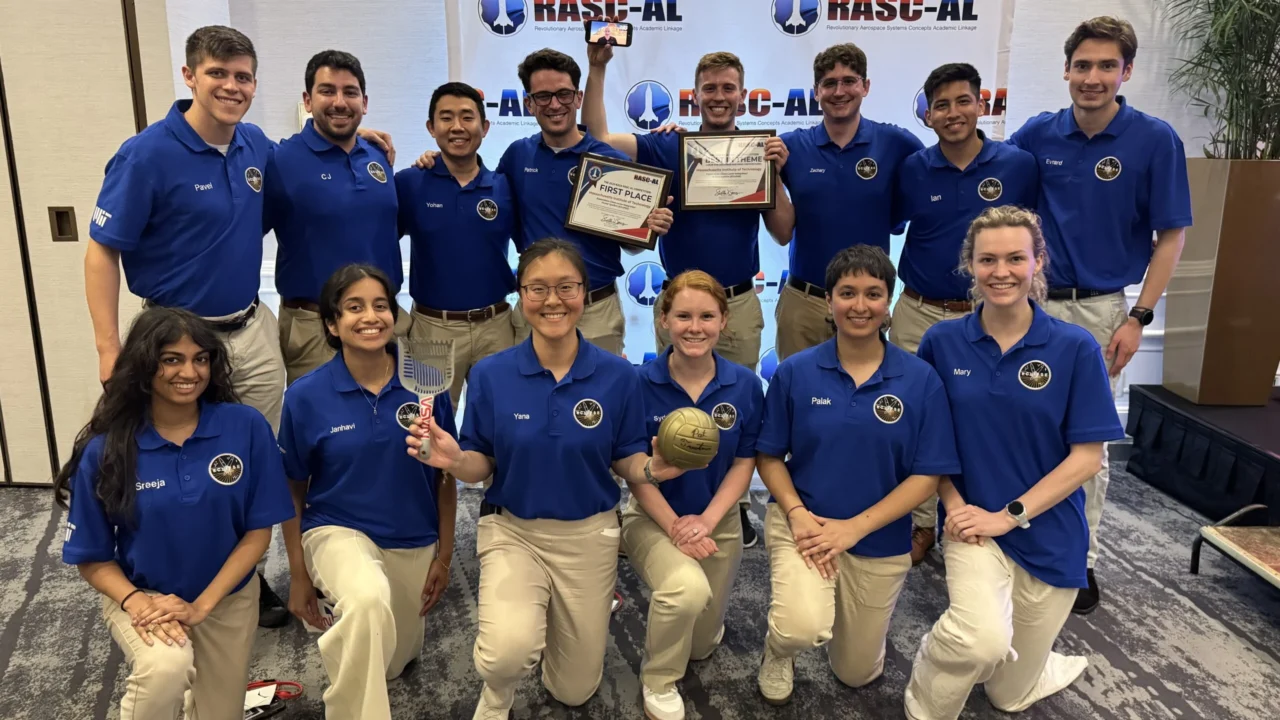
NASA has announced the winners of its 2026 Revolutionary Aerospace Systems Concepts – Academic Linkage (RASC-AL) competition, awarding university teams for innovative aerospace system designs that support Artemis lunar missions and Mars exploration strategies.
What happened
The Massachusetts Institute of Technology (MIT) took first place with their Exploration-Class Lunar Integrated Power SystEm (ECLIPSE), a project focusing on advanced lunar surface power and power management. MIT also secured second place with the Mars Exploration Layered Infrastructure for Operations, Research, and Advancement (MELIORA), which proposes layered infrastructure to support Mars surface operations. Virginia Polytechnic Institute and State University earned third place with their Mars Pylon Network concept.
The top 14 finalist teams presented their mission architectures, technology solutions, and analyses at a multi-day forum in Cocoa Beach, Florida, where they received real-time engineering feedback from NASA experts.
Additional awards recognized excellence in communication, sample return concepts, lunar technology demonstrations, and prototype development. Notable winners included South Dakota State University for lunar sample return concepts, Embry-Riddle Aeronautical University for prototype innovation, and a University of Illinois and Leonardo de Vinci Engineering School collaboration for regolith mining technologies.
NASA representatives praised the students’ ability to translate innovative ideas into technically rigorous and viable aerospace systems, underscoring the competition’s role in developing critical skills for future space missions.
Why it matters
The RASC-AL competition supports NASA’s workforce development by giving university students hands-on experience in mission architecture and systems engineering aligned with real agency goals. The projects contribute novel approaches to challenges in power management, infrastructure, and resource utilization for both lunar and Mars exploration.
By fostering academic innovation, NASA is helping prepare the next generation of aerospace engineers and researchers who will play key roles in advancing human spaceflight and robotic exploration beyond Earth.
Background
RASC-AL is an annual NASA-sponsored challenge that encourages university teams to develop new aerospace system concepts and prototypes, emphasizing technical rigor, innovation, and mission relevance. It is managed collaboratively by NASA’s Langley Research Center, the National Institute of Aerospace, and the NASA Tournament Lab, which oversees agency prize competitions and crowdsourcing efforts.
Past competitions have supported NASA’s Artemis program goals for lunar exploration as well as long-term planning for Mars missions, focusing on technologies like power generation, surface operations, sample return, and in-situ resource utilization.
Sources
This article is based on reporting and publicly available information from the following source:
Read more Space & NASA stories on Goka World News.