
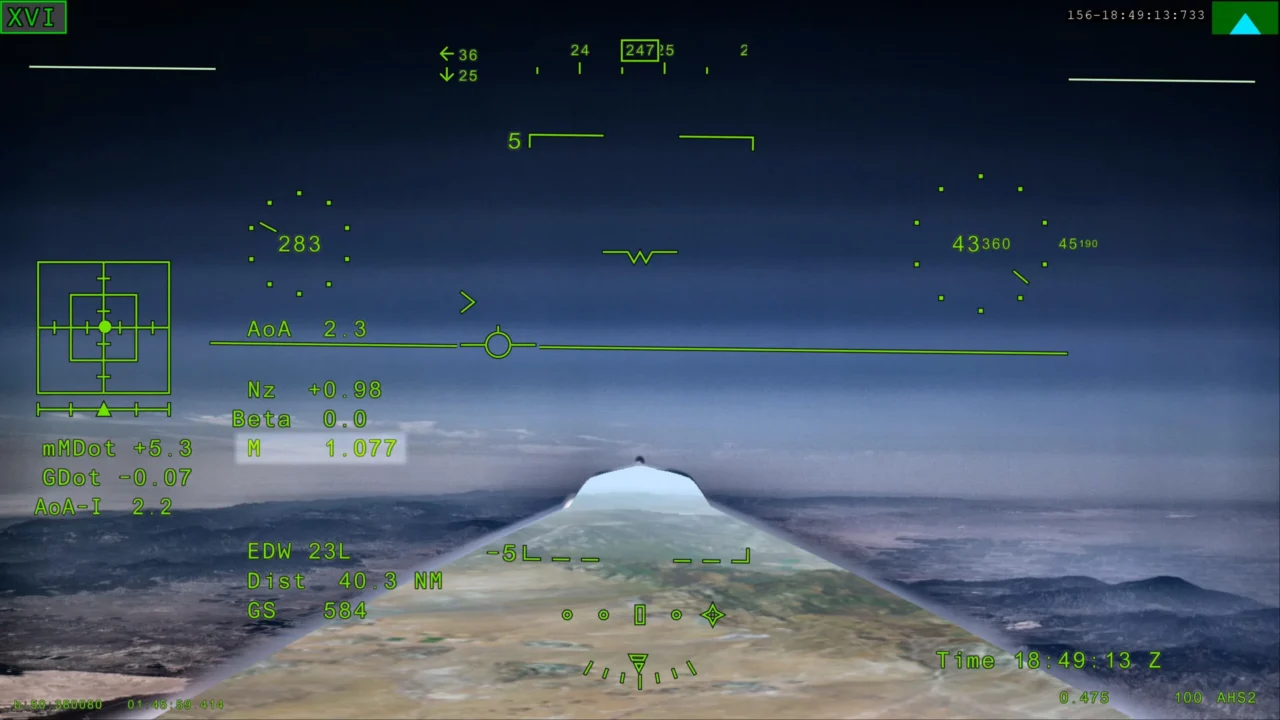
NASA’s experimental X-59 aircraft flew faster than the speed of sound for the first time on June 5, reaching approximately Mach 1.1 (713 mph) at an altitude of 43,400 feet. The 81-minute flight, conducted by NASA test pilot Jim “Clue” Less at Edwards Air Force Base in California, marked a significant step toward demonstrating the aircraft’s quiet supersonic capabilities later this year.
What happened
The X-59 took off at 11:08 a.m. PDT, performing tests to evaluate flying qualities at subsonic and supersonic speeds. The flight was monitored by a NASA F-15 chase plane, which produced conventional sonic booms that masked any noise from the X-59, designed to create a quieter “thump” rather than a loud sonic boom. NASA plans to conduct further supersonic flights soon, aiming to reach Mach 1.4 (925 mph) at around 55,000 feet, preparing for mission-condition tests over U.S. communities.
The upcoming mission-condition flights will help NASA gather data on how the quiet supersonic “thump” is perceived by people on the ground. This data will support efforts to establish new noise standards, enabling future commercial supersonic flights over land. The ongoing aircraft testing is part of the envelope expansion phase, which involves flying at varied speeds and altitudes to assess performance before focusing on the sound profile in later test phases.
Why it matters
The X-59’s successful supersonic flight demonstrates progress in developing quieter supersonic technologies that could transform commercial air travel. By reducing the disruptive sonic boom to a quieter thump, NASA aims to unlock regulatory approval for routine supersonic passenger flights over land, enabling faster travel times without disturbing communities below. This advancement could revitalize supersonic commercial flight, offering substantial economic and convenience benefits.
Background
The X-59 is central to NASA’s Quiet Supersonic Technology (QueSST) mission, which seeks to validate design tools and technologies for quiet supersonic airliners. The program involves partnerships with Lockheed Martin Skunk Works and aims to help U.S. aircraft manufacturers pursue new quiet supersonic concepts. Since its first flight on October 28, 2025, the X-59 has completed 16 flights in 90 days, steadily advancing toward its goal of redefining supersonic flight noise standards and commercial viability.
Sources
This article is based on reporting and publicly available information from the following source:
Read more Space & NASA stories on Goka World News.