
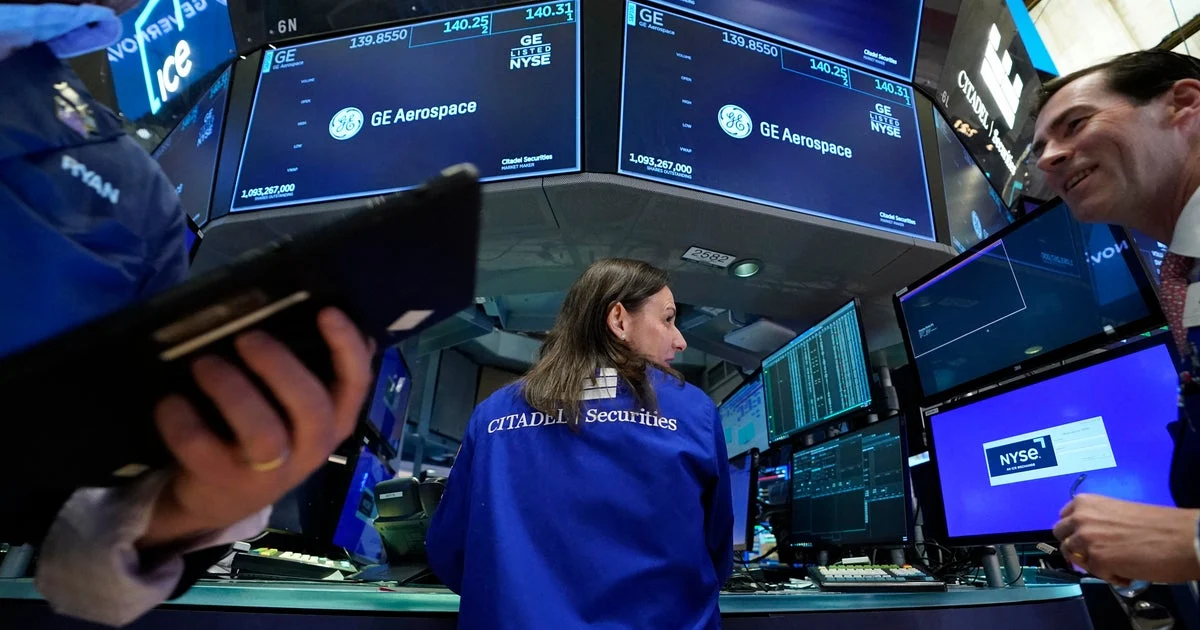
The Dow Jones Industrial Average rose sharply Thursday, fueled by investor optimism over a potential peace agreement between the United States and Iran. The blue-chip index closed 875 points higher, marking a 1.7% increase and pushing it further into record territory amid heightened geopolitical hopes.
What Happened
Wall Street traders boosted the Dow by nearly 900 points as market participants bet on progress toward an Iran peace deal expected to resolve current conflict tensions. The S&P 500 posted milder gains, rising 0.4%, while the Nasdaq Composite fell 0.1%, reflecting uneven sector performance.
Key Facts
The Dow closed at 51,562 points, reaching a new high as investors focused on the prospect of ceasing hostilities involving Iran. Recent weeks have seen a series of record highs across U.S. stock indices, driven largely by hopes of de-escalation in the Middle East. Brent crude oil prices dropped to $94.43 per barrel, and U.S. oil prices fell to $92.18, as peace prospects tempered supply concerns despite recent flare-ups of violence.
Why It Matters
The potential peace deal could stabilize oil supply routes through the Strait of Hormuz, a critical maritime channel for global energy markets. This would ease inflationary pressures and reduce volatility, factors that investors closely monitor when pricing risk and growth prospects. The rally reflects optimism about improved geopolitical conditions benefiting economic stability.
Background
Recent violence in the Middle East, including Iran’s attack on Kuwait’s airport and U.S. military strikes near the Strait of Hormuz, has kept global oil markets on edge. However, ongoing negotiations and a ceasefire agreement between Israel and Lebanon have shifted sentiment to a more positive outlook. The negotiations are aimed at reopening crucial oil tanker routes.
Analysis
Equity analysts note that while progress towards peace is encouraging, timing remains critical given global oil inventories are at historically low levels. This introduces risks to both supply security and market stability if negotiations falter or conflict intensifies again. Additionally, not all sectors participated equally, with artificial intelligence stocks retreating amid expectations of a slowdown in that sector’s rally.
Who Is Affected
The gains primarily benefited blue-chip industrial stocks driving the Dow, while investors in technology and AI stocks saw more mixed results. Broader markets remain sensitive to geopolitical developments impacting global energy supplies and economic forecasts.
Reactions / Official Statements
VitalKnowledge analyst Adam Crisafulli described recent Middle East news as “net positive” and noted ongoing negotiations between the U.S. and Iran, along with ceasefire talks between Israel and Lebanon. However, Iranian Foreign Minister Abbas Araghchi cautioned that “no tangible progress” has yet been made in peace talks, highlighting ongoing uncertainties.
What Remains Unclear
Whether the U.S. and Iran will finalize a peace agreement this month remains uncertain. The impact of renewed violence on negotiations and oil markets also poses ongoing risks. The status of other geopolitical tensions and their influence on market stability is not yet clear.
What Comes Next
Market participants will continue to monitor diplomatic efforts closely, with any breakthrough likely to sustain or enhance investor confidence. Conversely, setbacks could trigger increased volatility, particularly in energy markets. Sector rotations may also occur depending on broader economic signals and geopolitical developments.
Sources
This article is based on reporting and publicly available information from the following article-relevant source(s):
Read more Business stories on Goka World News.