
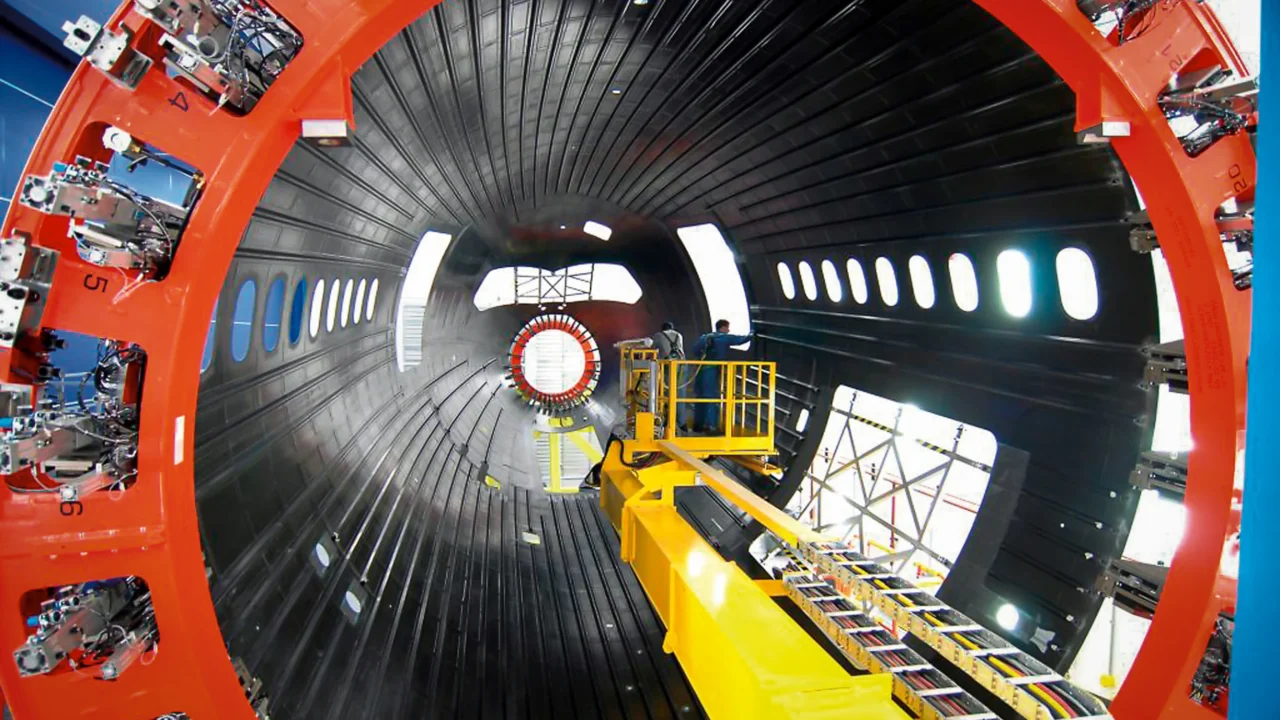
NASA’s Langley Research Center recently hosted the 2026 spring review of the Hi-Rate Composite Aircraft Manufacturing (HiCAM) project. The gathering united about 150 members from NASA’s 22-member Advanced Composites Consortium, a public-private partnership, to evaluate recent achievements and plan upcoming phases aimed at improving aircraft manufacturing processes.
What Happened
Between May 5 and 7, NASA convened the full HiCAM team to discuss the outcomes of the project’s Development Phase and progress on Phase 2, the Demonstration Phase. During the event, participants focused on assembly demonstrations of large composite aircraft structures, including wing boxes and fuselage barrels, emphasizing collaboration among NASA researchers and industry partners. This meeting also featured critical portfolio decisions on technologies expected to significantly enhance manufacturing rates for future airplane programs.
Key Facts
- HiCAM is a 22-member public-private partnership aimed at advancing composite aircraft manufacturing.
- About 150 consortium members attended the NASA Langley-hosted 2026 spring review.
- The review covered Development Phase results and early progress in the Demonstration Phase.
- Workshops focused on assembly demonstrations of large composite structures: wing and fuselage.
- Significant milestones include large-scale demonstrations of composite fuselage barrels and wing boxes planned for 2028 and 2029.
Why It Matters
The HiCAM project aims to revolutionize aircraft manufacturing by enabling faster, more cost-effective production of lightweight composite structures. Success in this area could reduce manufacturing time and expenses, ultimately contributing to the creation of more efficient, environmentally friendly aircraft. Demonstrating scalable composite manufacturing techniques is critical for upcoming airplane programs looking to leverage advanced materials for improved performance and sustainability.
Background
HiCAM is part of NASA’s broader efforts to enhance the use of advanced composites in aerospace manufacturing. These materials offer significant advantages over traditional metals, including reduced weight and improved fuel efficiency, but manufacturing large composite structures at scale remains challenging. Through collaboration with industry partners, HiCAM focuses on overcoming these hurdles by developing and demonstrating novel manufacturing technologies and processes.
Analysis
The stronger coordination among consortium partners observed during the review highlights maturation in collaborative efforts essential for achieving project goals. Prioritizing technology selections during the meeting suggests a strategic focus on innovations with the highest potential to increase manufacturing rates. The planned large-scale demonstrations represent a critical step in transitioning advanced composite manufacturing from development to operational readiness.
Who Is Affected
The project directly involves NASA, member organizations within the Advanced Composites Consortium, and aerospace manufacturers aiming to integrate these technologies. In the longer term, the aviation industry and passengers stand to benefit from aircraft that are lighter, more fuel-efficient, and quicker to produce, potentially reducing environmental impact and operating costs.
Reactions / Official Statements
NASA officials and industry representatives reported stronger collaboration compared to previous years, underscoring confidence in the project’s trajectory. Portfolio decisions made during the review reflect NASA’s commitment to advancing technologies promising significant impact on future aircraft manufacturing rates.
What Remains Unclear
Specific technological challenges and risks associated with scaling up manufacturing processes remain undisclosed. Detailed timelines beyond the planned 2028 and 2029 demonstrations and how these technologies will be integrated into commercial production programs were not confirmed in the reviewed sources.
What Comes Next
The next phase involves scaling up key manufacturing technologies to enable large-scale composite wing and fuselage assembly demonstrations scheduled for 2028 and 2029. Continued collaboration will focus on refining processes to support faster, lower-cost aircraft production.
Sources
This article is based on reporting and publicly available information from the following article-relevant source(s):
Read more Space & NASA stories on Goka World News.