
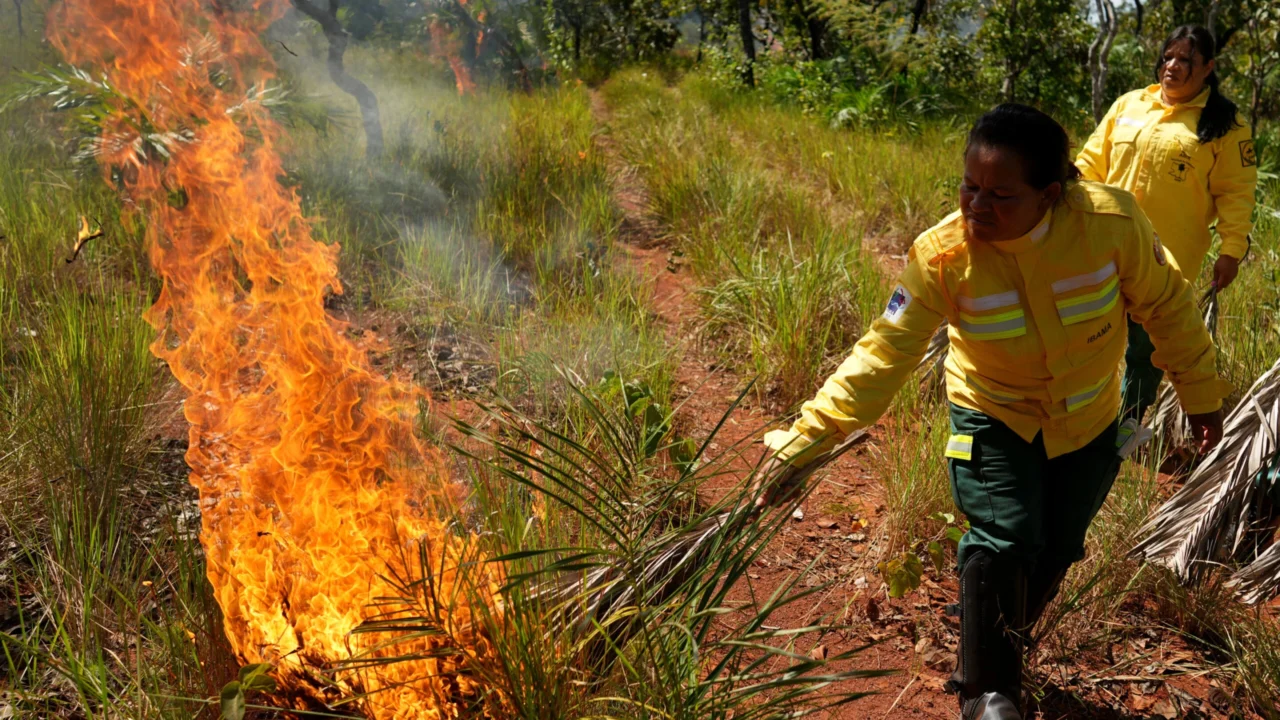
In Brazil’s Cerrado region, Indigenous fire practices are becoming central to new wildfire prevention strategies. Combining ancestral knowledge with modern science, Indigenous communities and government agencies use controlled burns to reduce wildfire risk during peak dry seasons worsened by El Niño.
What Happened
In the Xerente Indigenous Territory in Tocantins, northern Brazil, Indigenous residents intentionally set controlled fires as part of a coordinated wildfire prevention plan. The operation involves joint efforts between Xerente Indigenous fire brigades and IBAMA, Brazil’s environmental protection agency. Using traditional firing techniques alongside aerial incendiary devices, teams create patchworks of burned areas in advance of the dry peak months to reduce flammable vegetation and protect vulnerable landscape sections.
Key Facts
- Controlled burns are timed for the early dry season when vegetation is less arid, reducing fuel buildup that can cause intense wildfires.
- Indigenous firefighters use traditional tools such as drip torches and dry palm leaves to ignite fires strategically.
- The government began supporting Indigenous-controlled burns officially since 2014, shifting away from a previous zero-fire policy.
- The recent El Niño event is expected to extend drought and raise temperatures, escalating wildfire risks in the Cerrado and Amazon.
- The Xerente collaborate with IBAMA through a formal structure including trained Indigenous brigades funded partly by partnerships like the Bunge Foundation.
Why It Matters
Fire is a natural and necessary element in maintaining the Cerrado ecosystem, promoting species regeneration and preventing larger catastrophic fires. Indigenous fire management helps limit destructive blazes, protecting biodiversity, water sources, and Indigenous lands. Incorporating Indigenous knowledge into wildfire strategies marks a turning point in environmental policy and enhances conservation efforts.
Background
Previously, Brazilian authorities maintained a strict no-fire approach, suppressing all burns. However, this led to excessive fuel accumulation causing uncontrollable fires. Indigenous peoples have long employed controlled burns as a land management tool rooted in ancestral practice. Since 2014, Brazil has collaborated with Indigenous communities for controlled burns, recognizing their ecological role.
Analysis
The integration of Indigenous wisdom with scientific monitoring, such as satellite data, enables precise targeting of burn areas to optimize firebreaks. Controlled early burns reduce wildfire intensity during the dry peak and mitigate risks from human activities like pasture clearing. However, balancing traditional practices with modern fire management frameworks requires ongoing training, funding, and cooperation between governments and Indigenous authorities.
Who Is Affected
The primary beneficiaries are Indigenous communities like the Xerente, local ecosystems within the Cerrado savanna, and downstream populations protected from wildfire damage. Broader society benefits through reduced wildfire impacts on agriculture, biodiversity, and carbon emissions.
Reactions / Official Statements
Marco Borges of IBAMA acknowledged Indigenous communities as “our best teachers” in fire prevention. André Lima, Secretary for Deforestation Control, emphasized that when technically applied, fire can help environmental conservation. Xerente Chief Lazaro highlighted ancestral forest protection efforts and stressed the false accusations Indigenous peoples often face regarding fire causation.
What Remains Unclear
This information was not confirmed in the reviewed sources.
What Comes Next
Brazil’s Environment Ministry continues to implement its national fire management policy initiated in 2024, expanding coordination among Indigenous groups, scientists, and officials. Monitoring of El Niño’s evolving impacts will guide adaptive wildfire mitigation efforts. Continued funding and training for Indigenous brigades are expected to strengthen controlled burn programs across the Cerrado and Amazon regions.
Sources
This article is based on reporting and publicly available information from the following article-relevant source(s):
Read more Climate & Environment stories on Goka World News.