
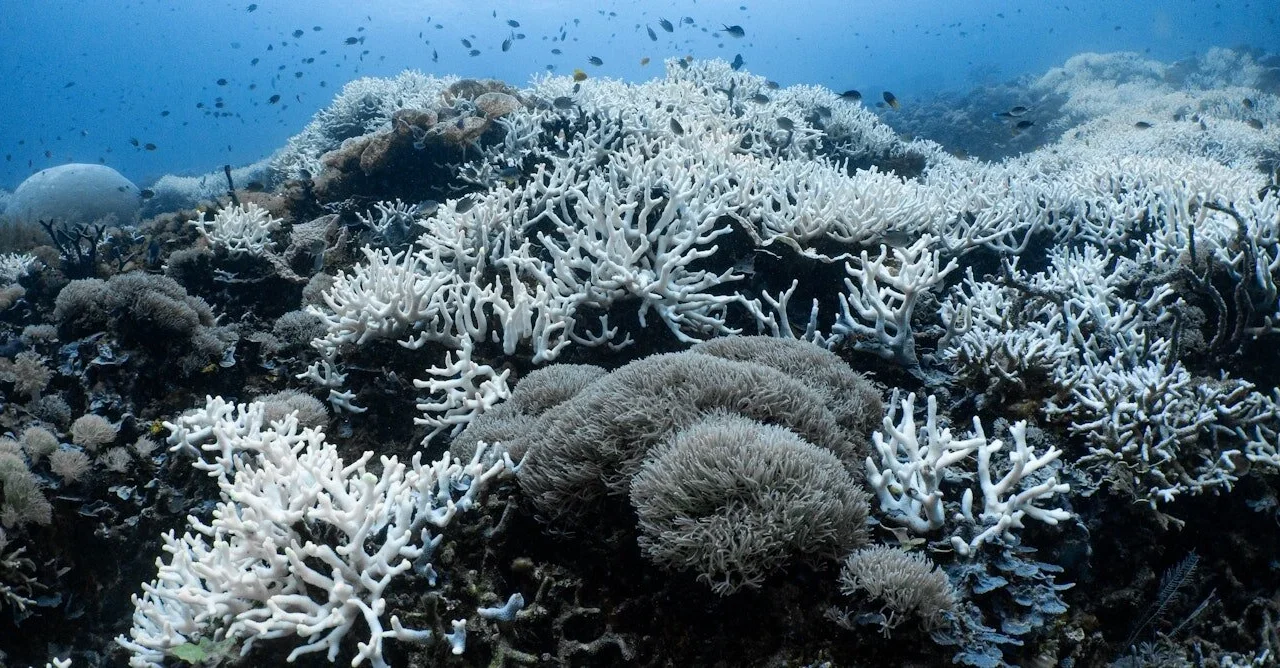
Indonesia hosts the world’s largest, most diverse coral reef system, spanning over 32,000 square kilometers of marine habitat. Recent scientific research compiling nearly two decades of coral monitoring across the archipelago reveals these reefs have exhibited remarkable stability despite rising sea temperatures. However, the study warns that this resilience has limits, and increasing ocean heat could trigger rapid coral loss once critical thermal thresholds are surpassed.
What Happened
A comprehensive study analyzed coral reef monitoring data collected between 2004 and 2023 from 394 permanent sites at 32 locations throughout Indonesia. Despite significant sea surface warming since 1985, 26 out of the 32 locations showed no significant overall decline in hard coral cover, with two locations even seeing increases. However, four sites did experience declines, highlighting variability across the region.
Key Facts
- Data sourced from Indonesian agencies, conservation organizations, and international programs documented coral cover and thermal stress across the coral reefs.
- Coral stability persisted despite rising sea temperatures and past bleaching events in 2010 and 2016.
- Analysis identified a critical heat stress threshold of approximately 12 degree-heating weeks (DHW), beyond which coral cover declines sharply.
- DHW measures both intensity and duration of heat exposure, combining how hot and how long waters remain above seasonal maximum temperatures.
- Marine protected areas (MPAs) can aid coral recovery but do not prevent bleaching caused by heat stress.
- Reefs exposed to multiple local pressures like pollution and destructive fishing show impaired recovery after heat events.
Why It Matters
The research illustrates that Indonesian coral reefs currently absorb moderate ocean warming without large-scale losses, which is hopeful amid global reef declines. However, the rapidly increasing frequency and intensity of marine heat waves pose a severe threat that could overwhelm this resilience. Understanding these limits is vital for conservation strategies and managing local stressors to improve reef recovery prospects.
Background
Indonesia’s coral reefs are part of the Coral Triangle, renowned for exceptional marine biodiversity. Globally, coral reefs are under pressure from climate change, particularly from ocean warming that causes bleaching—a stress response that can lead to coral death. This study is the first to comprehensively link long-term coral cover changes in Indonesia to heat stress metrics across a broad geographic area.
Analysis
The relative stability in coral cover over two decades largely reflects reefs’ response to earlier heat events, but it does not guarantee future safety. A reef’s ability to maintain coral cover despite heat anomalies depends on resilience factors such as species composition, structural complexity, and local environmental conditions. The findings also emphasize that coral cover alone is insufficient to gauge reef health, as changes in coral types and physical complexity may still occur unnoticed.
Who Is Affected
Indonesian coastal communities and industries reliant on reefs—for fisheries, tourism, and shoreline protection—are directly affected by coral health. Reefs providing ecosystem services may become compromised if heat stress surpasses critical thresholds or if local human pressures hamper recovery.
Reactions / Official Statements
This information was not confirmed in the reviewed sources.
What Remains Unclear
Details on specific coral species’ tolerance, the long-term impacts of changing community compositions, and recovery rates outside monitored sites remain insufficiently understood. Moreover, the compounding effects of local stressors versus climate-induced heat stress require further investigation.
What Comes Next
The study underlines the need for a nationally coordinated Indonesian coral monitoring framework extending beyond coral cover to include bleaching severity, mortality, recovery dynamics, and habitat structure. Continuous monitoring combined with reducing local threats could enhance reef resilience in the face of climate change. Future reef survival depends on both natural tolerance and effective management of human impacts.
Sources
This article is based on reporting and publicly available information from the following source:
Read more Climate & Environment stories on Goka World News.