
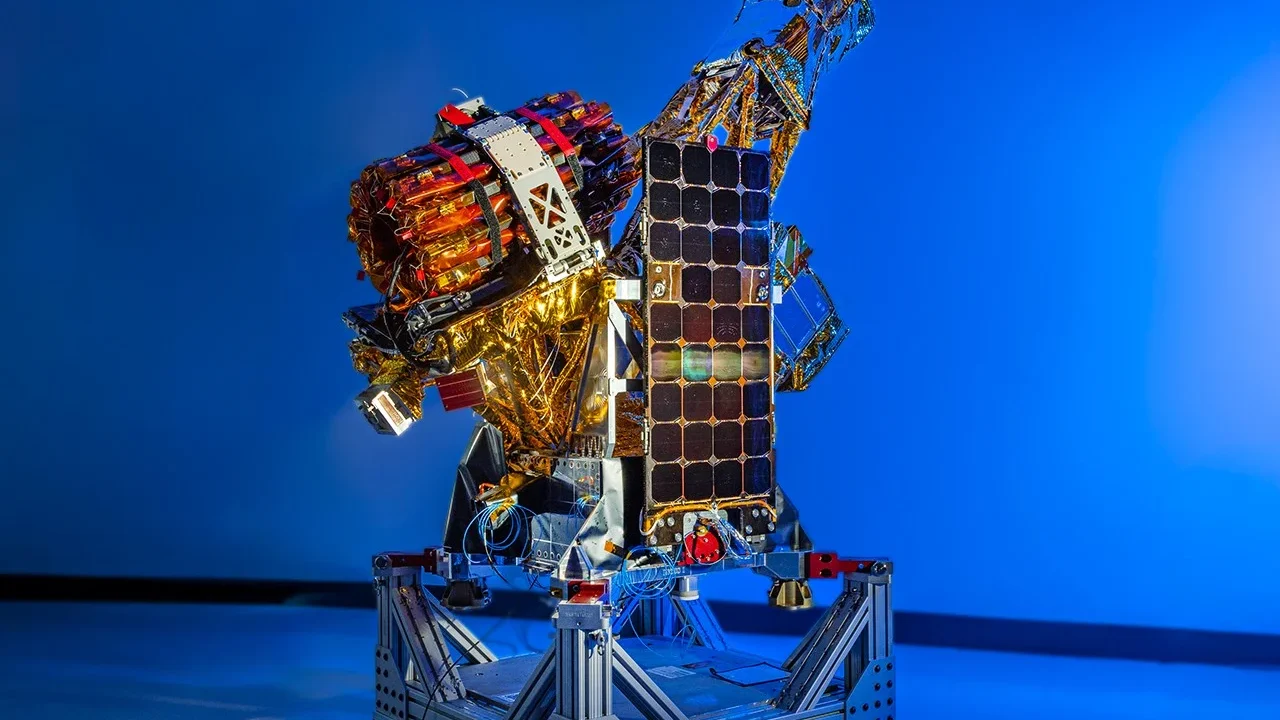
NASA’s Investigation of Convective Updrafts (INCUS) mission is progressing toward its planned launch in 2027, with the three satellites that will compose the constellation completing critical testing phases. The INCUS satellites are designed to provide unprecedented insights into the vertical dynamics of tropical convective storms from low Earth orbit.
What Happened
One of the three INCUS satellites recently completed suite-testing at Blue Canyon Technologies in Lafayette, Colorado, marking a major milestone ahead of the mission’s scheduled launch from NASA’s Wallops Flight Facility in Virginia. The three nearly identical satellites will fly in tight formation, separated by precise intervals of 30 and 90 seconds to maximize coordinated observations.
Key Facts
- The INCUS mission consists of three satellites with radar instruments designed to measure vertical air and water motions known as convective mass flux.
- The middle satellite is additionally equipped with a microwave radiometer to enhance atmospheric observations.
- The satellites will orbit in low Earth orbit, flying closely in sequence to capture storm development dynamics.
- The mission is funded under NASA’s Earth Venture Mission-3 program and managed as part of the Earth System Science Pathfinder initiative.
- INCUS contributes to NASA’s Earth System Observatory and FALCON, a fleet of satellite missions designed to monitor Earth’s atmosphere with contributions from NASA, academia, and commercial partners.
Why It Matters
INCUS will provide revolutionary data on the internal processes of tropical convective storms, which play a crucial role in weather and climate by driving energy and moisture circulation. Understanding convective mass flux can improve climate models and weather forecasts, helping scientists predict storm intensification and precipitation patterns more accurately.
Background
Convective storms are persistent atmospheric phenomena characterized by strong upward motion of air and water vapor. Despite their importance, detailed data on their internal dynamics from space has been limited. INCUS aims to fill this gap by using closely spaced satellites to observe changes in the vertical structure of storms in near real-time.
Analysis
The innovative design of INCUS, with three satellites flying within seconds of each other, allows the mission to capture dynamic atmospheric processes that single satellites cannot. This multi-satellite approach supports advanced temporal and spatial resolution for studying rapidly evolving convection and precipitation events.
Who Is Affected
The mission’s data benefits the scientific community focused on atmospheric science, climate modeling, and severe weather forecasting. Ultimately, improved storm insights could aid disaster preparedness, water resource management, and climate resilience strategies globally.
Reactions / Official Statements
Sue van den Heever, principal investigator from Colorado State University, leads the INCUS mission and has emphasized the importance of understanding convective processes for Earth system science. NASA continues to support INCUS as part of its Earth System Observatory portfolio, highlighting collaboration among federal, academic, and commercial partners.
What Remains Unclear
This information was not confirmed in the reviewed sources.
What Comes Next
Following completion of the current testing phase, the INCUS satellites will be prepared for integration and launch, targeted for late May 2026 preparations with actual deployment in 2027. Post-launch, the mission will initiate coordinated observations of tropical convective storms to begin fulfilling its scientific objectives.
Sources
This article is based on reporting and publicly available information from the following source:
Read more Space & NASA stories on Goka World News.