
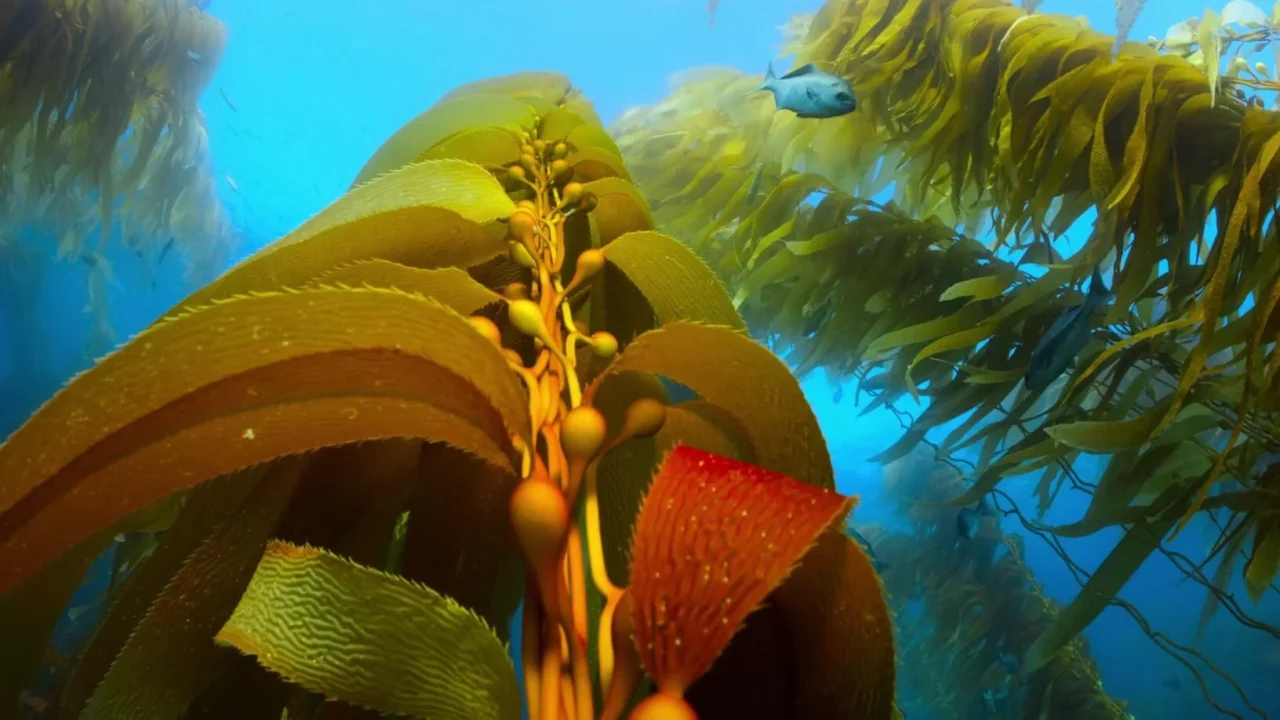
New research has illuminated the microscopic structure in giant kelp that enables it to efficiently convert sunlight into energy. This discovery could inspire innovative approaches to combat climate change by enhancing carbon capture technologies.
What Happened
A team of researchers led by Dr. Maria Maldonado mapped the molecular structure of giant kelp’s photosynthetic antenna for the first time. Published in Nature Communications, the study reveals how kelp’s cellular machinery is uniquely adapted to capture light in coastal environments, contributing to its exceptional photosynthetic efficiency.
Key Facts
- Giant kelp possesses a specialized light-harvesting antenna that enables efficient photosynthesis.
- The molecular arrangement of kelp’s photosynthetic supercomplex was visualized using advanced imaging techniques.
- The findings show why kelp excels at absorbing sunlight and removing carbon dioxide from the atmosphere.
- Kelp ecosystems function similarly to underwater forests, sequestering significant amounts of carbon.
- The research was conducted at the University of California, Davis, with Dr. Maldonado now at Monash University’s Biomedicine Discovery Institute.
Why It Matters
Understanding kelp’s photosynthetic system at the molecular level is crucial given kelp’s role in natural carbon sequestration. Insights from this study could lead to innovations that improve crop yields or develop technologies that enhance atmospheric carbon capture, offering new tools for addressing climate change and promoting sustainable food production.
Background
While terrestrial plants and many marine organisms have been extensively studied for photosynthesis, the details of kelp’s microscopic light-harvesting mechanisms have remained elusive. Kelp forests are known as important blue carbon sinks, but the molecular basis for their efficiency was not well understood before this research.
Analysis
The study reveals that kelp’s antenna system evolved specific structural features to thrive in coastal waters where light conditions differ from terrestrial environments. By mapping the Photosystem I-FCP (fucoxanthin chlorophyll protein) supercomplex, scientists better understand the evolutionary drivers behind these adaptations. This knowledge may inform bioengineering approaches or synthetic systems designed to mimic kelp’s energy capture efficiencies.
Who Is Affected
Researchers in marine biology, climate science, and bioengineering communities stand to benefit from these insights. Moreover, industries focused on sustainable agriculture, carbon sequestration technologies, and marine ecosystem restoration may find applications for the findings.
Reactions / Official Statements
Dr. Maldonado emphasized the significance of visualizing kelp’s photosynthetic machinery, highlighting the potential to unlock new molecular and cellular insights. She noted this breakthrough as a major step toward leveraging marine photosynthesis for global environmental solutions.
What Remains Unclear
This information was not confirmed in the reviewed sources: the specific technological pathways or commercial applications that might emerge from this discovery, and how quickly practical solutions could be developed.
What Comes Next
The research team anticipates using their mapping methods to explore a wider range of kelp molecular biology, with the goal of enhancing carbon capture and ocean ecosystem regeneration. Future studies will likely focus on translating these biological mechanisms into scalable technologies.
Sources
This article is based on reporting and publicly available information from the following source:
Read more Science Discoveries stories on Goka World News.