
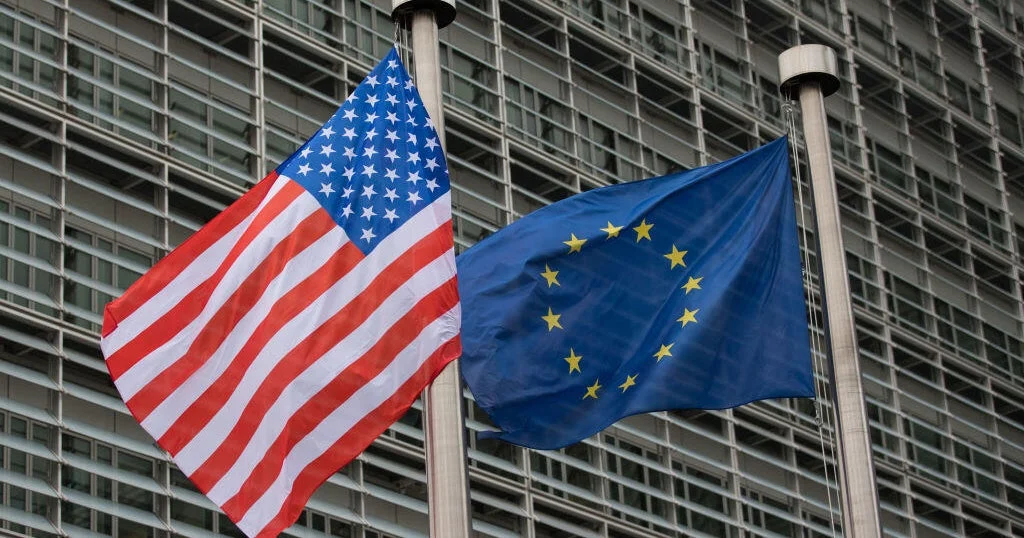
A major new poll reveals that only one in ten Europeans now considers the United States an ally, marking a sharp decline in transatlantic confidence. Conducted across 15 European countries, the survey highlights growing skepticism about U.S. commitment to Europe amid controversial policy decisions in recent years.
What Happened
The European Council on Foreign Relations (ECFR) surveyed 19,481 individuals in May 2026 across Austria, Bulgaria, Denmark, Estonia, France, Germany, Hungary, Italy, the Netherlands, Poland, Portugal, Spain, Sweden, Switzerland, and the U.K. The poll found a dramatic drop to 11% of Europeans viewing the U.S. as an ally, down from 16% six months earlier and 22% in November 2024.
Key Facts
- Only 11% of Europeans now see the U.S. as an ally—down from 22% in late 2024 (ECFR).
- 50% consider the U.S. a “necessary partner.”
- 25% view the U.S. as a rival or adversary, with increases especially in Denmark, France, Spain, and Switzerland.
- Majority in every surveyed country lack confidence that the U.S. would aid them if attacked.
- Many Europeans support buying more weapons from their own countries and developing independent nuclear deterrents.
- The poll included nearly 20,000 respondents across 15 European nations.
Why It Matters
The poll illustrates deepening doubts about U.S.-European security ties, which could influence defense cooperation and NATO dynamics. The widespread call among Europeans to reduce reliance on Washington and bolster their own military capabilities signals a shift in transatlantic relations that may impact regional stability and collective defense arrangements.
Background
The ECFR called the findings a “collapse in European faith in the U.S.,” attributing the shift in opinion to actions by former President Donald Trump, including his threats to exit NATO, plans to annex Greenland, unilateral military strikes on Iran excluding European consultation, and announcements about withdrawing some U.S. troops stationed in Europe.
Analysis
Jana Kobzová, co-author of the ECFR policy brief and senior policy fellow, noted a “clear support for reducing dependence on Washington” among Europeans. Despite the current negativity, polling showed a cautious optimism that relations might improve after Trump leaves office.
Who Is Affected
European citizens across the 15 surveyed countries, NATO allies, and the governments involved in collective defense partnerships are directly impacted by this shift in perception and potential strategic realignment.
What Remains Unclear
- Exact measures European governments will take to reduce dependence on the U.S. are not detailed.
- The extent to which U.S. troop withdrawals will proceed remains unspecified.
- Responses from the U.S. government or formal diplomatic reactions to the poll were not available.
What Comes Next
The ECFR poll does not specify future events but highlights an expectation among Europeans that U.S.-Europe relations could improve after the current U.S. administration changes. How European countries adjust their defense policies remains to be seen.
Sources
This article is based on reporting and publicly available information from the following source:
Read more World News stories on Goka World News.