
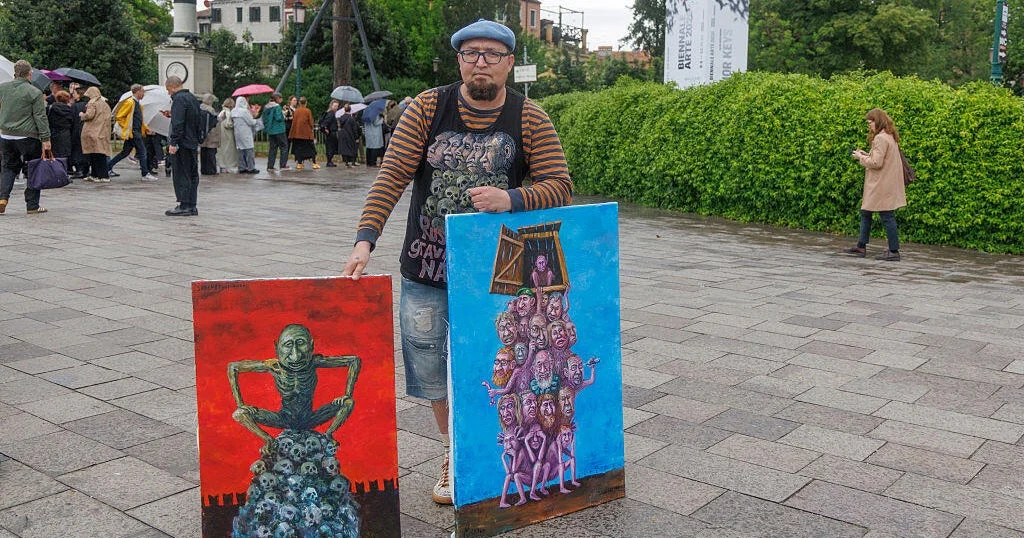
Russian artist and outspoken critic of Vladimir Putin, Semyon Skrepetsky, was shot dead in Poland’s eastern city of Biała Podlaska on June 15, 2026. The killing has shocked opposition activists and raised questions about whether his political activism was targeted.
What Happened
On the morning of June 15, 2026, Semyon Skrepetsky, whose real name was Robert Kuzovkov, was shot several times while walking along a pedestrian path in a residential area of Biała Podlaska, Poland. Prosecutors reported that a man fired three initial shots, and after Skrepetsky fell, two more shots were fired at close range. The assailant escaped, and police launched a broad search operation including checkpoints and forensic investigation. Authorities detained two Belarusian nationals near the Belarusian consulate in the city but have not charged them or linked them to the killing.
Key Facts
- The victim, Robert Kuzovkov, was 44 years old and went by the artistic name Semyon Skrepetsky.
- He had lived in Poland since 2021 after fleeing Russia due to fears of political persecution.
- The shooting occurred just before 10 a.m. on June 15 in Biała Podlaska, Poland.
- Investigators confirmed five gunshot wounds to Skrepetsky’s body, including injuries to the chest and head.
- Two Belarusian men were detained for questioning near the Belarusian consulate, but no charges were filed as of the latest update.
- Skrepetsky was known for his anti-Kremlin artwork and protests targeting Vladimir Putin, Alexander Lukashenko, and Ramzan Kadyrov.
Why It Matters
The murder of Skrepetsky, an exiled Russian dissident active in political art and protests, has sparked concern among opposition circles and human rights advocates about the safety of Kremlin critics abroad. The killing in Poland highlights ongoing risks faced by political refugees and activists who oppose authoritarian regimes, with implications for Poland’s security environment and regional stability.
Background
Skrepetsky left Russia in 2021 citing fear of political persecution. He continued his activism in exile, staging performances and creating artwork critical of Russian President Vladimir Putin and leaders of other authoritarian states such as Belarus and Chechnya. Shortly before his death, he organized a protest in Berlin near the Russian embassy, underscoring his persistent opposition despite living abroad.
Analysis
Authorities have not publicly described the attack as an execution but noted that the methodical nature of the shooting suggested intent to ensure death. Polish prosecutors confirmed the detention of two Belarusian citizens as part of the investigation but emphasized that their involvement remains unproven. Friends and supporters reported that Skrepetsky had received threats due to his political work, though investigators have not confirmed a direct link between these threats and the shooting.
Who Is Affected
The immediate victims are the Russian dissident community and political activists who risk persecution for opposing authoritarian regimes. The incident also affects Polish authorities tasked with protecting refugees and maintaining security. The Belarusian consulate and Belarusian nationals living in Poland have come under scrutiny due to the investigation.
What Remains Unclear
- Whether the killing was directly motivated by Skrepetsky’s political activism.
- The identity and whereabouts of the gunman who escaped after the shooting.
- The involvement, if any, of the two Belarusian men detained near the Belarusian consulate.
What Comes Next
Polish investigators continue searching for the shooter and assessing forensic evidence. Authorities have not announced any formal charges and are investigating potential political links to the killing while following up on leads related to the detained Belarusian nationals.
Sources
This article is based on reporting and publicly available information from the following source:
Read more World News stories on Goka World News.