
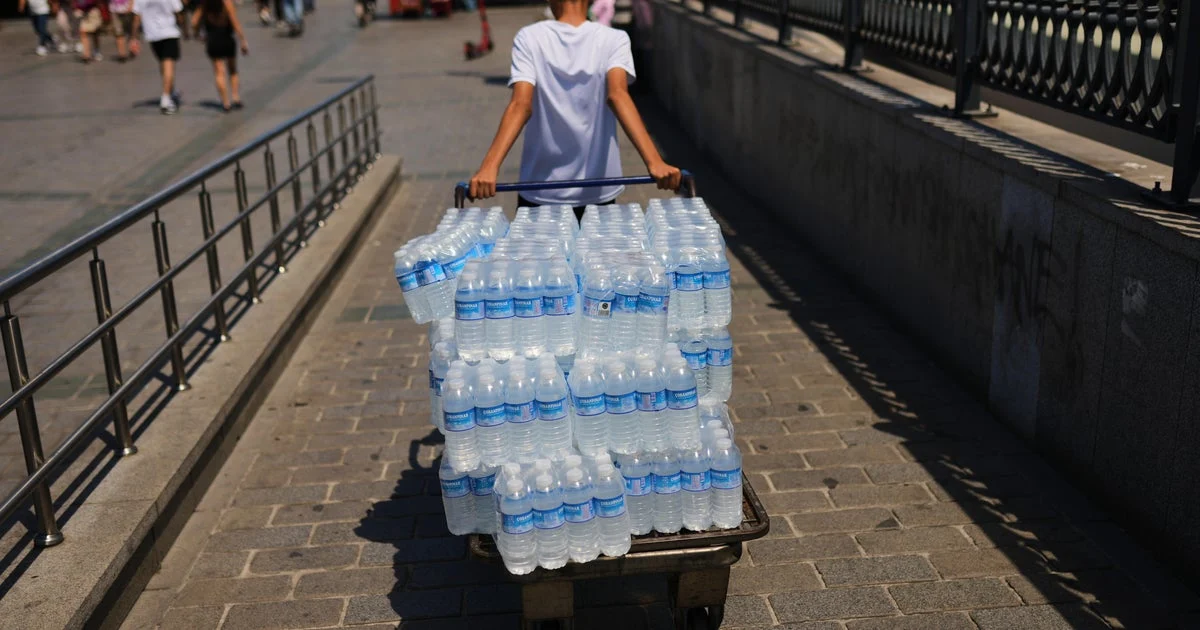
French authorities have imposed a ban on outdoor public alcohol consumption and activated emergency services in response to a severe heat wave sweeping the country. With temperatures reaching up to 104 degrees Fahrenheit, France is implementing measures to safeguard public health and prevent wildfire risks amid an intense summer heat surge.
What Happened
On Sunday, June 21, 2026, about one-third of France fell under a red heat alert as temperatures soared, with forecasts predicting even higher heat on Monday. The French government banned public drinking in designated “red alert” zones and instructed organizers of the annual Music Day festival—held on the summer solstice and featuring widespread concerts and gatherings—to limit alcohol sales. This measure aims to ensure emergency services can focus on vulnerable people needing medical assistance.
Authorities also placed emergency services and military forces on wildfire alert. To mitigate heat risks, 845 schools were closed across the country, and some French trains were canceled while additional railway staff were deployed to manage potential infrastructure problems caused by the heat. Prime Minister Sebastien Lecornu convened a crisis meeting to address heat adaptation policies, including expanded use of air conditioning facilities.
Key Facts
Temperatures in some French regions have climbed to 104°F (40°C), surpassing normal summer highs. The country sees growing concern over vulnerable populations, including elderly individuals and those isolated at home or in nursing facilities. The 2003 European heat wave resulted in about 15,000 deaths in France, demonstrating the potential for heat-related fatalities.
The French government mandated restrictions on alcohol consumption during public events to preserve emergency response capacity. Wildfire preparedness was heightened and water supply surveillance around nuclear reactors tightened. Outside France, other European nations such as Spain, Italy, Germany, and Britain are also grappling with elevated temperatures and heat warnings, with Spain suspending outdoor sports and cultural events in Basque Country.
What This Means
This strong government response highlights the urgent need for local communities to adapt to increasingly extreme temperatures linked to climate change. France’s restrictions on outdoor alcohol and enhanced emergency readiness aim to reduce heat-related health emergencies and prevent wildfire outbreaks at a pivotal public holiday—the Music Day festival—when large crowds gather.
For the general public, these measures mean disruptions to traditional summer activities, school closures, and heightened safety monitoring. The focus on protecting elderly and vulnerable groups holds broader implications for public health policy in regions where air conditioning is not widespread. The government’s steps reflect an acknowledgment that extreme heat events are becoming more frequent and severe, prompting lasting changes in emergency preparedness and community resilience efforts.
Background
Europe has witnessed a rise in deadly heat waves exacerbated by human-induced climate change. A World Health Organization Europe report noted that over 200,000 heat-related deaths occurred across the continent in recent years, most of which were preventable. The 2003 French heat wave remains a stark reminder of the deadly consequences of excessive heat, particularly for the elderly.
What Comes Next
French officials plan to further develop strategies to cope with heat waves, including expanding cooling infrastructure such as air conditioning. The government’s heat crisis meetings continue to shape adaptive policies aimed at reducing future risks to public health and infrastructure.
Sources
This article is based on reporting and publicly available information from the following source:
Read more Climate & Environment stories on Goka World News.