
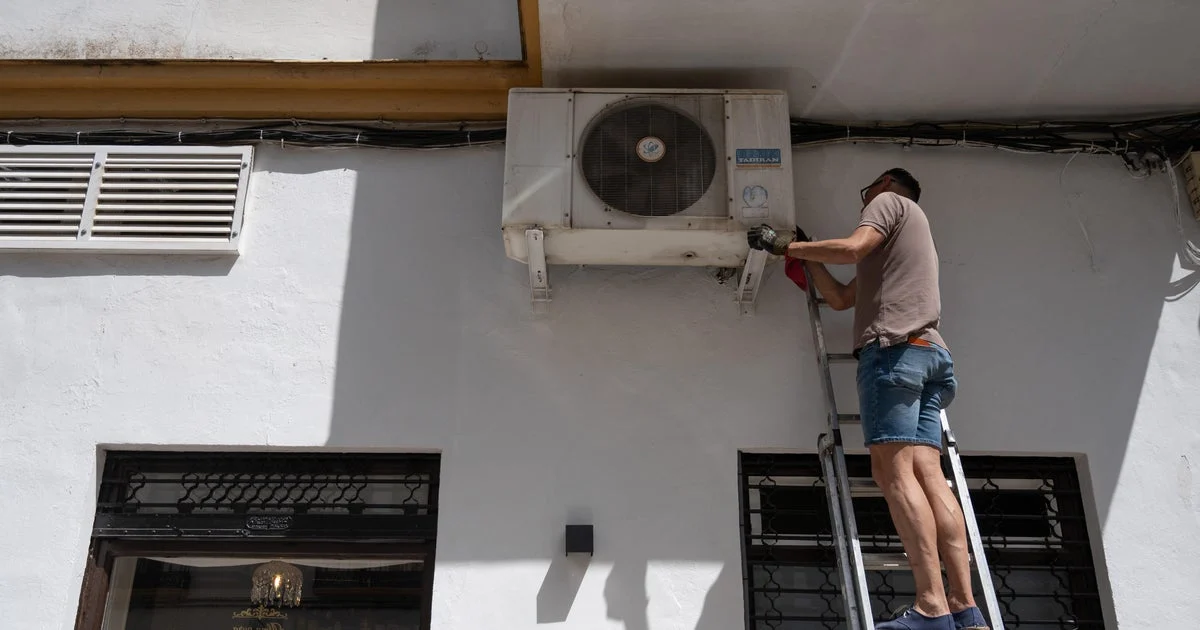
Europe is experiencing a significant shift in public acceptance of air conditioning as deadly heat waves become more frequent and intense across the continent. What was once widely regarded as an expensive luxury with high environmental costs is now becoming a critical tool to protect lives during soaring summer temperatures.
What Happened
In recent weeks, Europe has endured brutal heat waves causing severe human tolls and widespread discomfort. France recorded 40 drowning deaths linked to efforts to escape extreme heat, while temperatures in Spain soared to 111 degrees Fahrenheit (44 degrees Celsius). The United Kingdom witnessed its hottest June on record, with multiple cities breaking temperature records.
Governments across Europe, including those of Italy, France, Spain, and the UK, are confronting rising demand for air conditioning amid these heat events. Retailers in France reported selling out of units during peak heat days, and installation firms in London saw unprecedented orders. This uptick reflects a broader continental trend as heat waves become more lethal and persistent.
Key Facts
According to the World Health Organization, heat currently causes approximately 175,000 deaths annually in Europe. A 2007 study found that air conditioning can reduce heat-related mortality by up to 75%. Research published in The Lancet highlighted that in 2019 alone, 195,000 heat-related deaths among people aged over 65 were prevented by air conditioning use.
Despite this, only about 20% of European households have air conditioning, compared to 90% in the United States. Italy, following the deadly 2003 heat wave, saw adoption rise from 10–15% of households to 56% by 2024, now contributing to one-third of the European Union’s electricity consumption on air conditioning.
Europe’s rapid warming—twice the global average according to the World Meteorological Organization—is driving expectations that air conditioner stocks will double by 2050, per the International Institute of Refrigeration.
What This Means
The growing reliance on air conditioning signals a profound cultural and infrastructural shift in Europe driven by climate change. For ordinary Europeans, this means adapting to hotter summers that challenge traditional housing designs and longstanding social attitudes that prized natural ventilation and stoicism over mechanical cooling.
This shift also highlights the tension between immediate public health needs and long-term climate goals. Since air conditioning accounts for 4% of global greenhouse emissions—double that of the aviation sector—increased use raises concerns over energy consumption and carbon footprints. The need to source electricity from renewables, such as solar power, is becoming more urgent to prevent further exacerbating global warming.
Furthermore, the surge in air conditioning adoption underscores economic disparities: higher energy costs in Europe, due to natural gas dependence and lower average incomes compared to the US, may limit access for lower-income households, raising questions about equitable resilience to climate change.
Background
Historically, European architecture and climate moderated the need for air conditioning. In southern Europe, thick stone walls, small windows, and shutters helped keep buildings cool, while northern European countries had cooler summers, negating the necessity of such systems. However, decades of rising temperatures now surpass these traditional methods’ effectiveness.
Italy’s 2003 heat wave, which caused thousands of deaths, was a turning point for adoption there. Countries like the UK and France have seen rapidly growing demand only in recent years as the frequency and intensity of heat waves have intensified.
What Comes Next
European nations are pursuing policies to manage growing electricity demand linked to air conditioning. Southern EU countries like Spain, Italy, and Greece are limiting the cooling of public buildings, while northern states including the UK and Nordic countries accelerate renewable energy adoption. The UK’s recent Climate Change Committee carbon budget law aims to keep AC’s electricity demand below 1% by 2050 through efficiency and clean energy.
Innovations such as heat pumps, which provide both heating and cooling more efficiently than traditional systems, are encouraged but remain costly and slow to penetrate the market.
Sources
This article is based on reporting and publicly available information from the following sources:
Read more Climate & Environment stories on Goka World News.