
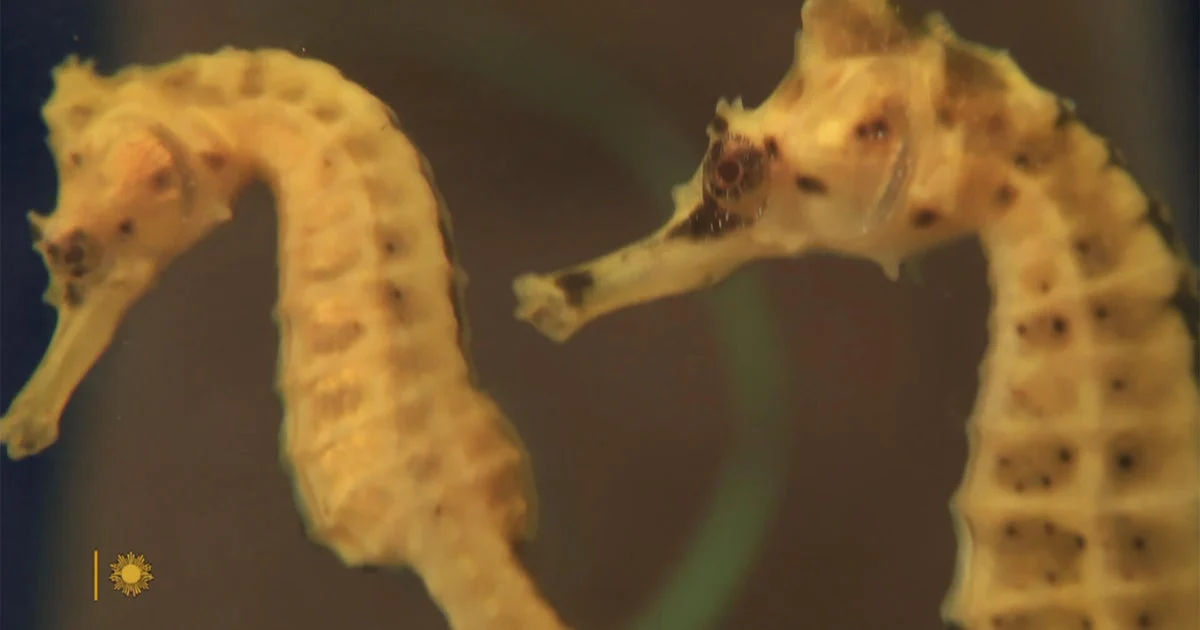
Seahorses and their close relatives, seadragons, are among the ocean’s most distinctive and intriguing species, noted for their unusual body shapes and reproductive behaviors. At the Birch Aquarium at the Scripps Institution of Oceanography in California, these creatures are studied and displayed to highlight their unique roles in marine ecosystems.
What Happened
The Birch Aquarium features seahorses and seadragons, unique fish known for extraordinary adaptations. Seahorses have a horse-like head, a pouch resembling that of a kangaroo, and flexible tails akin to monkeys. They possess specialized camouflage abilities that help them avoid predators. An uncommon reproductive trait is that male seahorses carry fertilized eggs in a pouch until they hatch, a rare example of male pregnancy in the animal kingdom. This exhibition at Scripps Oceanography educates visitors about these animals’ biology and ecology.
Key Facts
Seahorses and seadragons belong to the family Syngnathidae, which includes species known for their elongated bodies, bony armor plates, and prehensile tails. Male seahorses fertilize and then incubate eggs within a specialized pouch. Their camouflaging capability allows them to blend with underwater plants by changing color or texture, aiding survival. Seadragons, close relatives of seahorses, are known for leaf-like appendages that mimic seaweed, further enhancing their concealment.
What This Means
The presence and study of seahorses and seadragons at institutions like Birch Aquarium spotlight the diverse biological adaptations marine creatures have evolved to survive shifting ocean environments. Understanding their unique reproductive roles challenges conventional assumptions about gender in nature and enriches scientific knowledge of evolutionary pathways. Their camouflage abilities underline the complexity of underwater ecosystems, where survival often depends on blending into delicate habitats. Exhibiting these species cultivates public awareness about marine biodiversity, which is essential for fostering conservation initiatives in the face of environmental threats such as habitat loss, pollution, and climate change.
Background
Seahorses and seadragons are distributed in coastal waters worldwide, with many species considered vulnerable due to habitat degradation and collection for aquariums and traditional medicine. Conservation efforts benefit from research institutions like Scripps Oceanography, where breeding programs and educational outreach promote species protection.
Sources
This article is based on reporting and publicly available information from the following source:
Read more Science Discoveries stories on Goka World News.