
A new study published by the University of Amsterdam highlights the role of certain tropical sponges that, alongside their symbiotic photosynthetic microbes, contribute about 11% of the gross primary productivity within coral reef ecosystems. This finding revises the traditional view of sponges as purely consumers, revealing their part in photosynthesis and organic compound production under the sea.
What Happened
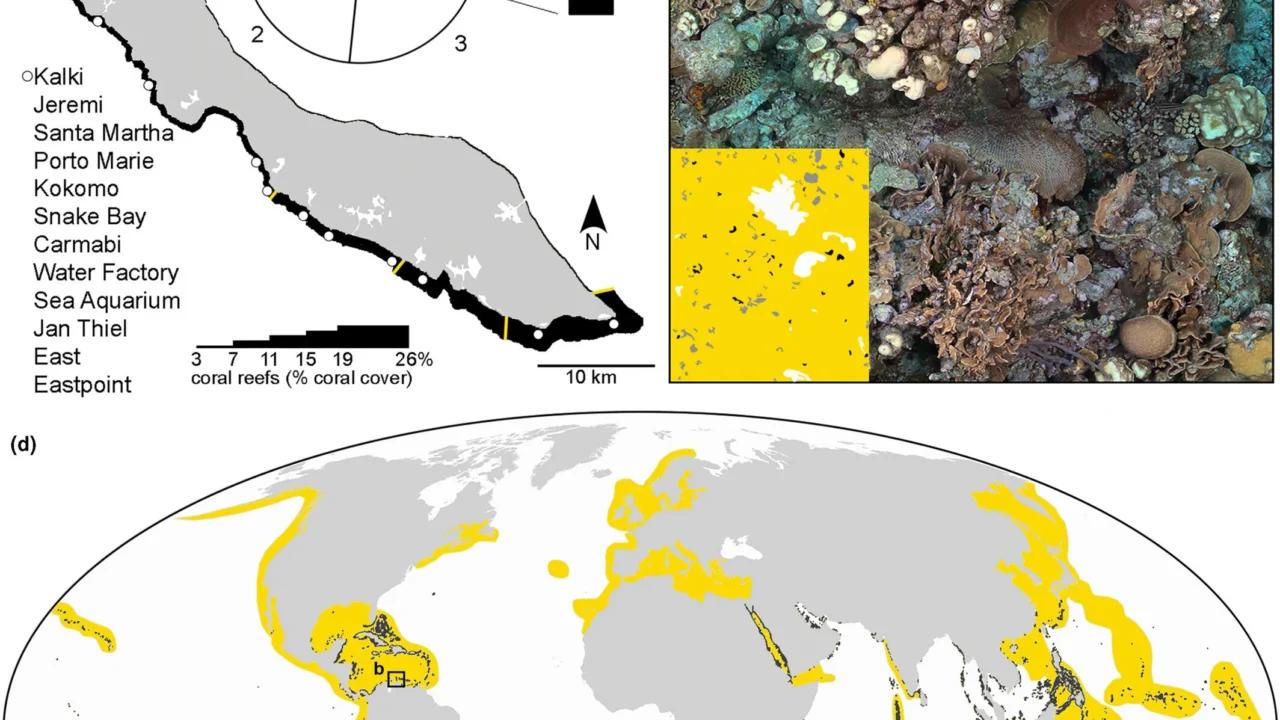
Researchers from the Institute for Biodiversity and Ecosystem Dynamics (IBED) at the University of Amsterdam conducted extensive fieldwork on reefs around Curaçao, focusing on 24 common sponge species found there. Lead researcher Michelle Achlatis and her colleagues performed detailed physiological measurements on eight species to quantify their photosynthetic activity. By scaling these individual measurements to the ecosystem level and incorporating a three-dimensional reef dataset that accounts for organism volume and richness, the team was able to estimate the overall contribution of sponges to reef productivity.
The team found that half of the sponge species studied exhibited significant photosynthetic activity via their microbial symbionts—tiny microbes capable of converting sunlight into organic material. Collectively, these photosynthetic sponges accounted for 11% of the reef’s gross primary productivity, a contribution previously unrecognized in coral reef ecological models.
Key Facts
- The study focused on 24 sponge species from Curaçao coral reefs.
- Eight species underwent detailed photosynthesis measurements.
- Photosynthetic sponges provide 11% of gross primary productivity on the reef.
- Researchers used a three-dimensional reef dataset to approximate the volume and biomass distribution of sponges.
- Findings published in the peer-reviewed journal Functional Ecology (2026) under DOI: 10.1111/1365-2435.70311.
- The research highlights sponges’ dual role as filter feeders and primary producers, mediated by their symbiotic photosynthetic microbes.
What This Means
This study challenges the longstanding classification of sponges solely as heterotrophic organisms, shifting them into a dual functional category involving photosynthesis through microbial symbionts. As a result, sponges should no longer be considered only consumers in coral reef food webs but also notable producers, directly contributing to the ecosystem’s energy base.
The ecosystem-level implications are important for understanding coral reef carbon cycling and productivity estimates, especially in light of climate change and reef degradation. If sponges’ photosynthetic contributions are widespread in tropical reefs, they could influence models of carbon sequestration and nutrient dynamics. For marine ecologists, this means that future ecosystem assessments must integrate the photosynthetic roles of sponges to accurately reflect reef metabolism and resilience.
Moreover, recognizing the photosynthetic capabilities in sponges and their microbial partnerships underscores the complexity of marine ecosystems, where traditional boundaries between plants and animals blur, reflecting more intricate trophic relationships and energy pathways than terrestrial analogs.
Background
Sponges have long been known as efficient filter feeders, extracting organic material from seawater. Past research had revealed the presence of photosynthetic microbes within some sponge species, but these findings were limited to a few species and did not quantify their ecological impact on reef productivity. This study expands the scope by investigating a broader array of species and scaling findings to the entire reef ecosystem.
Researchers utilized advanced three-dimensional reef mapping to better estimate sponge abundance and biomass, surpassing traditional two-dimensional survey methods that underestimate these benthic organisms’ presence.
Analysis
Jasper de Goeij, associate professor of marine benthic ecology at IBED and co-author of the study, emphasized the significance of these findings for marine biology’s conceptual frameworks. He stated that sponges, alongside their microbial partners, photosynthesize similarly to plants, challenging the strict categorization of marine organisms as either plant or animal. This greater ecological nuance affects how scientists model energy flow and nutrient cycling in ocean habitats.
What Remains Unclear
The extent to which these photosynthetic processes occur in sponges outside of tropical reefs remains to be established. Further research is needed to determine geographical and species-specific variability in photosynthetic rates and how environmental factors modulate these dynamics. Additionally, the precise contribution of photosynthetic sponges to carbon sequestration at global scales has yet to be quantified.
What Comes Next
Future studies will likely focus on expanding geographic coverage to other coral reefs and sponge-rich ecosystems, validating whether similar photosynthetic contributions occur. Researchers may also explore the potential role of these sponges in reef restoration efforts and how their multitasking feeding strategies affect ecosystem resilience under environmental stressors.
Sources
This article is based on reporting and publicly available information from the following source:
Read more Science Discoveries stories on Goka World News.