
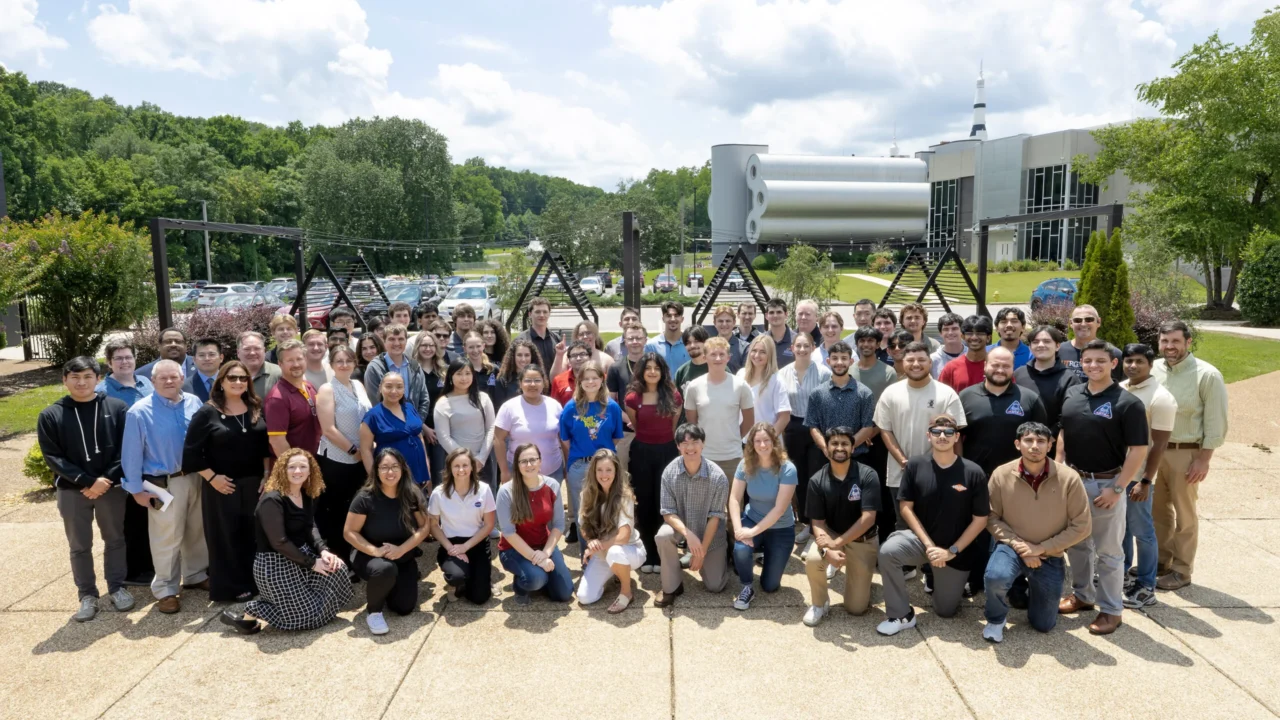
NASA has announced the winners of the 2026 Human Lander Challenge, recognizing university teams that developed innovative environmental control and life support systems (ECLSS) for future crewed lunar landers supporting the Artemis program. The challenge concluded on June 25 near NASA’s Marshall Space Flight Center in Huntsville, Alabama, marking a significant step in advancing technology vital to sustained lunar exploration and eventual missions to Mars.
What Happened
Since September 2025, 12 student teams from universities across the United States participated in the Human Lander Challenge, focusing on designing systems-level solutions to improve performance and reliability of life support and environmental control technologies for deep space missions. The finalists convened at the U.S. Space & Rocket Center in Huntsville on June 22 to present their projects to NASA experts, aerospace professionals, and their peers. After thorough evaluation, California Polytechnic State University earned the top prize for their Peltier-based Hydration Accumulation Terminal project, winning $10,000. Purdue University secured second place with their Enhanced Potable Water Dispenser, receiving $5,000, while Embry-Riddle Aeronautical University in Daytona Beach took third place and a $3,000 prize for their Advanced Quality Orbital Rehydration Assembly.
Key Facts
The Human Lander Challenge is coordinated by NASA’s Human Landing System Program, managed at Marshall Space Flight Center, and administered by the National Institute of Aerospace. The challenge is part of a broader effort within the Artemis program, which aims to return astronauts to the Moon in 2028 and establish a sustainable presence. The winning projects specifically target environmental control and life support systems critical for astronaut health and safety during long-duration missions, including hydration and potable water management technologies. The student teams’ work was evaluated on technical merit, systems integration, and applicability to human lunar landing systems.
What This Means
The outcomes of the 2026 Human Lander Challenge represent more than academic competition; they contribute directly to the technological groundwork needed for future lunar missions. Effective environmental control and life support systems are essential for maintaining astronaut safety and mission success, especially as NASA focuses on extended stays on the Moon under Artemis. By encouraging university students to apply systems-level thinking and engineering innovation, NASA is cultivating the next generation of aerospace professionals while simultaneously advancing key technologies. Innovation in hydration and water management systems, as showcased, addresses fundamental needs for sustainable human habitation beyond low Earth orbit, which is critical for NASA’s vision of deep space exploration and eventual crewed missions to Mars.
Background
The Human Lander Challenge supports NASA’s Artemis program, which plans to send astronauts to the lunar surface by 2028 and develop infrastructure for ongoing exploration. The human landing system—the spacecraft that ferries astronauts between lunar orbit and the surface—is central to these efforts. Reliable environmental control and life support technologies are fundamental components of the landing system, enabling astronauts to survive and work safely in the harsh conditions of space and the Moon. Previous challenges and technological development have laid the foundation, but this student competition introduces fresh perspectives and novel engineering approaches.
What Comes Next
NASA may consider the innovative student solutions as potential contributions to ongoing development of Artemis landers and other crewed spaceflight systems. Continued Artemis milestones include spacecraft development, testing, and eventual crewed missions targeting a sustainable lunar presence and preparation for Mars exploration. The agency remains committed to fostering collaboration with academic institutions to enhance mission capabilities and workforce readiness.
Sources
This article is based on reporting and publicly available information from the following sources:
Read more Space & NASA stories on Goka World News.