
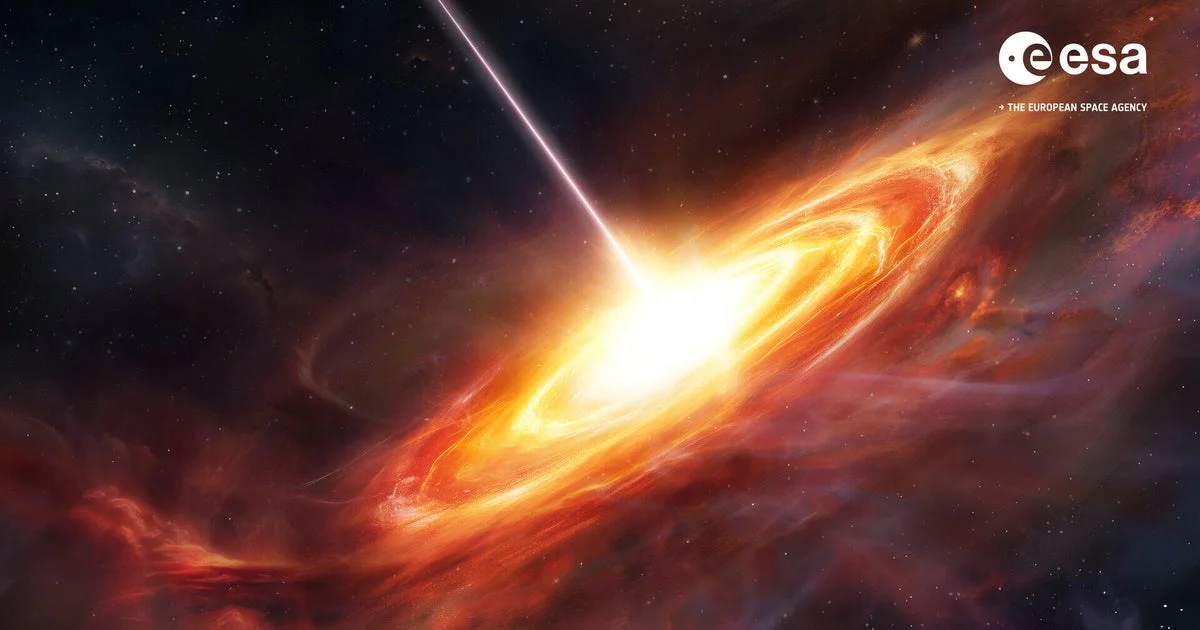
The European Space Agency’s Euclid space telescope has uncovered 31 ancient quasars, among them the oldest quasars ever detected, offering astronomers an unprecedented look into the infancy of the universe. These findings challenge existing understanding of early galaxy and black hole formation.
What Happened
An international team of astronomers announced on July 6, 2026, that the Euclid telescope spotted 31 quasars dating back to the epoch of reionization, when the first stars and galaxies formed after the cosmic dark ages. Among these, two quasars represent the oldest observed, with light emitted when the universe was just 670 million years old—about 5% of its current age of 13.8 billion years. This discovery improves upon the team’s previous record set in 2021 by roughly 20 million years.
Launched in 2023 and positioned around 1.5 million kilometers from Earth, Euclid has doubled the number of known ancient quasars in just two years. Its ability to detect fainter light across vast areas of sky marks a significant advance over earlier ground-based telescopes that primarily identified the brightest objects.
Key Facts
Quasars are luminous phenomena powered by supermassive black holes consuming surrounding matter, shining trillions of times brighter than the sun. The newly observed quasars weigh billions of solar masses, existing at a much earlier cosmic time than previously expected. Euclid’s six-year mission involves mapping approximately one-third of the sky, imaging galaxies and clusters as far back as 10 billion years.
The study is led by PhD student Daming Yang of Leiden University and published in Astronomy & Astrophysics. Data from the James Webb Space Telescope are also being analyzed to complement these findings. Euclid has also captured remarkable images of galaxy clusters such as Abell 2390 and the Perseus cluster, showcasing tens of thousands of galaxies.
What This Means
These discoveries deepen a long-standing cosmic mystery regarding how gargantuan black holes formed so rapidly after the Big Bang. Finding quasars with masses billions of times that of the sun from such an early epoch suggests that current models of galaxy and black hole growth may be incomplete. It raises questions about the mechanisms that enabled such swift development in a universe only a fraction of its present age.
For the scientific community, Euclid’s ability to detect fainter quasars dramatically expands the observable sample size, enabling a more detailed reconstruction of early cosmic history and reionization processes. For broader audiences, these insights contribute to humankind’s evolving understanding of where we come from, the evolution of cosmic structures, and the conditions that eventually led to the formation of planets and life.
In practical terms, this could reshape astrophysical theories and influence future telescope designs targeting the universe’s earliest phases. By expanding the timeline and mass range of known black holes, the research helps clarify the dynamic environment of the young cosmos.
Background
Quasars act as cosmic lighthouses, illuminating the gas and matter between them and Earth, enabling scientists to trace how the universe underwent reionization—a pivotal era ending the cosmic dark ages. Previous quasar discoveries were limited mostly to the brightest objects detectable from Earth-based telescopes. Euclid’s launch marked a new era in space observation, positioned well beyond Earth’s orbit for stable, undisturbed viewing.
The Bigger Picture
As astronomical instruments grow more powerful, discoveries continue to challenge conventional theories about the early universe’s pace of structure formation. Each new detection of ancient, massive objects compounds the question of how early galaxies and black holes assembled so quickly. Euclid’s findings align with others from telescopes like James Webb, collectively prompting a re-examination of the cosmic timeline during galaxy evolution and supermassive black hole growth.
What Comes Next
The research team plans to analyze additional data from the James Webb Space Telescope to further investigate these and potentially older quasars. Over its mission, Euclid will continue to survey vast regions of the sky, steadily building a detailed quasar chronicle spanning the first billion years of cosmic history. This extended dataset will inform future investigations into the origin and acceleration of early cosmic structures.
Sources
This article is based on reporting and publicly available information from the following sources:
Read more Space & NASA stories on Goka World News.