
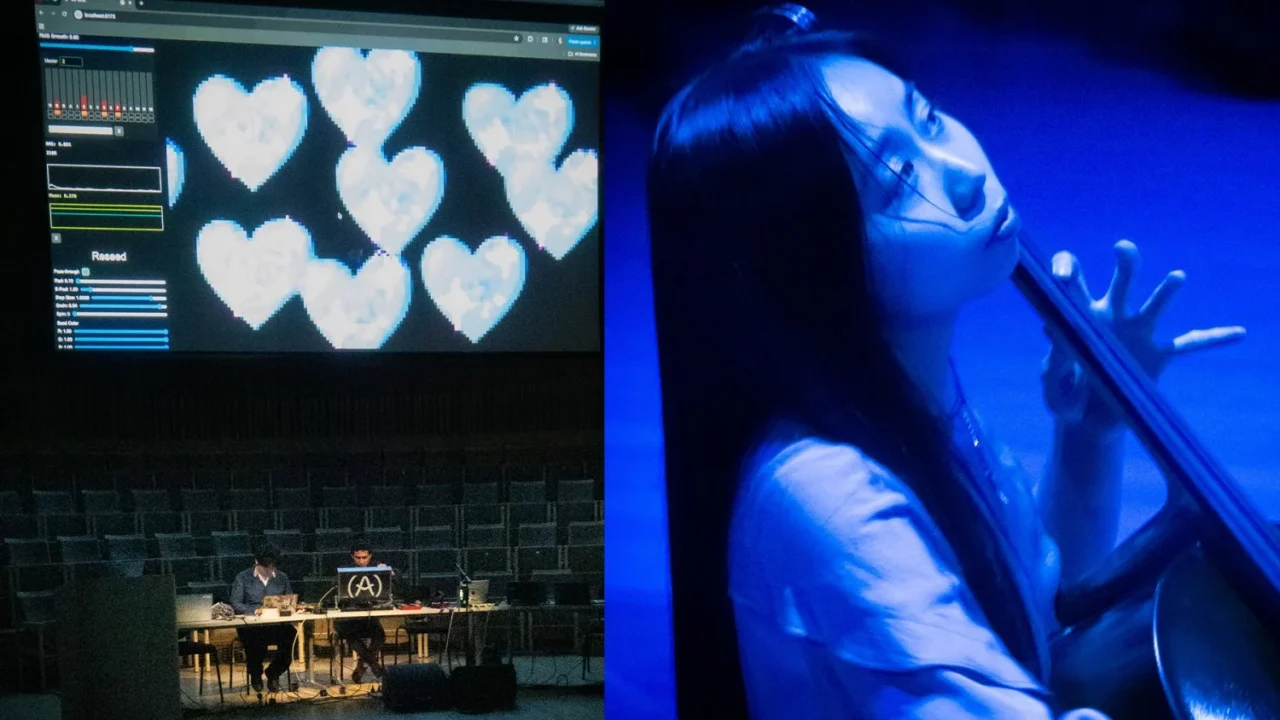
MIT has officially launched its Music Technology and Computation (MTC) Graduate Program, presenting its inaugural research showcase on May 13, 2026. This event highlighted innovative interdisciplinary projects developed by the program’s first cohort of students, demonstrating cutting-edge work at the intersection of music, engineering, and artificial intelligence.
What Happened
MIT’s MTC Graduate Program, established in fall 2024 as a joint initiative between the School of Humanities, Arts, and Social Sciences (SHASS) and the School of Engineering (SoE), held its inaugural Music Technology Research Showcase at the Thomas Tull Concert Hall in the Edward and Joyce Linde Music Building. The standing-room-only event featured presentations and live demonstrations from the five inaugural graduate students, all former MIT undergraduates, along with several PhD students and faculty members.
Projects ranged from machine-learning models that decode imagined music from brainwaves to real-time AI-assisted piano improvisation visualizations and interactive music visualization tools. Faculty leaders and deans from both participating schools delivered opening remarks emphasizing the program’s interdisciplinary roots and its ambition to position MIT as a global leader in music technology research.
Key Facts
The program represents a collaboration between MIT’s Music and Theater Arts Section within SHASS and the School of Engineering, including Electrical Engineering and Computer Science (EECS). It benefits from new facilities in the Edward and Joyce Linde Music Building, scheduled to open in 2025, which provide classrooms, studios, rehearsal spaces, and a dedicated music technology laboratory.
The inaugural class comprised five students—all MIT alumni from prior undergraduate programs—who completed the first year of the accelerated one-year master’s curriculum. Ten new master’s students were admitted for the 2026–27 academic year, with applicants exceeding 100. About projects on display, key highlights included Claire Southard’s machine-learning work decoding musical notes from EEG brain signals and Mariano Salcedo’s custom web app generating emergent visuals influenced by real-time streamed music.
Program director Eran Egozy, a professor of the practice of music, alongside SHASS Dean Agustín Rayo and SoE Dean Paula Hammond, underscored the program’s emphasis on blending artistic creativity with technological rigor to create new forms of music expression enriched by AI and computational methods.
What This Means
MIT’s launch of a dedicated graduate program in music technology reflects an expanding recognition of the powerful synergy between STEM fields and the creative arts. By fostering collaboration between musicians, engineers, and computer scientists, the program is poised to accelerate innovation in AI-driven music creation, accessibility, and interactive experiences.
For artists and technologists alike, this initiative opens new pathways for pioneering work that addresses challenges such as physical disabilities preventing traditional instrument playing, as exemplified by EEG-based musical decoding research. It also nurtures tools for collaborative human-AI improvisation and novel visualization of music, positioning MIT at the forefront of shaping the future of music production and performance in an increasingly digital and AI-enhanced environment.
Moreover, the program’s ability to attract diverse applicants and faculty from across disciplines suggests it will cultivate a rich ecosystem of experimentation that encourages thoughtful engagement with technology’s impact on culture, creativity, and societal inclusion. It highlights the importance of human-centric approaches in AI and music technology development, informing a broader conversation on technology’s role in enhancing human expression.
Background
The MTC Graduate Program was created with support from MIT’s Schwarzman College of Computing and new physical resources at the Edward and Joyce Linde Music Building. It bridges academically rigorous computing and engineering disciplines with the artistic traditions of MIT’s Music and Theater Arts Section, reflecting a growing trend in interdisciplinary education.
Prior MIT research in music technology includes faculty-led work in AI-assisted music composition and performance, and machine-learning applications for music signal processing. The program’s inaugural cohort demonstrated that students could meaningfully engage in research and creation within a concentrated one-year timeframe, an approach initially debated against a more typical two-year master’s plan.
What Comes Next
The MTC program will expand its student base in the upcoming academic year to include graduates from other institutions, enhancing its diversity and breadth of backgrounds. Faculty will continue to invite new PhD students into related labs in EECS, fostering longer-term research development in music technology.
The program is also launching a new interdisciplinary course, “Tuning Attention: Creative Practices in Movement, Sound, and AI,” co-taught by Associate Professor Anna Huang and Professor Grisha Coleman, focusing on the interaction between musical improvisation, somatic movement, and AI-driven systems.
Sources
This article is based on reporting and publicly available information from the following sources:
Read more Science & Technology stories on Goka World News.