
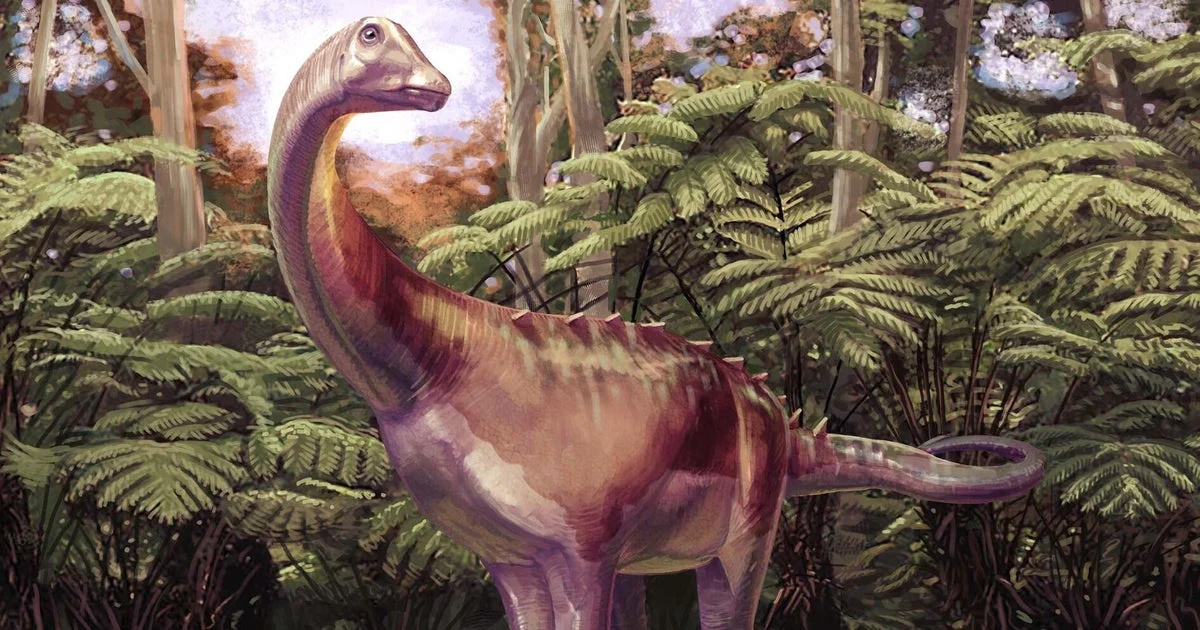
Scientists have identified a rare dinosaur fossil discovered over 40 years ago in Antarctica, marking the continent’s first confirmed dinosaur bone find. The fossil, a tail bone from a titanosaur—an herbivorous dinosaur known for its long neck—was originally collected on James Ross Island in 1985 but only recently recognized as dinosaurian through renewed research.
What Happened
The bone was uncovered during a 1985 geological expedition led by Mike Thomson as part of efforts to map rock layers and collect marine reptile fossils near Antarctica’s northeastern James Ross Island. Initially cataloged simply as a “large reptile,” it remained unexamined in storage until paleontologist Mark Evans of the British Antarctic Survey noticed the specimen and suspected it might be dinosaurian. Following detailed shape analysis and comparisons to known titanosaur fossils, the research team confirmed its identity. The study reporting these findings was published on June 29, 2026, in Acta Palaeontologica Polonica.
Key Facts
The fossil represents a tail vertebra from a titanosaur, a group of long-necked, four-legged plant-eating dinosaurs that inhabited Antarctica approximately 80 million years ago during the Late Cretaceous period. The individual dinosaur was about 23 feet (7 meters) long, relatively small for titanosaurs, suggesting it might have been a juvenile. This specimen constitutes only the second confirmed sauropod body fossil from Antarctica, with the first body fossil discovered later. The bone likely fossilized after the animal’s carcass floated from coastal areas and settled on the sea floor within marine sedimentary rock.
What This Means
This discovery enriches our understanding of Antarctica’s prehistoric ecosystem, which was dramatically different from today’s icy landscape. During the Late Cretaceous, Antarctica was covered with dense forests, supporting diverse dinosaur species like titanosaurs. Finding this fossil expands evidence of dinosaur distribution into polar regions, demonstrating that these large herbivores adapted to the cooler, forested environments of the time.
The identification also highlights the value of reassessing archival fossil collections with modern techniques and expertise. Advances in imaging technology now allow scientists to extract more information from fragmentary fossils, which can illuminate evolutionary histories and ancient biodiversity without the need for new digs in challenging environments like Antarctica. For the scientific community and the public, such findings underscore how much remains to be uncovered about Earth’s distant past.
Background
Antarctica’s dinosaur fossils are scarce mainly due to its harsh climate and ice coverage, which limit fossil exposure. Previous discoveries of polar dinosaurs have been limited, and titanosaurs are known worldwide with over 100 species identified. These sauropods were notable for their massive size, some exceeding 100 feet long and weighing upwards of 60 tons. The discovery adds to this global record by confirming that titanosaurs also thrived in Antarctic forests millions of years ago.
Sources
This article is based on reporting and publicly available information from the following sources:
Read more Science Discoveries stories on Goka World News.