
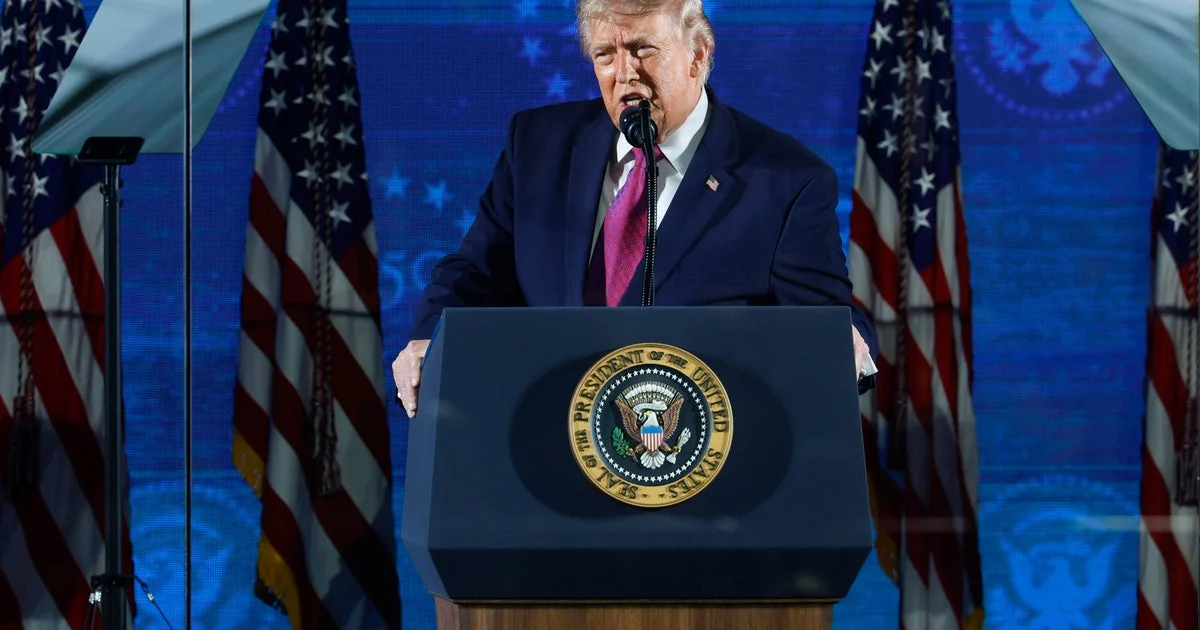
President Donald Trump delivered a fiery Independence Day eve speech at Mount Rushmore in Keystone, South Dakota, warning of a revival of communism in the United States and emphasizing the protection of American culture. Speaking on July 3, Trump called on Americans to reject what he described as radical and extremist threats undermining the nation’s founding values.
What Happened
On the night of July 3, 2026, President Trump addressed a crowd gathered at the Mount Rushmore National Memorial during the kickoff of the 250th anniversary of July 4th celebrations. Against the backdrop of the granite faces of former presidents, he framed American identity as being under attack by a “communist menace,” which he said included newcomers embracing ideologies contrary to American values.
Trump characterized a clear divide between communism and patriotism, stating, “You can be a communist, or you can be a patriot. You cannot be both.” He urged those present to cherish American culture, freedom, independence, and the right to free speech, religious worship, and firearms ownership. The event coincided with preparations for what was to become the largest fireworks display in U.S. history as part of the bicentennial celebrations.
In addition to his cultural warnings, Trump called for political action ahead of the midterm elections. He advocated abolishing the Senate filibuster and passing the SAVE America Act, legislation aimed at tightening voter registration by requiring proof of U.S. citizenship and valid photographic ID before ballots are cast.
Key Facts
The speech took place at Mount Rushmore, located near Keystone, South Dakota, on July 3, 2026. Trump explicitly targeted “radicals” and “extremists” whom he said threaten American ideals. He promoted the SAVE America Act, which would impose stricter voter eligibility verification measures. The occasion marked the beginning of America 250, commemorating the nation’s 250th anniversary.
What This Means
Trump’s speech underscores ongoing domestic political tensions, particularly around cultural identity and election laws. His framing of communism as a resurging threat seeks to rally his political base by portraying ideological opposition as existential, potentially influencing voter turnout and legislative priorities in the upcoming midterms.
The push to abolish the filibuster and enforce voter ID laws reflects long-standing Republican efforts to reshape federal election rules, raising debates about voter accessibility versus election security. For the public, these developments signal a continued partisan battleground over how American democracy and national identity are defined and protected.
Set against the symbolic site of Mount Rushmore during a milestone anniversary, the speech also reinforces historical narratives that resonate with many Americans, linking national pride and republicanism with current political challenges. The event’s timing and location amplify its emotional and cultural impact.
Background
The SAVE America Act, referenced by Trump, is a legislative proposal that would require Americans to prove citizenship when registering to vote, alongside showing photo identification at the polls, measures often championed by Republicans amid concerns about election integrity.
This speech follows years of political rhetoric about ideological threats domestic and foreign, with Trump repeatedly casting communism as incompatible with American values. Mount Rushmore has previously served as a site for nationalistic events, underscoring its symbolic role in American history.
What Comes Next
With the midterm elections approaching, the proposed abolition of the filibuster and passage of voting reforms like the SAVE America Act remain key Republican priorities. Legislative efforts and political campaigns are expected to intensify around these issues in the coming months.
Sources
This article is based on reporting and publicly available information from the following source:
Read more Politics stories on Goka World News.