
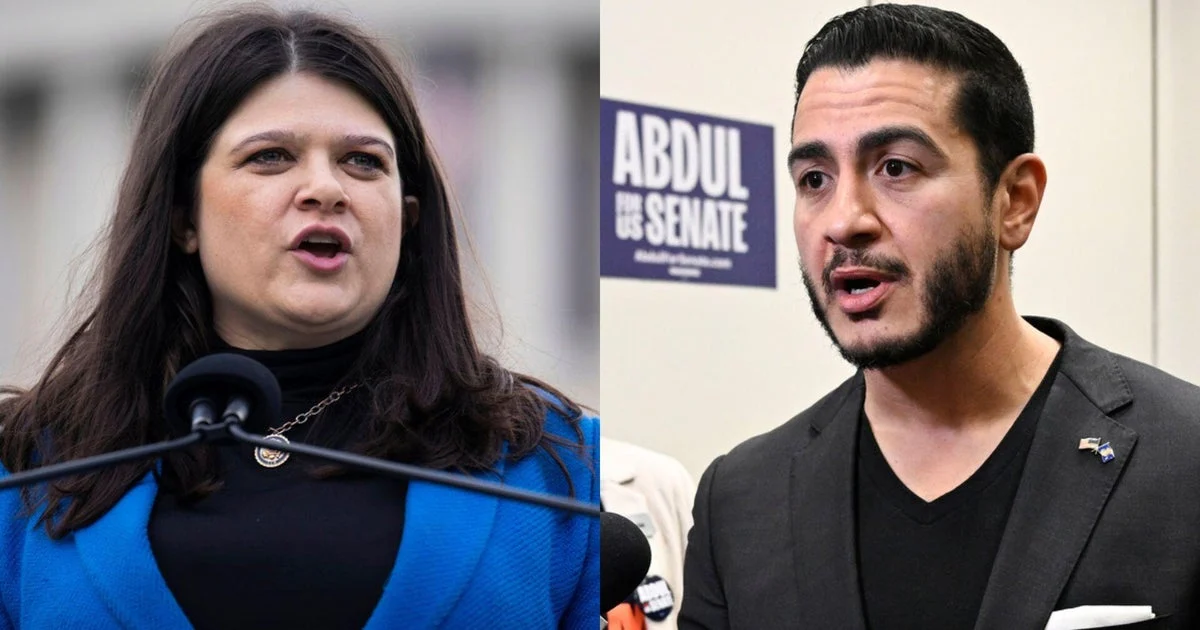
Michigan Democratic Senate contenders Haley Stevens and Abdul El-Sayed engaged in a sharply contested debate on July 7, spotlighting significant divisions over Israel policy, campaign financing, and the future direction of the Democratic Party. The debate came just days after fellow Democrat Mallory McMorrow ended her campaign, reshaping the primary race ahead of the August 4 vote.
What Happened
During a one-on-one debate, Stevens, a moderate backed by Senate Minority Leader Chuck Schumer, and El-Sayed, a progressive supported by Senator Bernie Sanders and Representative Alexandria Ocasio-Cortez, clashed over their stances on Israel and campaign finance. Stevens accused El-Sayed’s campaign of receiving assistance from Republican interests aiming to clear the path for former GOP representative Mike Rogers in the general election. She also criticized El-Sayed for seeking publicity rather than substantive work in the Senate. El-Sayed countered by denouncing Stevens as beholden to corporate donors and the pro-Israel lobby AIPAC.
The debate highlighted differing foreign policy approaches: El-Sayed criticized U.S. support to Israel, calling it complicity in human rights abuses and apartheid, and advocating against continued U.S. aid and arms sales. Conversely, Stevens emphasized a two-state solution, supporting Israel’s right to peacefully coexist with Palestinians, while criticizing both former President Trump and Israeli Prime Minister Netanyahu for their roles in escalating regional tensions. The debate further featured heated exchanges concerning outside spending and campaign transparency, with Stevens questioning El-Sayed’s failure to release recent tax returns and El-Sayed linking Stevens to corporate fundraising influence.
Key Facts
The Michigan Democratic Senate primary is scheduled for August 4, with the winner set to face Mike Rogers, who narrowly lost to Democrat Elissa Slotkin in 2024. Democratic Senator Gary Peters, who currently holds the seat, is retiring. This seat is critical, as Democrats seek to regain Senate control by flipping at least four seats while defending incumbents like this one.
Stevens is backed by Senate Minority Leader Chuck Schumer. El-Sayed receives support from progressive figures such as Senator Bernie Sanders and Representative Alexandria Ocasio-Cortez. McMorrow’s withdrawal from the race two days before the debate eliminated a candidate positioning herself as a centrist alternative to Stevens and El-Sayed.
Moderated by Rick Albin of WOOD TV8, the debate featured off-script moments addressing campaign finance and transparency issues. Both candidates have requested extensions on financial disclosures.
What This Means
This debate underscored a key ideological rift within Michigan’s Democratic voters ahead of an important primary. The candidates’ divergent views on Israel signal the broader national debate within the party between moderates who maintain traditional foreign policy alliances and progressives pushing for a reassessment of U.S. support in the Middle East. Given Michigan’s strategic Senate seat, these positions could influence not only the primary outcome but also Democratic messaging heading into the general election.
Moreover, the focus on campaign funding exposes concerns over transparency and outside influence that could resonate with voters wary of corporate money in politics. The personal and financial attacks exchanged may intensify scrutiny over election financing in this highly competitive race. Ultimately, the August 4 primary will reveal whether Michigan Democrats prefer a centrist approach aligned with party leadership or a progressive challenge marking a shift toward grassroots-funded politics.
Background
The Senate seat is open due to Senator Gary Peters’ retirement after serving multiple terms. Mike Rogers, the Republican candidate, narrowly lost the seat in 2024, making this a key battleground race in 2026. The primary initially included state Senator Mallory McMorrow, who suspended her campaign on July 5, leaving Stevens and El-Sayed as the leading contenders.
Stevens has a record as a moderate U.S. Representative, with past support for trade deals such as the U.S.-Mexico-Canada Agreement, which faces criticism in Michigan’s manufacturing sectors. El-Sayed, a former state health official, casts himself as a progressive alternative, challenging corporate influence in politics and critiquing established foreign policy.
What Comes Next
Michigan Democrats will hold their primary election on August 4. The winner of the Stevens-El-Sayed contest will face Republican Mike Rogers in the crucial general election this November, where the Democrats aim to defend the seat to secure Senate majority control.
Sources
This article is based on reporting and publicly available information from the following source:
Read more Politics stories on Goka World News.