
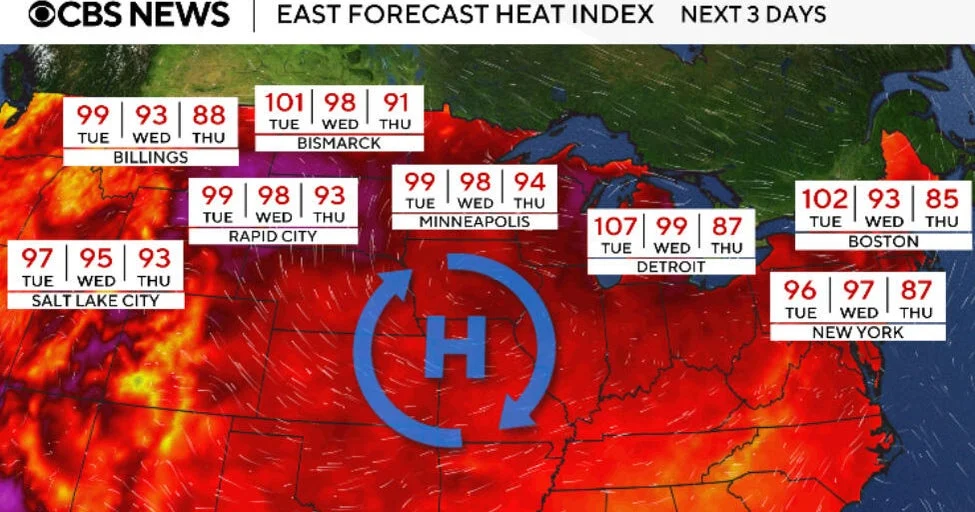
Millions of Americans from the Plains to the Northeast are enduring extreme heat this week as a heat dome that originated in the western United States pushes eastward, sparking record temperatures and heightened wildfire risks.
What Happened
In multiple states spanning the northern Plains, the Rockies, and the desert Southwest through to the Northeast, dangerously high temperatures have set new records. Billings, Montana, hit 111 degrees on Sunday, breaking local heat records. Salt Lake City, Utah, recorded an unprecedented 109 degrees, surpassing prior highs dating back decades. Several states, including Utah and the Dakotas, are under extreme heat warnings extending through at least Tuesday morning.
The heat dome is causing temperatures to soar 20 to 30 degrees above normal for mid-July, with the peak heat expected on Tuesday in parts of the northern tier and Wednesday in the Northeast. Heat indexes are forecasted to reach the high 90s to over 100 degrees in many areas. The National Weather Service has stressed that record-breaking highs combined with warm nighttime temperatures will sustain significant heat stress across these regions.
At the same time, California and Arizona are experiencing dangerously hot weather, with Southern California battling the Summit Fire near Los Angeles, which has consumed nearly 3,000 acres and prompted evacuations. Firefighters continue to combat wildfires in Colorado’s high country, including the Aspen Acres Fire that destroyed over 850 structures, with Senator John Hickenlooper calling for increased wildfire funding.
In contrast to the dry heat threatening much of the country, parts of the southern U.S. face heavy rain and flash flooding, such as historic floods in Missouri and damaging microbursts in Philadelphia, which led to a disaster emergency declaration by the city’s mayor.
Key Facts
According to the National Weather Service and CBS News meteorologists:
- Approximately 100 million Americans are under heat alerts this week.
- Billings, Montana reached 111°F on July 12, 2026.
- Salt Lake City, Utah hit an all-time high of 109°F on the same day.
- Utah remained under extreme heat warnings through Tuesday morning.
- The Summit Fire near Los Angeles burned nearly 3,000 acres with 31% containment as of Sunday evening.
- The Aspen Acres Fire in Colorado destroyed more than 850 structures.
- Multiple wildfires sparked in Colorado on July 12 as crews fight ongoing blazes.
- Heavy thunderstorms and flash floods affected southern states like Louisiana, Missouri, and Pennsylvania.
What This Means
This heat wave underscores how extreme weather events continue to intensify and stretch across vast regions, putting public health and safety at considerable risk. Prolonged exposure to such high temperatures increases the possibility of heat-related illnesses, including heat stroke, especially in communities without adequate cooling resources. The persistent night-time heat offers little respite, compounding health risks for vulnerable populations such as the elderly and those with chronic conditions.
The wildfire outbreaks fueled by the extreme heat not only threaten to devastate homes and ecosystems but also strain firefighting resources already stretched thin. Calls from lawmakers for increased funding reflect a growing acknowledgment of the need to bolster firefighting capabilities amid climate-driven wildfire seasons. For residents, this means heightened risks of evacuation and property loss.
Furthermore, the contrast between regions facing scorching heat and others experiencing heavy rain and flooding highlights the complexity of climate impacts currently shaping daily life across the U.S. Municipalities must therefore prepare not just for heat emergencies but also for the increased likelihood of simultaneous severe weather events.
What Comes Next
The National Weather Service forecasts that the heat dome will linger through the coming week, particularly in central regions, with hazardous heat conditions expected to persist and potentially increase wildfire threats. Emergency management agencies in affected states are monitoring conditions closely and have issued warnings urging residents to take precautions against heat stress and fire dangers. Fire crews continue battling active wildfires while preparing for possible new ignitions amid ongoing hot, dry weather.
Sources
This article is based on reporting and publicly available information from the following sources:
Read more Climate & Environment stories on Goka World News.