
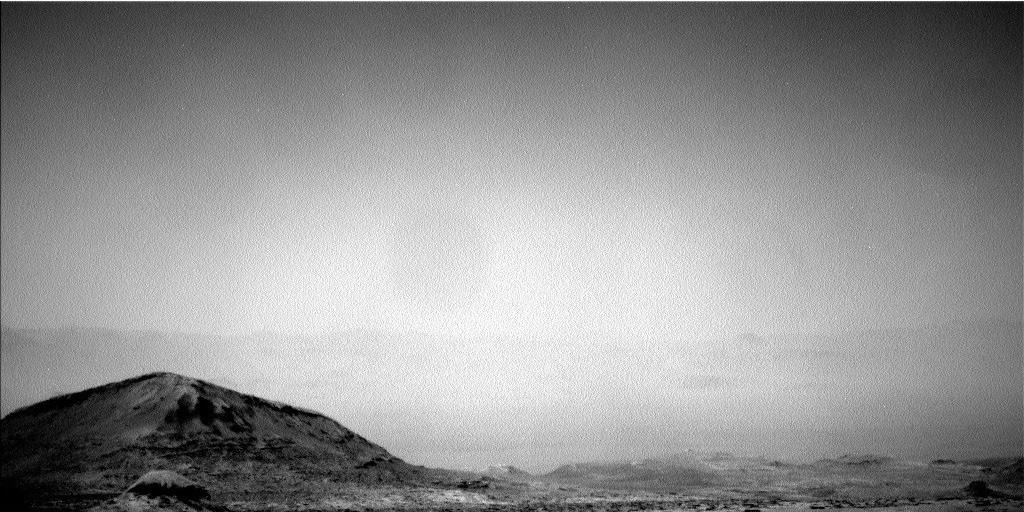
NASA’s Curiosity rover has continued its detailed exploration of Gale Crater on Mars, focusing on diverse geological formations and seasonal atmospheric changes. Over the course of a week, the rover conducted analyses of several distinct local rock units, including unusual dark rocks that may be meteorites or foreign to the area, while also tracking the shifting dust and cloud patterns as Martian summer wanes.
What Happened
During sols 4947 to 4953, Curiosity moved rapidly across three mapped geological units within Gale Crater, conducting contact science at each stop with its MAHLI (Mars Hand Lens Imager) and APXS (Alpha Particle X-Ray Spectrometer) instruments. The rover’s ChemCam instrument employed its Laser-Induced Breakdown Spectroscopy (LIBS) to analyze the chemical composition of rocks, including two notably darker specimens encountered on Monday and Wednesday that stood out from surrounding material. These analyses aim to understand whether these dark rocks originated locally or from elsewhere, possibly as meteorites.
Throughout the week, Mastcam and ChemCam provided medium- to long-range imaging to contextualize these areas of interest, capturing images of buttes and erosional features that help reconstruct past environmental conditions in Gale Crater. In parallel, Curiosity’s atmospheric instruments, particularly the REMS (Rover Environmental Monitoring Station) suite, continuously recorded meteorological data, monitoring the seasonal transition from the dusty “C” storm season toward the incoming cloudy period as the Mars year approaches autumn.
Key Facts
- Curiosity completed scientific work at three distinct geological units within Gale Crater during sols 4947-4953.
- Contact analyses employed MAHLI and APXS instruments, while ChemCam LIBS examined rock compositions, targeting dark-toned rocks of potential meteoritic origin.
- Mastcam and ChemCam captured detailed images of surrounding terrain including buttes and erosion textures.
- The REMS instrument suite provided continuous atmospheric measurements, observing seasonal changes in dust and cloud activity.
- The work occurred as Mars approaches the end of its summer season in Gale Crater, transitioning from the dusty “C” storm period into a cloudier phase.
What This Means
Curiosity’s investigation of uniquely dark rocks offers valuable insights into Gale Crater’s geological history, including the potential discovery of meteorites or transported materials that can reveal Mars’ broader planetary processes. Understanding these rocks’ composition and origin contributes to reconstructing Mars’ ancient environments, informing hypotheses about water activity, erosion, and atmospheric conditions over geologic time.
At the same time, close monitoring of seasonal atmospheric changes helps scientists track dust storm cycles and cloud formation, which are critical for assessing both Martian climate patterns and future mission planning. As dust storms can affect rover operations and solar power availability for other missions, timely observations by Curiosity enhance readiness for upcoming seasonal challenges on Mars.
Background
Gale Crater has been Curiosity’s exploration site since 2012, chosen for its layered sedimentary rock formations that preserve a history of ancient lakes and a potentially habitable environment. The rover’s comprehensive suite of instruments enables detailed examination of rock textures, chemical makeup, and environmental conditions, gradually building a complex picture of Mars’ past.
What Comes Next
Curiosity will continue to explore new geological units within Gale Crater, performing further compositional analyses and environmental monitoring as Mars transitions into autumn. Scientists anticipate additional imaging and atmospheric data collection to better understand seasonal weather phenomena and to identify targets for possible future drilling and in-depth study.
Sources
This article is based on reporting and publicly available information from the following sources:
Read more Space & NASA stories on Goka World News.