
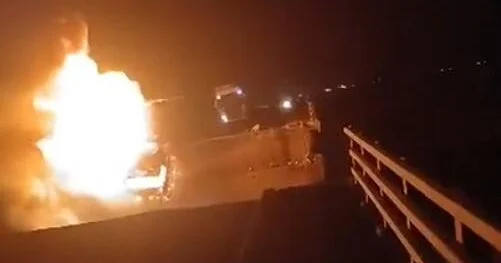
The conflict between the United States and Iran has sharply intensified, with escalating military strikes prompting maritime crews around the strategic Strait of Hormuz to refuse passage. This breakdown in the prior ceasefire has revived fears of a severe disruption to global shipping and oil supplies.
What Happened
On July 16 and 17, 2026, the U.S. Central Command (CENTCOM) reported completing six consecutive nights of military strikes targeting dozens of Iranian military sites, including coastal surveillance and air defense locations, military logistics hubs, and maritime capabilities. These operations employed fighter jets, drones, and warships.
In retaliation, Iran’s Islamic Revolutionary Guard Corps (IRGC) announced multiple attacks on U.S. military facilities across the Middle East, claiming strikes against bases in Syria, Kuwait, Oman, Bahrain, and Jordan. Although these claims remain unconfirmed by U.S. officials and disputed by local sources, the Iranian commander vowed continued “effective and targeted strikes” until calm is restored along the Strait and southern coastline.
The heightened conflict has caused ship crews to avoid the voyage through the Strait of Hormuz entirely. Dimitris Maniatis, CEO of Greek maritime risk management firm Marisks, described the current situation as having “gone back to the worst case scenario” following the ceasefire collapse. He emphasized that fear, not financial incentives or other considerations, now dominates decision-making among vessel operators.
Key Facts
Iran’s health ministry reported that U.S. strikes since June 22 have killed at least 38 individuals and injured around 400, including women and children. The most recent strikes reportedly wounded a one-year-old child severely and killed his mother in southern Iran. Iranian state media confirmed damage to transportation infrastructure such as bridges, an airport, and a railway station.
Oil prices have responded sharply to the developments, with Brent crude climbing above $85 per barrel and U.S. crude approaching $80. Global stock markets declined amid concerns over escalating Middle East instability. Additionally, U.S. Marines boarded a commercial vessel in the Gulf of Oman to enforce a naval blockade of Iranian ports.
What This Means
The resumption of intense military attacks and Iran’s renewed aggressive posture have instantly reversed the fragile stability that had allowed maritime vessels to transit the vital Strait of Hormuz safely. The strait is a critical chokepoint responsible for around 20% of global petroleum transit, meaning any disruption raises the risk of sustained supply shocks and price volatility in oil markets worldwide.
For commercial shipping companies and global energy consumers, the unwillingness of crews to navigate the strait signals not only immediate operational halts but also a new period of uncertainty and risk premium embedded in energy prices. This environment exacerbates geopolitical tensions, placing added pressure on U.S. and allied decision-makers to balance military responses with efforts to protect commercial interests and regional stability.
Furthermore, the conflict’s human toll on Iranian civilians and potential spillovers to neighboring countries underscore the complexities inherent in resolving such confrontations. As outright warfare risks increase, global eyes remain on how this localized escalation could affect broader U.S. foreign policy and international energy security.
What Remains Unclear
U.S. authorities have not confirmed the operational success or specific damages from the Iranian strikes on U.S. bases, and some claims, including alleged attacks on the al-Tanf base in Syria, were denied by Syrian officials. The exact motives behind Iran’s continued aggression and whether diplomatic channels remain active are also not detailed.
What Comes Next
CENTCOM and White House officials have reaffirmed a commitment to responding to Iranian attacks with consequences but provided no immediate details on forthcoming military or diplomatic initiatives. Shipping companies and international observers will closely monitor whether the maritime blockade around the Strait persists or if a new ceasefire or negotiation emerges to ease tensions.
Sources
This article is based on reporting and publicly available information from the following source:
Read more World News stories on Goka World News.