
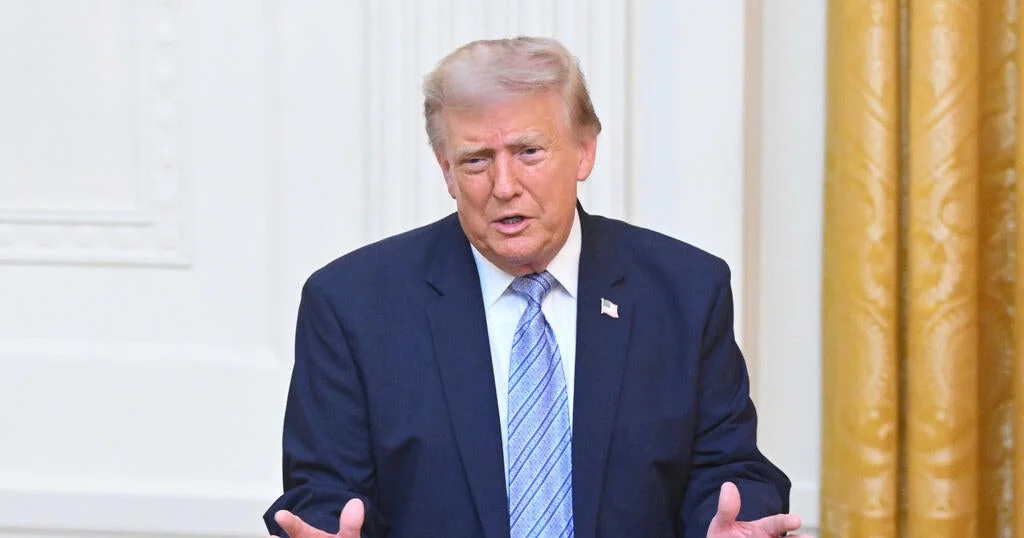
In a primetime speech on July 16, 2026, former President Donald Trump reiterated his long-held allegations that the U.S. election system suffers serious security weaknesses, despite extensive expert disagreement. Alongside the speech, the White House released declassified documents related to election security. Trump also urged Congress to pass the SAVE America Act, a controversial legislative package proposing stricter voting regulations, including proof of citizenship requirements.
What Happened
Trump’s Thursday night address focused on accusing the U.S. election infrastructure of falling “catastrophically short,” a claim consistently challenged by election officials and experts. Ahead of the speech, a White House briefing clarified that the newly released documents did not allege any vote switching or hacking of voting machines. Nevertheless, Trump asserted that China had obtained voter registration data for 220 million Americans between 2020 and 2023, a claim disputed due to the public nature of such data in many states. He also alleged that intelligence agencies withheld this information from Congress and himself.
Trump highlighted what he described as voter roll problems, including claims that hundreds of thousands of non-citizens and deceased individuals remain active on voter lists. He cited a Department of Homeland Security report covering four states that claimed over 250,000 non-citizens were registered to vote.
Additionally, Trump revisited concerns over voting machines, labeling them as vulnerable to attack, and pointed to intelligence about potential foreign attempts to use machines to commit fraud in Venezuela—technology not deployed in the U.S. He also branded U.S. adversaries, including China, Russia, Iran, and North Korea, as possessing the capability to interfere with election infrastructure, referencing a 2020 National Intelligence Council memo.
During his speech, Trump pushed lawmakers to pass the SAVE America Act to implement new election security measures. The legislation has faced resistance in the Senate, especially from some Republicans, while GOP allies broadly expressed support. Democrats sharply criticized the speech and legislation, accusing Trump of undermining election integrity.
Key Facts
- The speech took place on July 16, 2026, in a nationally televised primetime slot.
- The SAVE America Act includes provisions for voter registration reforms such as proof of citizenship requirements.
- The DHS report cited by Trump alleged more than 250,000 non-citizens registered to vote in California, Pennsylvania, New Jersey, and Nevada.
- States such as Georgia, Ohio, Texas, and Louisiana have found limited cases of non-citizen registration and voting following audits.
- The National Intelligence Council memo from January 2020 states foreign adversaries have the capability to compromise election infrastructure but would likely be detected by audits.
- The White House released documents declassifying an FBI probe into a 2020 voter registration drive in Michigan, which was eventually closed.
What This Means
Trump’s speech revives contested narratives about election security that have shaped much of the political discourse since 2020, aiming to influence legislative priorities and maintain support among his political base. By pushing the SAVE America Act, Trump and his allies seek to harden voting rules nationwide, potentially reshaping voter access and registration processes.
The allegations about foreign access to voter data reignite concerns about election interference, although experts emphasize that publicly available voter files do not equate to election manipulation. The focus on vulnerabilities and fraud allegations can deepen partisan divides over electoral trust and policies. Lawmakers and officials will likely continue debating the balance between election security and voter accessibility amid a politically charged environment.
Given the lack of evidence for widespread fraud or hacking in recent elections, the speech and document releases may serve more to underscore political narratives than to uncover new facts. However, the push for legislative changes could have lasting impacts on how elections are administered and contested in the United States.
Background
Since the 2020 election, Trump has repeatedly claimed without substantiation that the election was stolen due to widespread fraud. Election officials, courts, and federal agencies have rejected these claims. The SAVE America Act proposed by Trump allies contains measures such as proof-of-citizenship requirements to register to vote, which critics argue would suppress eligible voters.
Previous intelligence assessments, including the 2020 National Intelligence Council report, found foreign states engaged in campaigns to influence narratives but did not directly tamper with the mechanics of voting or vote counts.
What Remains Unclear
It is not confirmed whether the SAVE America Act will advance in the Senate or become law. The extent and impact of the FBI investigation into voter registration irregularities in Michigan remain partially undisclosed, with the probe closed amid internal disagreements. The precise intentions and outcomes regarding China’s acquisition of voter data, if any, are also not established conclusively.
Sources
This article is based on reporting and publicly available information from the following sources:
Read more Politics stories on Goka World News.