
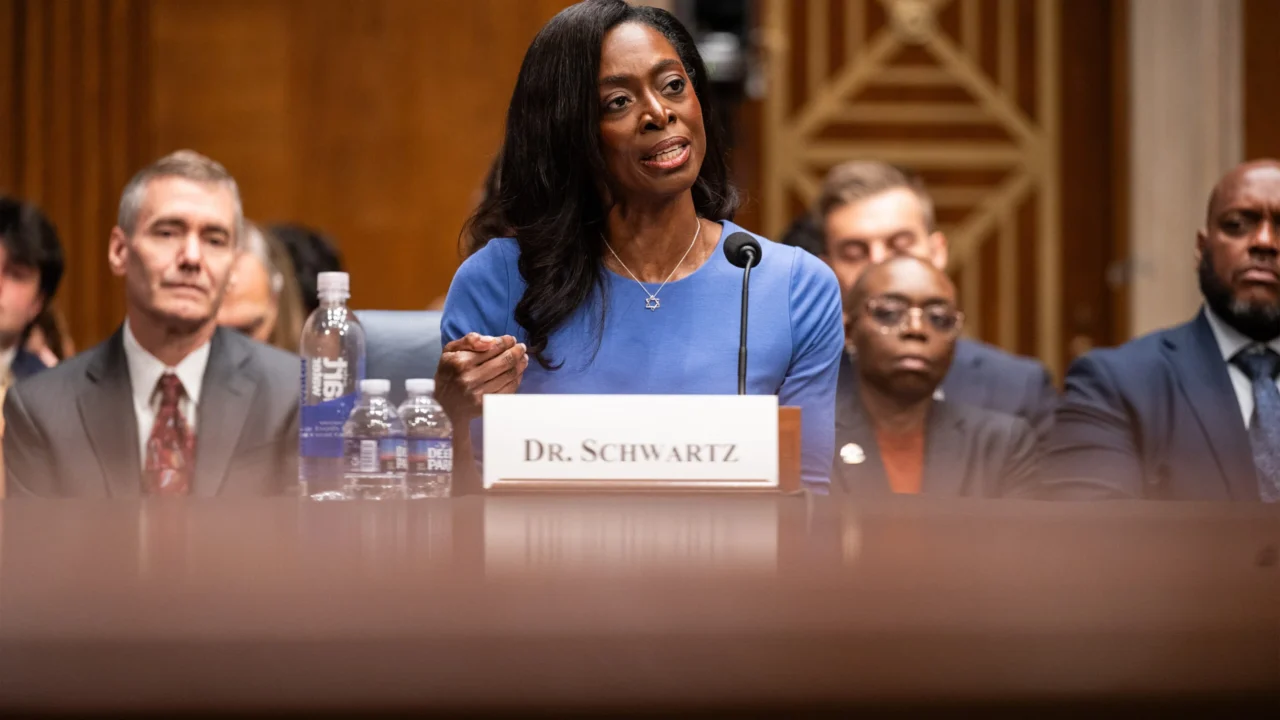
Erica Schwartz, nominated by President Donald Trump to lead the Centers for Disease Control and Prevention (CDC), affirmed her support for vaccines—including mRNA-based COVID-19 vaccines—during a Senate confirmation hearing, though she did not address concerns about maintaining the agency’s independence from Health and Human Services Secretary Robert F. Kennedy Jr.
What Happened
On July 15, during her Senate Health, Education, Labor and Pensions Committee hearing, Erica Schwartz highlighted her career-long commitment to vaccination and public health. She explicitly stated trust in mRNA vaccine technology as safe and effective. Schwartz, who previously served as deputy surgeon general and chief medical officer for the Coast Guard, is Trump’s nominee to become CDC director.
Her confirmation process unfolds amid a contentious backdrop. Secretary Kennedy, known for his anti-vaccine stance and policy interventions, removed the prior CDC director, Susan Monarez, reportedly over disagreements about vaccine guidance and budget cuts. Senator Bernie Sanders released emails revealing Kennedy pressured Monarez to alter vaccine recommendations, leading to her departure. These developments raised bipartisan doubts about Schwartz’s ability to preserve agency autonomy from Kennedy.
Key Facts
Schwartz emphasized she would follow scientific evidence and legal mandates, stating, “I will never compromise on science.” She committed to restoring trust in public health institutions and promoting “radical transparency” to modernize the CDC. The American Public Health Association (APHA) endorsed her nomination, citing her strong medical background and commitment to evidence-based science.
Several senators, including Committee Chairman Sen. Bill Cassidy (R-La.), pressed Schwartz on whether she would resist political or ideological pressure, particularly from Secretary Kennedy, who has publicly questioned vaccines’ safety and efficacy. Cassidy’s influence on the confirmation vote is significant despite his previous clashes with Kennedy over public health policies.
Some senators expressed concern over the administration’s previous political interference in public health funding and research grants targeting diversity and equity efforts. Schwartz acknowledged such concerns and prioritized reinstating scientific integrity at the CDC.
What This Means
Schwartz’s expressed support for vaccines and mRNA technology contrasts starkly with the controversial approach of Secretary Kennedy, placing her at the center of a potential power struggle within the Department of Health and Human Services. Her nomination signals an attempt to reestablish professional public health leadership after disruptions caused by politicization within the CDC.
The ambiguity over her independence from Kennedy, who has promoted misinformation about vaccines, suggests that the agency could continue facing challenges balancing science-based guidance with political pressures. For Americans, especially those relying on trust in the CDC for pandemic responses and vaccination programs, the outcome of Schwartz’s confirmation and her ability to assert scientific principles will be critical in restoring confidence in public health messaging.
Her commitment to “radical transparency” could mark a shift toward more open communication at the CDC, addressing past criticisms of opaque decision-making under politically influenced leadership. However, how effectively she can navigate internal pressures remains to be seen.
Background
The CDC has endured significant instability during Trump’s second term, with only about one month of Senate-confirmed leadership. The agency grappled with funding reductions, the dismissal of career scientists, and efforts to curtail vaccine programs and COVID-19 shot availability, all occurring under Secretary Kennedy’s oversight. His longstanding anti-vaccine activism, including unfounded claims about mRNA vaccine safety, has intensified controversies around CDC operations.
Analysis
Emily Hilliard, an HHS spokesperson, emphasized Schwartz’s career dedication to American health and expressed optimism about her collaboration with Kennedy to advance public health priorities. Despite this, bipartisan skepticism prevailed in the Senate hearing. Senator Sanders argued that Monarez was removed for opposing Kennedy’s dangerous agenda, underscoring concerns of potential scientific undermining within the administration’s health agencies.
What Comes Next
Schwartz’s confirmation vote by the Senate remains pending. If appointed, she would replace Jay Bhattacharya, the current acting CDC director who also serves as NIH director but lacks Senate confirmation for the CDC role. Observers anticipate that Schwartz’s tenure will test whether the CDC can regain stability, independence, and public trust in the face of competing political influences.
Sources
This article is based on reporting and publicly available information from the following sources:
Read more Health & Public Health stories on Goka World News.