
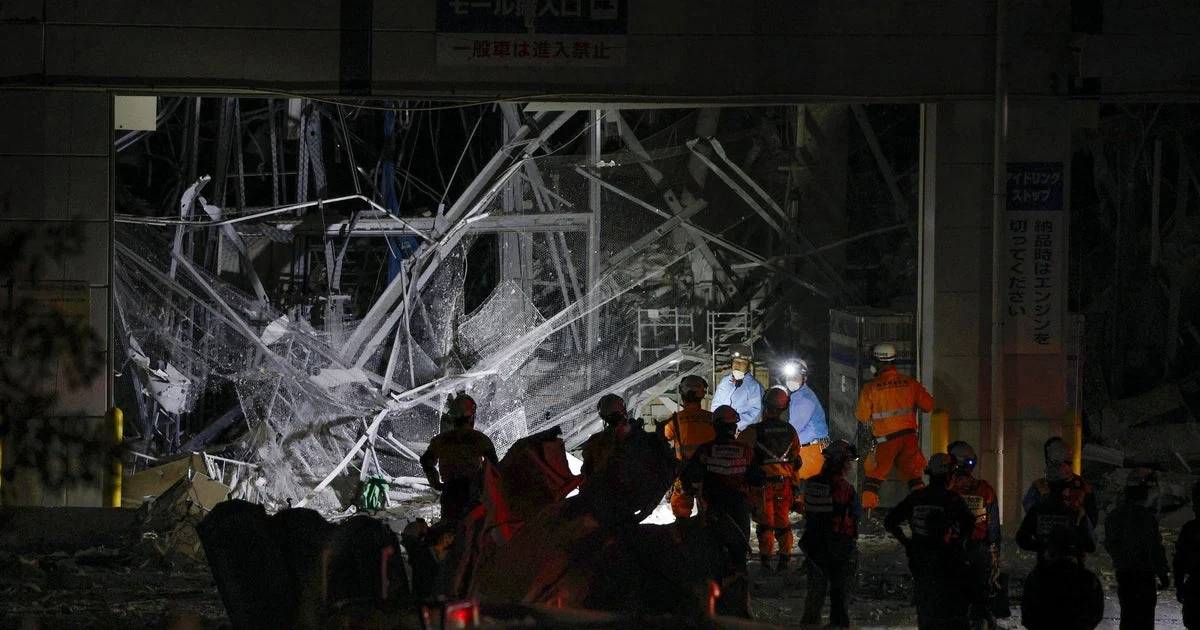
A powerful earthquake registering magnitude 7.1 struck Japan’s Kumamoto Prefecture on July 28, 2026, resulting in at least five confirmed deaths and sparking urgent rescue operations across the region. The tremor severely damaged infrastructure including a shopping mall and a paper mill, exacerbating concerns about human casualties and community hazard amid high summer temperatures.
What Happened
The earthquake hit the southern part of Japan’s main Kyushu island at 4:27 p.m. local time. The Japan Meteorological Agency reported a magnitude of 7.1 and the maximum level of 7 on Japan’s Shindo intensity scale. The U.S. Geological Survey recorded the quake at magnitude 6.8. The epicenter was concentrated in Kumamoto Prefecture, where significant damage was observed. Local emergency responders confirmed multiple fatalities and numerous injuries.
Two young women in their 20s were among the victims found in the heavily damaged Aeon Mall in Kashima city. The mall’s second floor collapsed after an explosion, likely caused by a gas leak. Police indicated that assessing the full death toll would take time due to the scale of destruction.
Separately, at Nippon Paper Industries’ Yatsushiro Plant within Kumamoto, a collapsed chimney trapped at least 11 workers. Two were found without vital signs. The quake also sparked fires, derailed a cargo train, damaged bridges, and cracked roads. More than a dozen homes collapsed, contributing to the reported casualties.
Key Facts
According to Japan’s Fire and Disaster Management Agency and NHK, at least five people have died and dozens more are injured or missing. Emergency services have transported at least 50 injured persons to hospitals, with conditions varying and not fully disclosed. Approximately 45,000 households and facilities experienced power outages. Despite infrastructure damage, nuclear plants in the region continued operating normally, affirmed by the Nuclear Regulation Authority.
The Japan Meteorological Agency initially issued a tsunami warning for waves up to three feet but lifted the alert after a few hours. The government immediately set up an emergency operations center under Prime Minister Sanae Takaichi, who warned of heat-related risks following consecutive days of temperatures reaching 104°F.
What This Means
The severe earthquake underlines Japan’s ongoing vulnerability as one of the world’s most seismically active countries, situated at a juncture of four major tectonic plates in the Pacific “Ring of Fire.” The immediate humanitarian impact includes loss of life, injuries, and displacement of residents, compounding the challenges faced by emergency teams amid sweltering heat and infrastructure disruptions.
Economically and socially, the destruction of commercial centers like Aeon Mall and key industrial facilities disrupts local livelihoods and supply chains, affecting the wider Kyushu region. Power outages and damaged transportation networks may delay recovery efforts and strain resources. Residents must prepare for potential aftershocks and continued instability.
Prime Minister Takaichi’s swift action in mobilizing emergency response reflects the government’s focus on minimizing further harm and restoring services. The event is a stark reminder for disaster preparedness in a country repeatedly tested by powerful quakes and their aftermath.
Background
Kumamoto experienced similarly devastating earthquakes in 2016, including a magnitude 7.3 tremor that killed 273 people and injured thousands. Japan also suffered a colossal 9.0 undersea quake in 2011, triggering a deadly tsunami and a nuclear disaster at Fukushima, which remains a defining moment in the nation’s disaster history. These past events shape current safety protocols and emergency readiness.
What Remains Unclear
Precise casualty figures remain in flux amid ongoing rescue operations. Authorities have yet to release a definitive death toll from the shopping mall collapse and factory incident. The total number of people trapped or missing is also uncertain. The extent of structural damage to infrastructure beyond initial reports is still being assessed.
What Comes Next
The Japanese government will continue search and rescue efforts and conduct thorough damage assessments through the night and coming days. Emergency services will focus on restoring power, water supply, and transportation links while anticipating further seismic activity. Local authorities have urged residents to stay alert and take precautions.
Sources
This article is based on reporting and publicly available information from the following source:
Read more World News stories on Goka World News.