
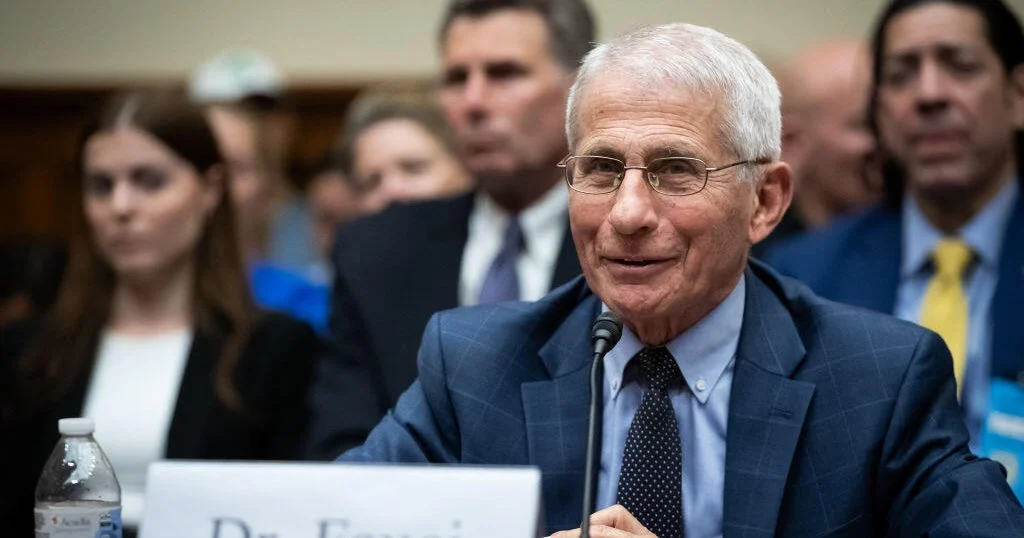
Senator Rand Paul of Kentucky has made public more than a thousand pages of journal entries from Dr. Anthony Fauci, the nation’s former top infectious disease expert. The release on July 28, 2026, sets the stage for a contentious hearing before the Senate Homeland Security Committee concerning the origins of the COVID-19 pandemic and Fauci’s role during the crisis.
What Happened
Paul, who chairs the Senate Homeland Security Committee, subpoenaed Fauci to testify as part of an ongoing investigation into how the coronavirus emerged. The diaries, covering entries from December 2019 through December 2022, offer Fauci’s reflections from just before the U.S. declared a public health emergency until his retirement as director of the National Institute of Allergy and Infectious Diseases. Paul has long maintained that COVID-19 likely emerged from a lab leak at the Wuhan Institute of Virology and has accused Fauci and government officials of misleading the public and Congress regarding the virus’s origins.
Fauci has declined to comment on the diary release. According to Health and Human Services Secretary Robert F. Kennedy Jr., the entries were obtained from government computer servers in recent months. Paul’s office has not disclosed the method by which the documents were acquired.
Key Facts
The diary entries reveal Fauci’s early ambivalence about the source of the pandemic. In a January 2020 entry, Fauci dismissed the Wuhan market as the virus’s origin, calling it merely an “amplifier,” but conceded the virus had jumped from animals to humans. Soon after, Fauci noted a discussion among experts that questioned whether the virus originated in nature. In a May 2021 entry, Fauci expressed frustration with media scrutiny over his statements and acknowledged that no one, including himself, was 100% certain about the virus’s origin, calling for thorough investigation.
Paul criticized Fauci for allegedly portraying differing views privately in his diary compared to public statements, asserting Fauci claimed the lab leak theory was implausible publicly while privately acknowledging uncertainty. The FBI has assessed the virus’s emergence as most likely due to a lab incident, with the CIA issuing a low-confidence January 2025 report favoring the lab leak hypothesis.
The diaries also document Fauci’s media appearances, his uneasy fame during the pandemic, and his complicated relationship with former President Donald Trump. Fauci described some positive interactions early on but also noted moments when Trump criticized or accused him of undermining the administration. The entries include moments where Trump reportedly told Fauci, “you are losing me trillions of f*ing dollars,” yet also affirmed respect for Fauci.
What This Means
The publication of Fauci’s diary entries provides unprecedented insight into the internal deliberations of the federal government’s pandemic response and the ambiguity surrounding COVID-19’s origins. It underscores the difficulties policymakers and scientists faced in navigating incomplete information while managing public communication under intense political scrutiny.
For the public and policymakers, these diaries may deepen distrust about official narratives on pandemic origins and government transparency. They highlight the challenges officials encountered balancing evolving scientific understanding with political pressures. Fauci’s notes reveal how conflicting information and political conflicts complicated an already fraught public health crisis.
Furthermore, the release and impending Senate hearings could influence ongoing debates over pandemic preparedness, funding of controversial virus research, and the extent to which scientific advisors were politicized during the administration. This could impact future oversight legislation or shape the political landscape as investigations continue to scrutinize government accountability during COVID-19.
Background
The question of SARS-CoV-2’s origins has been politically charged, with scientists largely favoring natural animal-to-human transmission as the most probable cause, particularly through contact at a Wuhan market. However, intelligence agencies such as the FBI and CIA have posited lab leak scenarios, though with varying confidence levels. Sen. Paul has been a leading congressional voice advocating for lab leak investigations and criticizing Fauci for allegedly misleading lawmakers and the public about the National Institutes of Health’s role in funding certain research at the Wuhan lab.
Fauci has repeatedly denied intentionally misleading Congress and contested the characterization of NIH-funded research as gain-of-function. Their public disputes include Senate committee confrontations where Paul accused Fauci of dishonesty and Fauci retorted that Paul was the one lying. These tensions have persisted since early 2021.
What Comes Next
Dr. Fauci is scheduled to testify before the Senate Homeland Security Committee following the diary release, where members are expected to question him extensively about COVID-19’s origins, his communications with the White House, and the federal response. The hearings will seek to clarify unresolved questions about laboratory research, funding, and government transparency.
The political and scientific scrutiny of pandemic origins is likely to continue shaping congressional oversight activities and inform public debates on managing future pandemics and funding virology research. The full impact of the diaries on legislative or regulatory changes remains to be seen.
Sources
This article is based on reporting and publicly available information from the following source:
Read more Politics stories on Goka World News.