
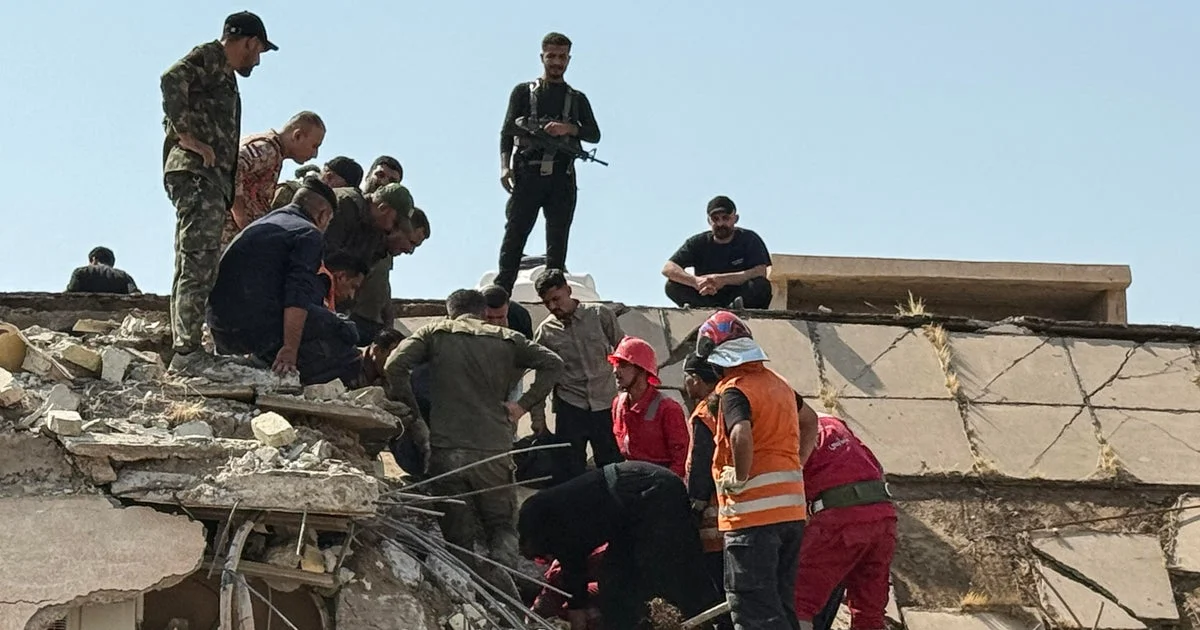
The ongoing conflict between Iran and the United States widened this week as joint U.S.-Saudi airstrikes targeted Iranian-backed militias in Iraq, resulting in significant casualties and escalating tensions in the Middle East. President Donald Trump warned of a forceful U.S. response against Iran amid continued attacks on American forces and allied infrastructure across the region.
What Happened
On July 28 and 29, 2026, U.S. Central Command confirmed coordinated airstrikes with Saudi forces against Iranian proxies affiliated with the Popular Mobilization Forces in eastern Iraq. These strikes, announced late Tuesday and continuing on Wednesday, targeted logistics and weapons sites used by the militias. At least 20 fighters were reported killed, including several Iranian military advisers, according to Sabreen News, a media outlet connected to the Iran-backed Shiite militias.
Meanwhile, the U.S. military thwarted a planned “surprise attack” by Iran on American forces in the Middle East and intercepted a missile barrage launched from Iran, which Jordan’s military claimed responsibility for intercepting. Separately, drone strikes ignited fires at an Egyptian port’s liquefied natural gas terminal in Damietta, marking a potential expansion of the conflict beyond the Gulf into the Mediterranean.
President Trump reinforced his resolve in a Fox News interview on July 29, asserting the U.S. would “be hitting them very hard” in response to recent Iranian attacks against U.S. positions. The State Department announced new sanctions targeting two Iranian insurance companies allegedly tied to the Islamic Revolutionary Guard Corps (IRGC) and accused of extorting fees from commercial shipping traversing the Strait of Hormuz.
Key Facts
The joint U.S.-Saudi strikes killed at least 20 fighters belonging to the Iranian-backed Popular Mobilization Forces, with Iranian military advisers reportedly among the casualties, as reported by Sabreen News.
U.S. Central Command stated these strikes targeted “terrorist logistics and weapons sites” and confirmed they began a renewed round of strikes on Iran around 8 p.m. ET on July 29.
Drone strikes at Damietta Port in Egypt caused fires on a U.S.-owned floating LNG storage facility and a Greek-owned tanker; no injuries were reported, and responsibility remains unconfirmed.
The U.S. Department of State imposed sanctions on Persian Gulf Marine Insurance Company and Hormuz Safe Marine Services Authority, which the U.S. charges with running coercive insurance schemes backing IRGC operations.
The U.S. Navy is enforcing a blockade on Iranian ports, with the Central Command reporting the redirection of 20 commercial ships attempting to evade the blockade.
What This Means
The escalation of joint U.S.-Saudi military actions signals a sharpening of the regional conflict involving Iran, which has lasted over five months. The strikes represent the first confirmed Saudi military involvement directly targeting Iran-backed forces inside Iraq, illustrating the deepening cooperation between the U.S. and its Gulf allies against Tehran’s militia network.
The attacks undermine the fragile balance in Iraq where Iran-backed militias hold significant influence, potentially destabilizing Iraq’s internal security and complicating its sovereignty. The Expansion of hostilities to Egyptian waters near the Suez Canal, if confirmed as Iranian or allied Houthi involvement, would mark a dangerous geographical broadening of the conflict that threatens global shipping routes critical for energy supplies.
President Trump’s public warnings and the imposition of sanctions targeting Iran’s methods of generating revenue—and exerting pressure on international shipping—highlight the multidimensional strategy the U.S. is employing: military pressure combined with economic measures aiming to curtail Iran’s regional ambitions.
Background
The conflict stems from ongoing tensions between Iran and the U.S., which has long accused Iran of supporting proxy militias destabilizing Middle Eastern countries. The war, now over five months in duration, involves repeated attacks on U.S. forces and bases, Iran’s growing blockade efforts in the Strait of Hormuz, and hits on energy infrastructure. The involvement of Saudi Arabia in strikes on Iranian-backed forces reflects the broader Sunni-Shia rivalry influencing regional geopolitics.
What Remains Unclear
Responsibility for the drone strikes on the Egyptian LNG terminal has not been officially confirmed. Although Iran’s Houthi allies in Yemen have publicly targeted shipping in the Red Sea, direct Iranian involvement in the Damietta attack is yet unverified.
The exact number and identities of Iranian casualties in the joint strikes remain unclear, with Sabreen News providing only limited information.
What Comes Next
U.S. Central Command announced ongoing and intensified strikes, signaling continued military operations aimed at Iranian targets in the region. U.S. sanctions efforts and naval blockades are expected to persist as part of a comprehensive strategy to pressure Iran economically and militarily.
Sources
This article is based on reporting and publicly available information from the following sources:
Read more World News stories on Goka World News.