
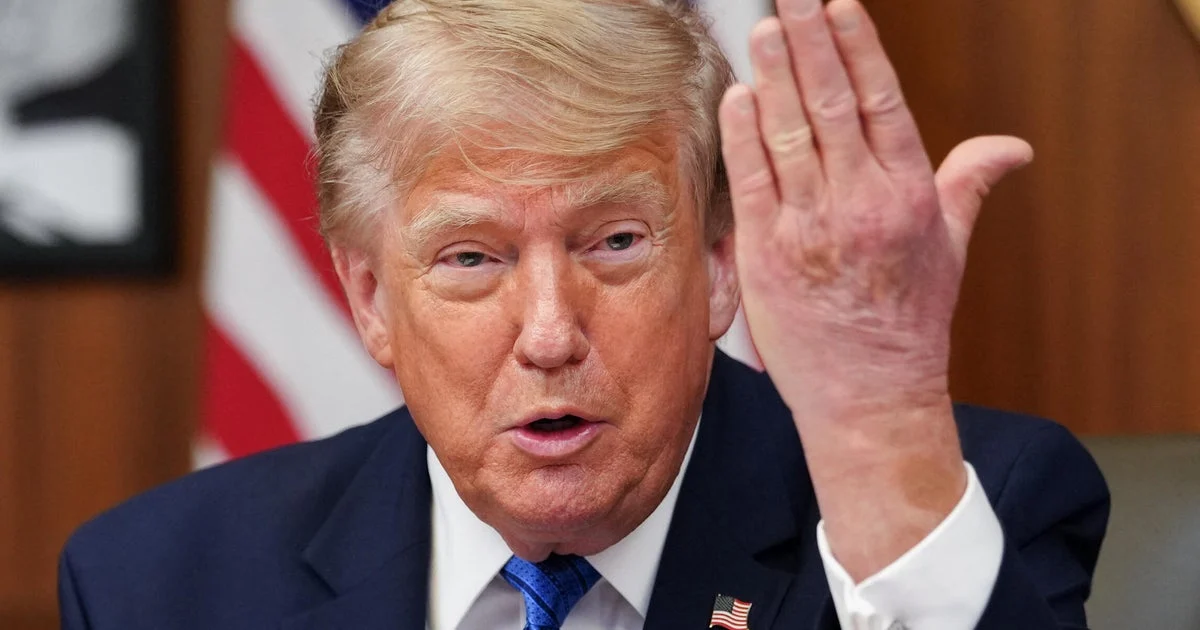
President Donald Trump has commended the United States for its military progress in the ongoing conflict with Iran, describing U.S. actions as an “amazing job” despite the war’s continuation into its sixth month. Meanwhile, United Nations Secretary-General Antonio Guterres issued a stark warning that the Iran war is increasingly fueling global instability, affecting energy markets and food supply chains worldwide.
What Happened
On July 31, 2026, President Trump spoke during a Cabinet meeting held at Camp David, asserting that U.S. military efforts in Iran have significantly weakened the country’s military capacity within five months—contrasting this with longer American involvements in Vietnam, Afghanistan, and Korea. Trump voiced skepticism over diplomatic prospects, citing Iran’s repeated breaches of agreements and missile attacks on U.S. bases in Jordan. In parallel, U.N. Secretary-General Guterres spoke to reporters about the conflict’s widening impact beyond the region, highlighting disruptions in energy supplies and rising prices in food and fertilizers that strain families worldwide.
On the ground, Iraq’s government announced boosted air defense and intelligence readiness following recent U.S.-Saudi airstrikes on pro-Iran militia bases associated with the Hashed al-Shaabi, an Iraqi armed alliance that includes powerful Iranian-backed groups. Meanwhile, in the cyber domain, U.S. officials and sources are investigating a wave of malicious cyber activity targeting water systems in at least seven U.S. states, including Minnesota. Initial probes are examining whether Iranian hackers are responsible, though some sources caution attribution remains uncertain, with the possibility that the cyberattackers may be attempting to mislead investigators.
Regionally, Israel conducted significant detonations near Lebanon’s UNESCO-listed Beaufort Castle overnight, targeting tunnels used by the Iranian-backed militant group Hezbollah. Israeli Prime Minister Benjamin Netanyahu and Defense Minister Israel Katz described the tunnel network as a central command center for Hezbollah, destroyed with approximately 700 tons of explosives after alleged ceasefire violations. Lebanon’s culture ministry warned of potential damage to the historic site.
Key Facts
President Trump framed the conflict as having lasted five months, with significant degradation of Iran’s military capabilities, though he acknowledged some forces remain. He described Iran as “very poorly” positioned and accused the country of dishonesty during negotiations.
U.N. Secretary-General Antonio Guterres detailed that the conflict’s ripple effects have led to upheavals in global energy markets and shortages that affect food security worldwide. He stressed the need to halt fighting across all fronts.
Iraq ordered heightened military readiness after U.S.-Saudi strikes targeted bases belonging to Hashed al-Shaabi militias, a group that, despite integration into Iraqi armed forces, includes factions acting autonomously and supported by Iran.
U.S. investigators are probing malicious cyber operations impacting water utility systems across at least seven states, including Minnesota, with no conclusive attribution yet. The FBI has confirmed incidents but has not publicly identified the states affected beyond Minnesota.
Israel’s military reported destroying a tunnel network near Beaufort Castle used by Hezbollah that spanned several underground levels built over two decades. The explosions disturbed nearby areas, with potential heritage site damage under assessment.
What This Means
Trump’s remarks underscore the administration’s attempt to maintain public support by highlighting military progress despite an ongoing, complex war that has geopolitical repercussions far beyond Iran’s borders. His warning of broken Iranian commitments reflects deep diplomatic challenges complicating conflict resolution efforts. For international observers and neighboring countries, the persistence of hostilities serves as a destabilizing factor in an already volatile Middle East.
The UN’s emphasis on global instability ties the Iran conflict directly to worldwide economic and humanitarian stresses, notably through disrupted energy flows and inflated prices for staple commodities. These effects resonate with ordinary consumers and governments worldwide, spotlighting the interconnectedness of regional conflicts and global markets.
Heightened military readiness in Iraq and actions by Israel against Iranian-backed Hezbollah highlight the conflict’s potential to escalate across multiple fronts in the region, risking wider violence and further undermining regional stability. Meanwhile, ongoing cyberattacks on U.S. infrastructure raise concerns over how the conflict is extending into digital warfare, posing new risks for civilian utilities and national security.
Background
The current Iran war has been ongoing for six months as of July 2026, involving direct U.S. military engagement and allied regional partners such as Saudi Arabia. Recent U.S.-Saudi strikes have targeted militias aligned with Iran inside Iraq, notably the Hashed al-Shaabi, complicating Iraq’s internal security dynamics. The conflict has also impacted the Strait of Hormuz, a crucial route for global oil shipments. Diplomatic efforts are ongoing but hampered by mutual distrust.
What Comes Next
U.N. Secretary-General Guterres called for cessation of fighting on all regional fronts but did not specify concrete peace initiatives. The U.S. administration indicated continuing military pressure on Iran. Meanwhile, U.S. cybersecurity and intelligence agencies continue their investigation into the recent cyberattacks on water systems, with attribution pending further technical analysis.
Sources
This article is based on reporting and publicly available information from the following source:
Read more Politics stories on Goka World News.