
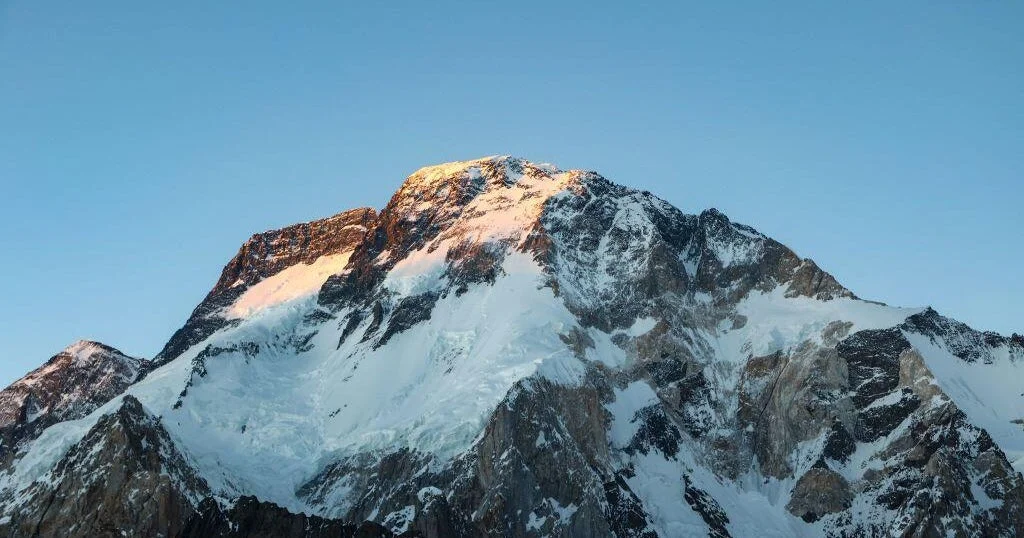
A devastating avalanche on Pakistan’s Broad Peak claimed the lives of ten climbers, including the celebrated British-Nepali mountaineer Nirmal Purja, marking a tragic moment for the global climbing community. The disaster has prompted multinational rescue efforts amid grim prospects for survivors.
What Happened
Earlier this week, an avalanche struck Broad Peak, a 26,401-foot mountain in Pakistan’s Karakoram range, sweeping away ten climbers. Led by Nirmal Purja, the expedition lost contact with base camp on the day of the avalanche, triggering a multi-agency search and rescue operation. The tragedy was confirmed by Purja’s expedition company Elite Expeditions and the Alpine Club of Pakistan by August 1, 2026. So far, three bodies have been recovered, with authorities continuing to search for the remaining victims.
Key Facts
Broad Peak is the world’s 12th-highest peak and part of the Karakoram range, famed for its extreme altitude and risky climbing conditions.
The expedition comprised climbers from various countries, including five Nepalese climbers, one Omani climber (Nathira Ahmed), an American climber (Mallory Geis), Pakistani climber Sohail Sakhi, a Chinese climber named Wang, and one unidentified foreign climber.
Elite Expeditions officially confirmed the death of Nirmal Purja and multiple others. Karrar Haidri, vice president of the Alpine Club of Pakistan, conveyed condolences and confirmed the ongoing rescue efforts supported by Pakistani military helicopters and experienced climbers.
Bodies recovered include Mallory Geis and Bahadur Gurung, currently held in a hospital in Skardu, the main city in Pakistan’s Gilgit-Baltistan region. Nathira Ahmed’s remains are being transported to Islamabad, Pakistan’s capital.
What This Means
The loss of Nirmal Purja and the other climbers highlights the persistent dangers faced by international mountaineers attempting to summit the world’s highest and most treacherous peaks in Pakistan. Broad Peak and the broader Karakoram region attract climbers worldwide but remain perilous due to unpredictable avalanches, falling ice, and extreme weather.
Purja’s passing is a significant blow to the mountaineering community. He was known for breaking records, including summiting the 14 highest peaks in just 189 days. His death underlines the constant risks even seasoned climbers endure. For Pakistan, which relies on high-altitude tourism, such accidents bring global attention to the challenges of mountain safety and emergency response capabilities in remote areas.
The tragedy may reverberate beyond mountaineering circles, raising questions about safety protocols, climate-impact-driven changes in mountain environments, and the preparedness of rescue operations in Pakistan’s rugged northern regions.
Background
Broad Peak is situated in the Karakoram mountain range, hosting five of the 14 peaks worldwide over 8,000 meters (26,247 feet). The region’s climbing routes are notoriously difficult due to shifting ice, extreme altitudes, and sudden weather shifts.
Mountain expeditions in northern Pakistan often attract international teams but face frequent hazards from avalanches and natural challenges.
Nirmal Purja gained global fame in 2019 when he climbed all 14 peaks above 8,000 meters in a record 189 days, a feat widely supported and documented through the Netflix film “14 Peaks: Nothing Is Impossible.”
What Comes Next
Search-and-rescue operations continue despite diminishing hopes, with Pakistani military helicopters and expert climbers participating. Officials have not yet reported recovery of all victims’ remains or announced an end to the mission. Further updates from local authorities are anticipated.
Sources
This article is based on reporting and publicly available information from the following source:
Read more World News stories on Goka World News.